
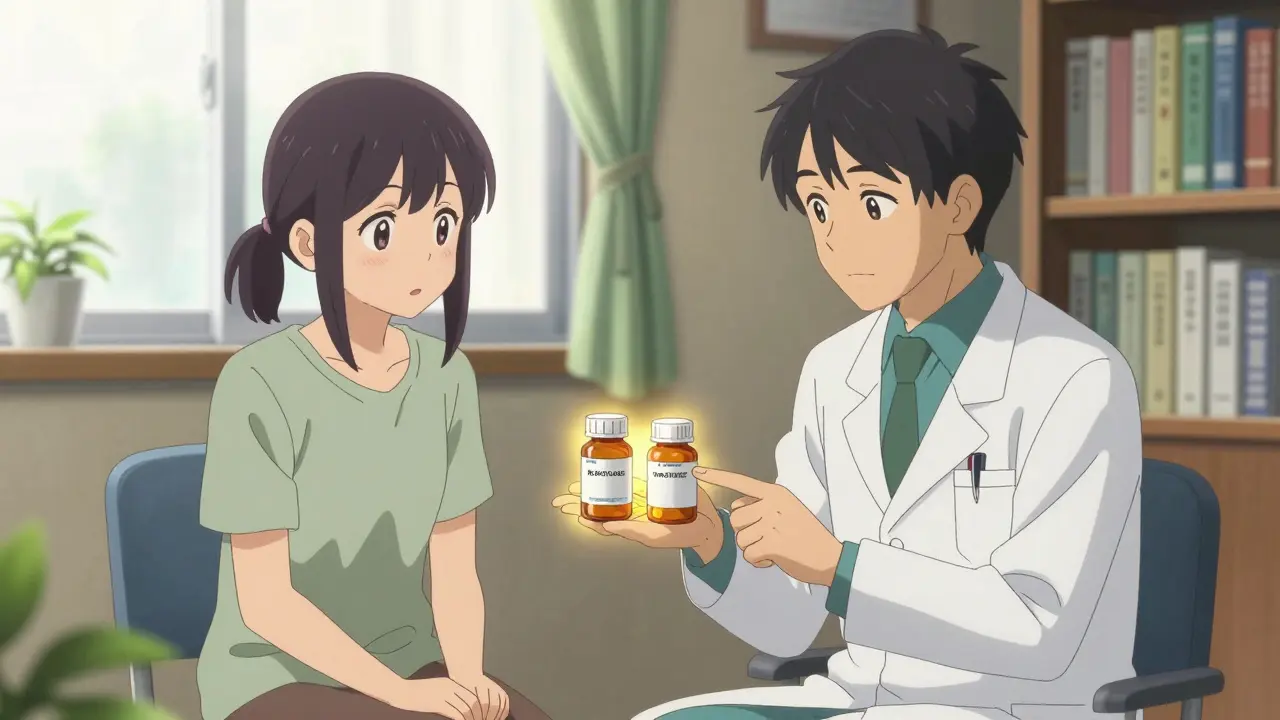
When your doctor hands you a prescription, you might notice something different: the pill looks smaller, the name on the bottle is unfamiliar, and the price is way lower. That’s a generic medication. And if you’re unsure whether it’s just as good as the brand-name version, you’re not alone. Many patients worry that cheaper means weaker. But here’s the truth: generic medications work the same way as their brand-name counterparts - and they’re backed by science, not marketing.
What Exactly Is a Generic Drug?
A generic drug contains the exact same active ingredient as the brand-name version. That means the part of the pill that actually treats your condition - whether it’s lowering blood pressure, controlling blood sugar, or fighting an infection - is identical. The FDA requires generics to match the brand-name drug in strength, dosage form, and how it’s taken (pill, injection, inhaler, etc.).What’s different? The color, shape, or flavor. Those come from inactive ingredients - things like dyes, fillers, or coatings. These don’t affect how the drug works. Think of it like two different brands of aspirin: one might be white and round, the other blue and oval. Both still relieve headaches the same way.
The FDA approves generics using the same strict standards as brand-name drugs. Every generic manufacturer must prove their product delivers the same amount of medicine into your bloodstream at the same rate. This is called bioequivalence. The FDA requires that the difference between the generic and brand-name drug falls within 80-125% for how much medicine enters your system. That’s a tight range - tighter than what’s allowed for two different batches of the same brand-name drug.
Why Do Generics Cost So Much Less?
Brand-name drugs cost a lot because the company that created them had to pay for years of research, clinical trials, and marketing. Once the patent runs out, other companies can make the same medicine without repeating those expensive steps. They only need to prove their version works the same way - which costs far less.As a result, generics typically cost 80-85% less. For example, a 30-day supply of brand-name Lipitor might run $675. The generic version, atorvastatin, costs around $16. That’s not a marketing trick. That’s the result of competition.
And it matters. In 2023, generics made up 90% of all prescriptions filled in the U.S. but only 23% of total drug spending. That’s billions saved every year - money that keeps people on their meds instead of skipping doses because they can’t afford them.
Do Generics Work as Well?
Yes. And the evidence is overwhelming.A 2020 study in JAMA Internal Medicine looked at 47 clinical trials comparing generic and brand-name cardiovascular drugs - things like blood pressure pills and statins. The results? No meaningful difference in how well they worked. Patients had the same outcomes whether they took the brand or the generic.
Another study tracked over 11 million people over several years. Those prescribed generics for chronic conditions like diabetes or high cholesterol were 8-12% more likely to keep taking their medicine. Why? Because they could afford it. When people don’t have to choose between medicine and groceries, they take their pills.
Even in complex cases - like thyroid medication - the FDA requires tighter standards. For levothyroxine, the acceptable bioequivalence range is 90-110%, not the usual 80-125%. That’s because small changes in thyroid hormone levels can have big effects. Even then, studies show most patients switch without issue.
What Do People Get Wrong About Generics?
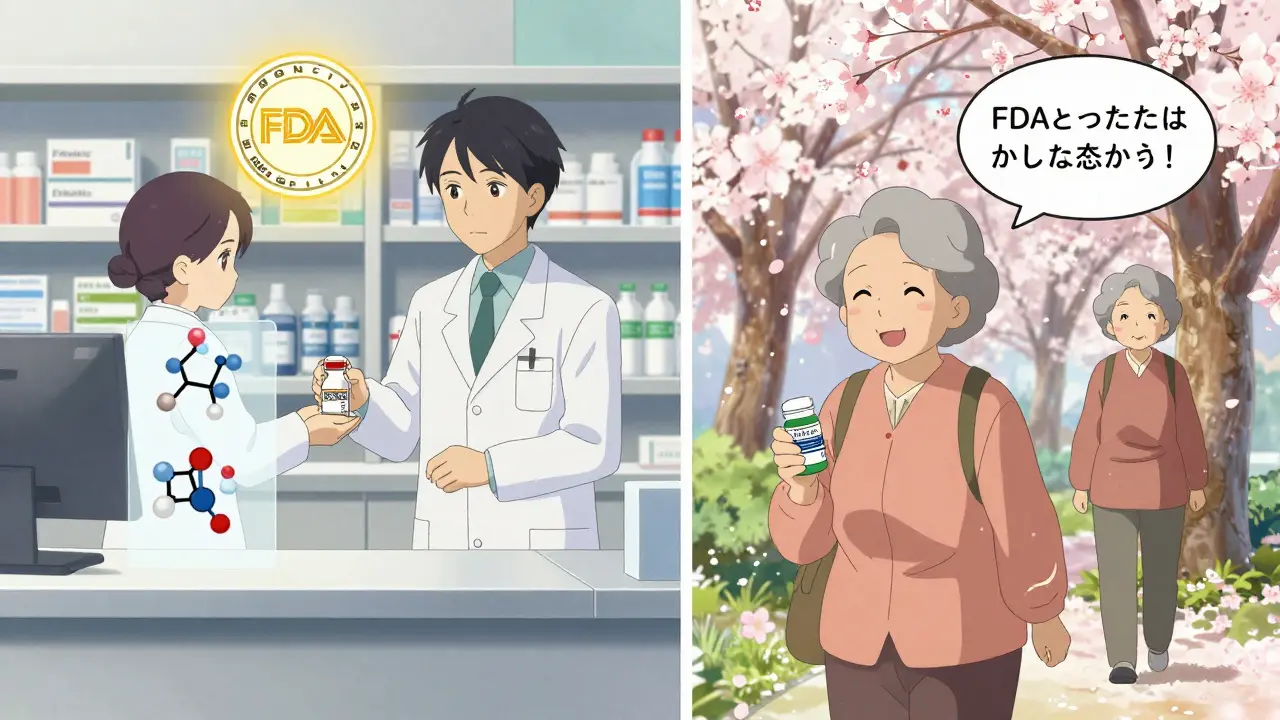
The biggest myth? That generics are made in lower-quality factories.Here’s the reality: the same companies that make brand-name drugs often make the generics too. And every single generic manufacturing facility - whether it’s in the U.S., India, or Germany - must pass the same FDA inspections as brand-name plants. In 2023, 98.7% of generic facilities passed their inspections. That’s higher than the average for many other industries.
Another common concern: “The inactive ingredients cause side effects.”
It’s possible - but rare. About 0.8% of patients report issues related to fillers or dyes. For example, someone allergic to a specific dye might react to one brand’s pill but not another. That’s why pharmacists ask about allergies. But if you’ve been taking a brand-name drug without problems, switching to the generic won’t suddenly trigger new side effects.
And no, generics aren’t “second-rate.” The FDA doesn’t allow them to be. Every generic must meet the same quality, purity, and stability standards. If it doesn’t, it doesn’t get approved.
How to Start the Conversation With Your Doctor
You don’t need to wait for your doctor to bring it up. You can start the conversation yourself.Try this simple script: “I’ve heard about generic versions of this medication. Can we talk about whether one would work for me?”
That’s it. No jargon. No pressure. Just an open question.
Your doctor might say yes right away. Or they might say, “Let’s check if there’s a generic available.” That’s fine. They’re not trying to push you toward a brand. They’re just making sure it’s the right choice for your condition.
For some drugs - like seizure meds, blood thinners, or thyroid pills - your doctor might prefer to stick with a brand if you’ve been stable on it. That’s not because generics don’t work. It’s because switching in those cases requires extra monitoring. But even then, many patients successfully switch with no issues.
Use the “Ask-Tell-Ask” method:
- Ask: “What do you know about generic medications?”
- Tell: “They have the same active ingredient and work the same way. The FDA makes sure of it.”
- Ask again: “Can you tell me how you’d take this if we switched to the generic?”
This simple technique reduces confusion and builds trust. A 2022 study found it cuts medication errors by 37%.
What If You’ve Had a Bad Experience?
Some people report feeling different after switching. Maybe you felt more tired. Or your headache came back. Or you noticed a change in how the pill tastes.First, don’t assume it’s the generic. Many factors can affect how you feel - stress, sleep, diet, other medications.
But if you’re sure it’s the switch, talk to your pharmacist. They can check if the generic you got is from a different manufacturer than before. Sometimes, switching between two different generics (both generic versions of the same drug) can cause small differences in how your body responds - especially with drugs that have a narrow therapeutic index.
That’s rare. But if it happens, your doctor can request the brand-name version or a specific generic manufacturer. Insurance often covers it if there’s documented medical need.
What’s Changing Right Now?
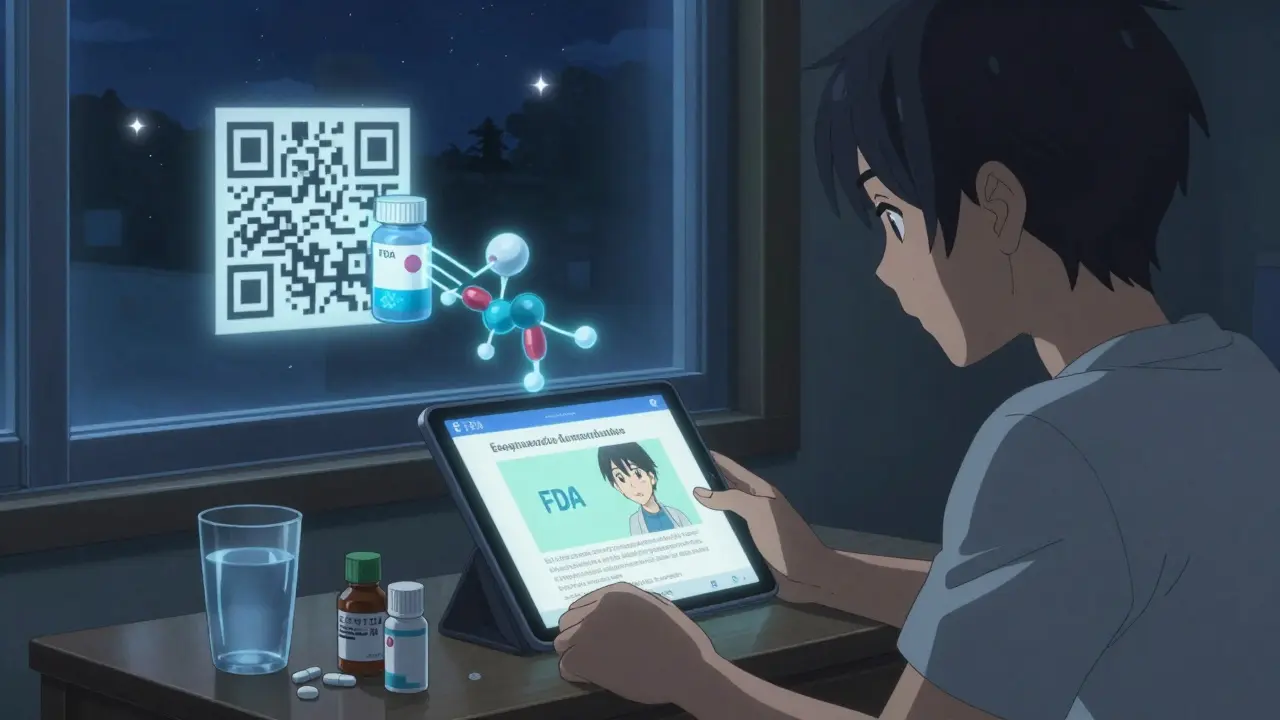
The rules are getting even clearer. Starting in 2025, Medicare Part D will cover many generics with $0 cost-sharing. That means you’ll pay nothing out of pocket for these drugs.The FDA is also rolling out new tools - like QR codes on prescription labels that link to short videos explaining how the drug works. And they’ve launched a public campaign called “Take With Confidence,” featuring real patients who switched to generics and saw no difference in how they felt.
AI tools are being tested too. One pilot chatbot helps patients answer common questions like, “Why does my pill look different?” or “Is this safe?”
Bottom Line
Generic medications aren’t a compromise. They’re a smart, safe, and proven choice. They work. They’re cheaper. And they’re held to the same standards as brand-name drugs.If you’re on a chronic medication and the cost is a burden, ask about the generic. If you’re worried it won’t work, ask your doctor to explain the science. You’re not being pushy. You’re being informed. And that’s exactly what good patient care looks like.
Medications are meant to help you live better. Generics make that possible for more people - without sacrificing quality, safety, or effectiveness.



15 Comments
Yo, I used to be super skeptical about generics too-like, I’d stare at the pill like it was a alien artifact. But then my blood pressure meds switched, and I didn’t even notice until my wife pointed out the color change. Same effect, same energy, same no-headache mornings. Now I ask for generics every time. It’s not about being cheap-it’s about being smart. Why pay $700 for the same chemistry when you can save $680 and put that toward a vacation, a gym membership, or just not stressing about bills? The FDA doesn’t mess around. If it’s on the shelf, it’s been tested harder than your ex’s excuses.
Let’s be clear: generics are a regulatory loophole disguised as consumer benefit. The FDA’s ‘bioequivalence’ standard is a joke-80–125% variance means a drug can be 25% weaker or 25% stronger. That’s not equivalence, that’s a lottery. And don’t get me started on overseas manufacturing. Over 70% of generic APIs come from India and China, where inspections are performative at best. You think your ‘same active ingredient’ pill is safe? Ask yourself: who’s really auditing those labs? The same people who approved the 2018 valsartan recall? Yeah.
i just wanna say… 🥺 i switched to generic thyroid med last year and cried when my energy came back. not because i’m dramatic (ok maybe a little) but because i was SO scared i’d feel like a zombie forever. turns out, my body didn’t care if it was branded or not. the real villain? the system that makes people choose between meds and rent. love u all. 🌿
What’s fascinating is how deeply cultural our distrust of generics is. We’ve been conditioned to equate price with quality-like a luxury watch versus a Timex. But medicine isn’t fashion. It’s biology. The fact that the FDA requires identical pharmacokinetics means we’re not guessing-we’re measuring. And yet, we still hesitate. Why? Because we fear the unknown. But here’s the twist: the generic is the known. The brand is the marketing. The science doesn’t care about logos. It only cares about molecular structure. And that’s the same.
Generics work fine unless you're one of those people who gets weird after switching then blames the pill instead of your sleep schedule or coffee intake. Also stop acting like the FDA is some holy guardian. They're underfunded and overworked. And yes, some generics are made in places where the water quality is questionable. Don't be naive. Just because it's legal doesn't mean it's flawless
Oh great, another corporate shill article. You think people don’t know that the same companies that make brand-name drugs also make the generics? They just slap a new label on it and call it ‘cost-effective.’ You’re not saving money-you’re being manipulated into trusting a product that’s been repackaged by the same profit-driven machine that sold you the brand name in the first place. Wake up.
There is a profound philosophical irony in our collective rejection of generics. We live in an age of hyper-individualism-where identity is curated, where uniqueness is monetized-and yet we cling to branded pills as if they are talismans of personal worth. But the body does not know brand. The liver does not care about packaging. The bloodstream absorbs molecules, not marketing. To reject a generic is to surrender your autonomy to the spectacle of commerce. True freedom lies not in paying more, but in understanding that chemistry is indifferent to branding.
It’s funny how we treat medicine like it’s sacred. We’ll buy a $1000 phone because it has a ‘better camera,’ but balk at a $15 pill because it looks different. The truth? We’re not afraid of the drug-we’re afraid of losing control. We want to believe that paying more gives us more safety. But science says otherwise. The real miracle isn’t the pill-it’s the system that lets a single molecule, identical in every way, save millions from financial ruin. That’s not magic. That’s justice.
Hi from India! 🌏 I work in pharma and can tell you-our generics are made with the same standards as US ones. In fact, many US brands source their active ingredients from here. We’re proud of what we do. My uncle took generic metformin for 10 years-no issues, no side effects, just steady blood sugar. Don’t let fear trick you. Generics are the quiet heroes of global health. And yes, they work. Trust the science, not the label.
Bro, I switched to generic lisinopril last year. Same pill, half the price. I didn’t feel any different. Now I’m saving $50 a month. That’s a Netflix subscription and a pizza. Why pay more for the same thing? Simple.
Let me guess-you’re the type who also buys ‘organic’ toilet paper because it’s ‘better for the planet’ but still uses 10 rolls a week. Generics are the ultimate anti-consumerist move. You’re not saving money-you’re rejecting the cult of pharmaceutical branding. And honestly? The fact that you’re reading this article means you already know the truth. So stop overthinking it. Take the pill. Save the cash. Live better.
According to the Ministry of Health and Family Welfare, India exports over $20 billion in pharmaceuticals annually, with 80% being generic formulations compliant with WHO-GMP and US-FDA standards. The notion that Indian generics are inferior is a colonial mindset. The molecules are identical. The manufacturing is audited. The outcomes are statistically indistinguishable. To doubt is to misunderstand science.
i’ve been on generic statins for 5 years. no issues. my doc didn’t even mention it-just swapped it at the pharmacy. i didn’t even notice until i got the bill. now i just ask for the cheapest one that’s covered. if it works, why fuss? 🤷♂️
Generics are a Trojan horse. The FDA allows them because they’re cheaper, but they’re not equal. The excipients are unregulated. The bioequivalence window is a loophole. And the real manufacturers? They’re owned by the same conglomerates that make the brand names. This isn’t competition-it’s consolidation. You think you’re saving money? You’re just paying less to the same people.
my grandma took generic blood thinner for 8 years. one day she got a rash. switched back to brand. rash gone. so yeah sometimes it matters. dont act like its all the same. people are different. just sayin.
Write a comment