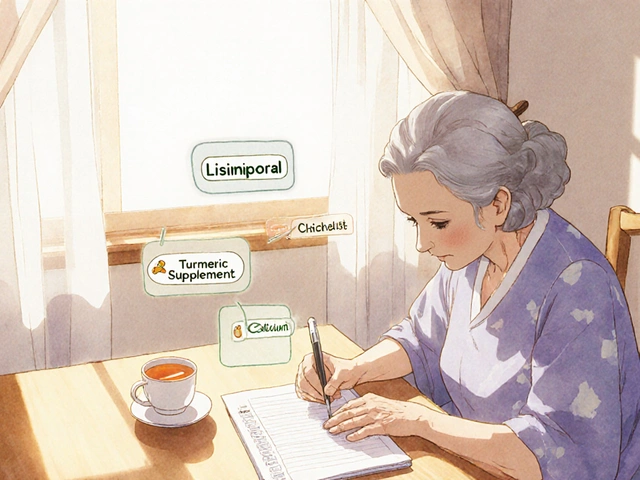

Anticholinergic Risk Assessment Tool
Input Parameters
Risk Analysis Results
Minimal impact on saliva production expected.
Digestive motility likely unaffected.
Bladder function typically remains normal.
Clinical Summary & Recommendations
Have you ever taken an allergy pill and suddenly felt like your mouth was filled with cotton? Or maybe you struggled to go to the bathroom for days after a simple cold? You aren't imagining things. These uncomfortable sensations are not just random bad luck; they are specific chemical reactions known as anticholinergic effects. While we take antihistamines to stop sneezing and itching, certain types also block another critical chemical in our bodies called acetylcholine. This blockade leads to a trio of common but often ignored side effects: severe dry mouth, stubborn constipation, and difficulty urinating.
Understanding why this happens is crucial, especially if you rely on older, over-the-counter medications for sleep or allergies. The difference between a modern allergy pill and one from the 1940s is night and day when it comes to these side effects. Let’s break down exactly what is happening inside your body, which drugs cause these issues, and how you can manage them without sacrificing relief.
The Science Behind the Side Effects
To understand the problem, we have to look at how First-Generation Antihistamines are older allergy medications developed in the 1940s that block histamine receptors but also interfere with acetylcholine signaling. Drugs like diphenhydramine (Benadryl) and chlorpheniramine were designed decades ago. At that time, scientists didn’t fully separate the mechanism for stopping allergies from other chemical pathways in the brain and body. These drugs bind tightly to muscarinic acetylcholine receptors. Acetylcholine is the neurotransmitter responsible for telling your glands to produce saliva, your intestines to move food along, and your bladder to empty.
When these medications block those signals, three main things happen:
- Dry Mouth (Xerostomia): The M3 receptors in your salivary glands get blocked. Studies show this can reduce saliva secretion by 60-70%. Without enough saliva, your mouth feels parched, your taste changes, and you become more prone to cavities.
- Constipation: In your digestive tract, M2 and M3 receptors help control peristalsis-the wave-like muscle contractions that move waste through your gut. Blocking them slows everything down, increasing transit time by up to two times normal.
- Urinary Retention: Your bladder needs acetylcholine to contract and push urine out. When antihistamines block these signals, the bladder muscle relaxes too much while the sphincter tightens. This makes it hard to start urinating or empty your bladder completely.
This isn't a minor annoyance for many people. For elderly patients, these effects can be dangerous, leading to falls, confusion, or acute medical emergencies requiring catheterization.
First-Generation vs. Second-Generation Antihistamines
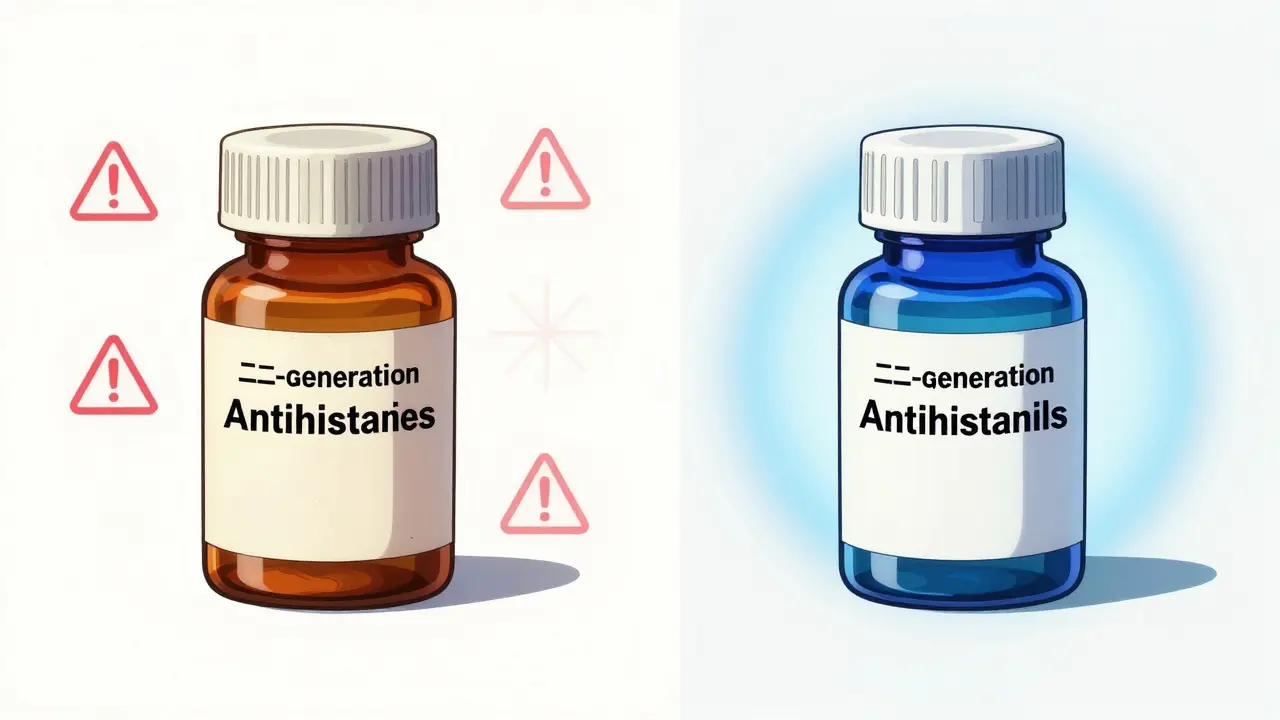
Not all antihistamines are created equal. The market has shifted dramatically because newer drugs were engineered specifically to avoid these off-target effects. Here is how they compare:
| Feature | First-Generation (e.g., Diphenhydramine/Benadryl) | Second-Generation (e.g., Cetirizine/Zyrtec, Fexofenadine/Allegra) |
|---|---|---|
| Anticholinergic Activity | High (Blocks M1-M5 receptors significantly) | Negligible to None (Minimal receptor binding) |
| Dry Mouth Incidence | ~28% of users | ~2-4% of users |
| Constipation Risk | 15-20% | 3-5% |
| Urinary Retention Risk | 5-8% (higher in elderly men) | <1% |
| Sedation Level | High (Crosses blood-brain barrier) | Low to None |
| Duration of Action | 4-6 hours | 24 hours |
Second-generation antihistamines like Fexofenadine is a non-sedating second-generation antihistamine with minimal anticholinergic activity, making it safer for long-term use. and loratadine do not easily cross into the central nervous system and have very low affinity for muscarinic receptors. If you are taking an antihistamine and experiencing severe dry mouth or urinary issues, you are likely taking a first-generation drug. Switching to a second-generation option is often the simplest solution.
Who Is Most at Risk?
While anyone can experience these side effects, some groups are far more vulnerable. The American Geriatrics Society explicitly lists first-generation antihistamines as "potentially inappropriate medications" for adults over 65. Why? Because aging naturally reduces the body's ability to clear these drugs, and older adults already have less reserve in their bladder and bowel functions.
Men with benign prostatic hyperplasia (BPH), or enlarged prostate, face a particularly high risk. If your prostate is already pressing on your urethra, adding an anticholinergic drug can cause complete urinary retention. Data suggests that 31% of men with significant prostate symptoms will experience acute urinary retention within 48 hours of taking a first-generation antihistamine. This is a medical emergency.
Additionally, there is a growing concern about cognitive health. Research published in JAMA Internal Medicine links long-term use of highly anticholinergic drugs to a 54% increased risk of dementia over seven years. The cumulative effect of blocking acetylcholine in the brain may accelerate cognitive decline. This doesn't mean one dose of Benadryl will cause Alzheimer's, but daily, long-term use is increasingly viewed as a serious risk factor.
Managing and Mitigating Side Effects
If you must take a first-generation antihistamine-for example, if you need the sedative effect for sleep or cannot afford newer generics-there are ways to manage the fallout. However, prevention is always better than cure.
- Hydrate Strategically: Water helps, but it won't fix the root cause. Chewing sugar-free gum containing xylitol can stimulate salivary flow by 40-60% within minutes. It’s a mechanical workaround that keeps your mouth moist and protects your teeth.
- Prevent Constipation Proactively: Don't wait until you are backed up. If you know you’ll be taking an anticholinergic drug, increase your fiber intake immediately. Some clinicians recommend prophylactic polyethylene glycol (like Miralax) for patients who must stay on these meds, which has been shown to reduce constipation incidence from 18% to 5%.
- Monitor Urination: If you feel pressure but can’t go, or if your stream is weak, seek medical attention. Do not ignore this. For men with prostate issues, avoiding these drugs entirely is the standard recommendation.
- Lower the Dose: The American Geriatrics Society suggests starting at half the normal dose for older adults (e.g., 12.5 mg instead of 25 mg) and waiting 72 hours before increasing. Often, a lower dose provides enough symptom relief without triggering severe side effects.

Real-World Impact and User Experiences
You don't have to look far to see how disruptive these effects can be. On patient forums and review sites, complaints about "extreme dry mouth" and "bathroom struggles" dominate negative reviews for generic diphenhydramine. One common theme among users over 65 is surprise. Many assume dry mouth is just part of getting older or a sign of dehydration, not realizing their nightly allergy pill is the culprit. When they switch to loratadine or cetirizine, they often report feeling like a weight has been lifted, noting that their energy levels improve and their physical discomfort vanishes.
The market is responding to this shift. As of 2023, second-generation antihistamines hold 78% of the global market share. Regulatory bodies are tightening restrictions too. The FDA added dementia risk warnings to diphenhydramine labels, and hospitals like Mayo Clinic have removed first-generation antihistamines from their inpatient formularies due to the risk of delirium. The message from healthcare providers is clear: unless you specifically need the sedation, the risks outweigh the benefits.
When to See a Doctor
Contact your healthcare provider if:
- You experience sudden inability to urinate, especially if accompanied by pain or abdominal swelling.
- Constipation lasts more than three days despite home remedies.
- You notice new confusion, memory lapses, or excessive drowsiness that interferes with daily life.
- You are taking multiple medications, as anticholinergic effects can stack up. Combining antihistamines with antidepressants, bladder spasms meds, or Parkinson’s drugs can lead to toxic levels of anticholinergic burden.
Your doctor can help you find alternative treatments that don't carry these heavy side effects. Sometimes, nasal steroid sprays or eye drops can treat allergy symptoms locally without affecting the rest of your body.
What are the most common anticholinergic effects of antihistamines?
The three most common effects are dry mouth (xerostomia), constipation, and urinary retention. Other potential effects include blurred vision, rapid heartbeat, and confusion, particularly in older adults.
Which antihistamines have the least anticholinergic effects?
Second-generation antihistamines such as fexofenadine (Allegra), loratadine (Claritin), and cetirizine (Zyrtec) have negligible anticholinergic activity. They are designed to target histamine receptors without interfering with acetylcholine.
Can antihistamines cause urinary retention in men?
Yes, particularly first-generation antihistamines like diphenhydramine. Men with an enlarged prostate (BPH) are at high risk because these drugs relax the bladder muscle and tighten the sphincter, potentially causing complete blockage of urine flow.
Is dry mouth from antihistamines permanent?
No, it is temporary and reversible. The dry mouth typically resolves once the medication leaves your system, usually within 24 hours for short-acting drugs. Staying hydrated and using saliva substitutes can help manage symptoms during use.
Why are first-generation antihistamines risky for seniors?
Seniors are at higher risk due to reduced kidney and liver function, which slows drug clearance. Additionally, they are more susceptible to cognitive side effects like confusion and dementia risk, as well as physical risks like falls and urinary retention.