
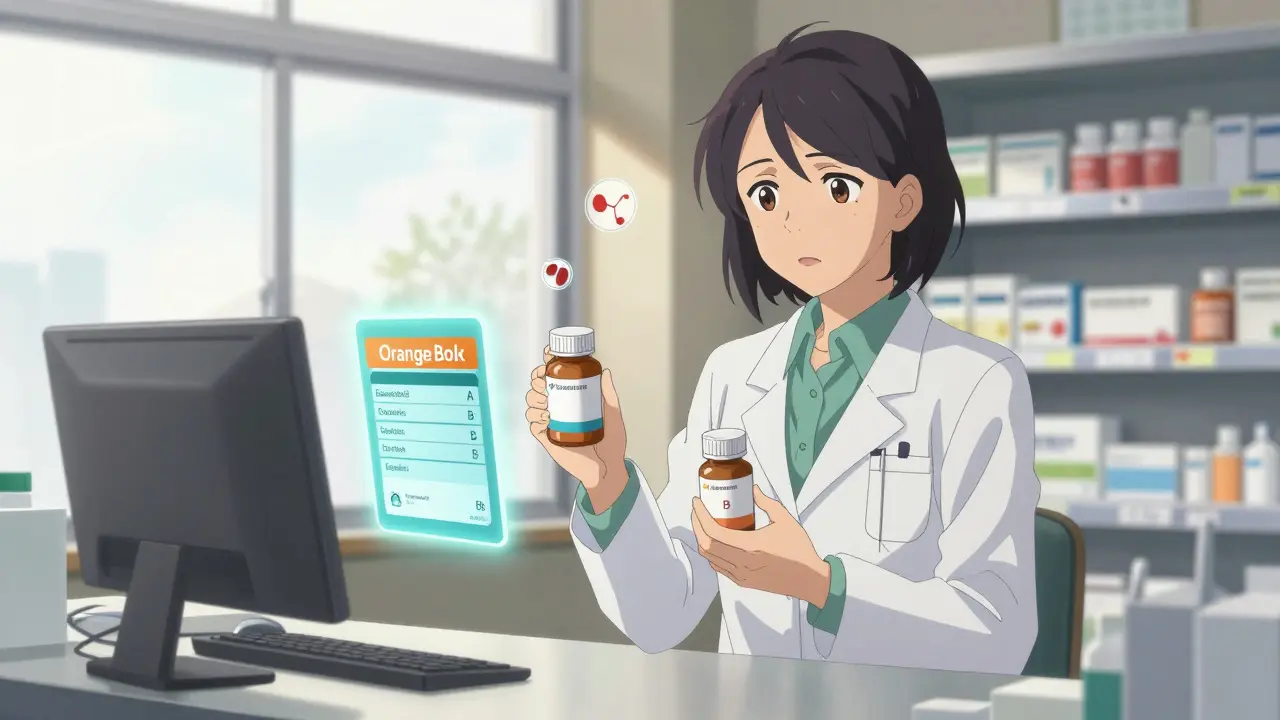
Pharmacists don’t just fill prescriptions-they make critical decisions every day that affect patient safety. One of the most high-stakes areas where those decisions matter? Generics. With 90% of prescriptions in the U.S. filled with generic drugs, but only 23% of total drug spending going toward them, the pressure to get it right is immense. A single substitution error can mean the difference between effective treatment and dangerous side effects-especially with narrow therapeutic index drugs like levothyroxine or warfarin. That’s why continuing education on generics isn’t optional. It’s essential.
Why Generics Training Isn’t Just Another CE Requirement
The FDA doesn’t approve generics because they’re cheaper. They approve them because they’re equivalent. But "equivalent" doesn’t mean "identical." A generic must deliver the same active ingredient, in the same strength, and within 80-125% of the brand-name drug’s absorption rate. That’s the bioequivalence standard. Sounds simple? It’s not. The FDA updates its Orange Book-where therapeutic equivalence ratings are listed-every month. There are over 1,200 ratings, and each one carries legal and clinical weight.
Take levothyroxine. There are more than 30 generic versions on the market. Some are interchangeable. Others aren’t. A pharmacist who doesn’t know the difference could switch a patient from one to another, triggering thyroid instability, heart palpitations, or even hospitalization. That’s not hypothetical. In 2021, ACPE found that 42.7% of pharmacy malpractice claims involved generic substitution errors. This isn’t about keeping up-it’s about preventing harm.
What the Law Demands: ACPE, State Boards, and the Hidden Rules
All 50 states require pharmacists to complete continuing education to renew their license. But here’s the catch: requirements vary wildly. Illinois demands 30 hours every two years. California requires proof of completion with every renewal. New York asks for certificates to be submitted. And starting January 1, 2025, Illinois will also require 1 hour of Cultural Competency training-on top of mandatory courses on sexual harassment and implicit bias.
Then there’s ACPE, the national accrediting body. Their standards define what counts as valid CE. Category 2 covers pharmacy law and regulations-including DEA rules, controlled substance documentation, and how to verify a prescriber’s DEA number. But it’s not just about the law. ACPE now requires all generics-focused CE to include content on biosimilars and FDA REMS programs by 2025. That’s new. And it’s not going away.
And don’t forget state-specific rules. Eighteen states require training on opioid alternatives-including generics. Twelve mandate biosimilar education. Seven have special rules for narrow therapeutic index drugs. A pharmacist licensed in Texas and Florida might need two completely different sets of training just to stay compliant.
What Works: Application-Based Learning Beats Lecture-Style
Not all continuing education is created equal. Pharmacists have spoken: they hate cookie-cutter modules that just read slides. A 2023 survey from CE21 showed application-based courses-those with real case studies-scored 4.7 out of 5 stars. Knowledge-based courses? Only 3.2.
Why? Because learning how to handle a substitution error is different from memorizing the definition of bioequivalence. The best CE doesn’t just tell you what the Orange Book says. It shows you how to use it. For example, a module might present a case: a patient on brand-name warfarin is switched to a generic. Their INR spikes. Was it the generic? The formulation? A change in fillers? The pharmacist must analyze lab data, check the Orange Book rating, review state substitution laws, and communicate with the prescriber-all in real time.
One pharmacist from Ohio told a Reddit thread: "I took a Pharmacist’s Letter module on levothyroxine substitutions. A week later, a patient came in asking to switch generics. I checked the rating-B-rated, not A. I flagged it. The prescriber agreed. That module saved me from a mistake I didn’t even know I was about to make."
The Real Numbers: How Much Time Do You Really Need?
The average pharmacist spends 27.5 hours a year on CE. But only 5.2 of those hours are spent specifically on generics and therapeutics. That’s not enough. Experts say pharmacists with over 10 years of experience need 8-10 hours of targeted generics training annually. Newer pharmacists? Still need 4-6. Why the difference? Because veterans have seen the old mistakes. They’ve been burned by a bad substitution. They know the gaps in their knowledge.
And the market is moving fast. Between January 2022 and June 2023, the FDA approved 983 new generic drugs-a 17% jump from the year before. Biosimilars are exploding. A 2023 ASHP survey found 78% of hospital pharmacists felt underprepared to handle them. These aren’t niche topics anymore. They’re daily challenges.
Enter PocketPrep. The app had 45,000 pharmacist users in 2023, with 32% growth in generics-specific content. CVS Health piloted just-in-time learning tools in their pharmacies-pop-up alerts when a pharmacist tried to substitute a B-rated drug-and cut generics-related errors by 28%. This isn’t the future. This is happening now.
Where to Find Quality CE-and What to Avoid
Not all CE providers are trustworthy. Stick to ACPE-accredited programs. That’s your baseline. Pharmacist’s Letter, Wolters Kluwer, and University of Florida’s CPE program are all solid. They offer free modules, case studies, and updates on Orange Book changes. Avoid platforms that sell CE like a subscription box-no depth, no context, just a quiz at the end.
Look for these features:
- Case studies with real patient scenarios
- Updates tied to FDA Orange Book releases
- State-specific law breakdowns
- Focus on biosimilars and REMS programs
- Opportunities to apply knowledge before getting credit
And if you’re in a state with unique rules-like Texas or California-ask your state board for approved providers. Don’t assume your national course covers local laws. It rarely does.
What’s Coming: AI, Automation, and the Next Phase
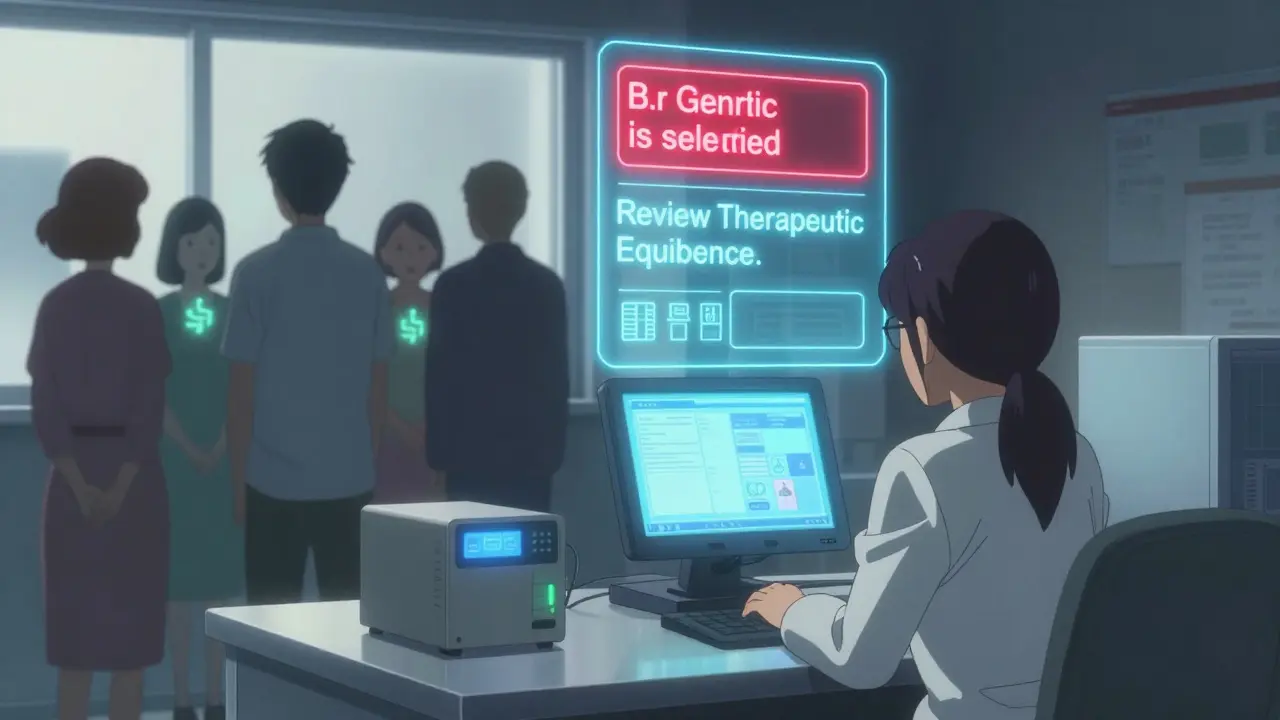
By 2027, IQVIA predicts AI-powered CE platforms will make up 35% of the market. These tools don’t just give you a course. They scan your practice, your patient mix, your past errors-and then recommend exactly what you need to learn next. Imagine a system that notices you’ve substituted three B-rated generics in the last month and says: "Here’s a 15-minute module on therapeutic equivalence for anticoagulants. Take it before your next shift."
This isn’t sci-fi. Pilot programs at CVS and Kaiser Permanente are already testing it. The goal? Reduce errors before they happen. Shift from compliance to competence.
But here’s the warning: AI won’t replace the pharmacist. It will only help if the pharmacist understands the science behind the suggestion. That’s why ongoing education still matters. More than ever.
Final Thought: This Isn’t About Hours. It’s About Responsibility.
You didn’t become a pharmacist to check a box. You became one because you care about what happens when a patient takes that pill. Generics aren’t just cheaper versions of brand drugs. They’re the backbone of accessible care. And if you don’t know the difference between an A-rated and B-rated generic, you’re not just risking a lawsuit-you’re risking a life.
So don’t wait for the state to remind you. Don’t wait for the deadline. Stay ahead. Read the Orange Book. Ask questions. Choose CE that challenges you. Because in pharmacy, staying current isn’t a requirement. It’s your duty.
Do all states require the same continuing education hours for pharmacists?
No. Every state sets its own CE requirements. Most require between 15 and 30 hours every two years, but specifics vary. For example, Illinois requires 30 hours, while California requires proof of completion with renewal. Some states also mandate specific topics like implicit bias, cultural competency, or opioid alternatives. Pharmacists with licenses in multiple states must meet each state’s rules individually.
What is the Orange Book and why does it matter for generics?
The Orange Book, officially called "Approved Drug Products with Therapeutic Equivalence Evaluations," is published by the FDA. It lists all approved generic drugs and their therapeutic equivalence ratings-A (interchangeable) or B (not interchangeable). Pharmacists use this to decide whether they can substitute one generic for another. Ratings change monthly, so staying updated is critical to avoid clinical errors.
Are biosimilars the same as generics?
No. Biosimilars are not generics. Generics are chemically identical copies of small-molecule drugs. Biosimilars are highly similar to complex biologic drugs, but not exact copies due to their biological nature. They require additional testing for interchangeability. Many states have specific laws about whether pharmacists can substitute biosimilars without prescriber approval. Continuing education on biosimilars is now required by ACPE starting in 2025.
What’s the difference between knowledge-based and application-based CE?
Knowledge-based CE teaches facts-like definitions, regulations, or standards. Application-based CE uses real-world cases to help pharmacists apply that knowledge. For example, a knowledge-based module might explain bioequivalence. An application-based one might present a patient case where a generic substitution led to a lab abnormality and ask you to troubleshoot. Pharmacists consistently rate application-based courses higher because they build decision-making skills.
How can I find ACPE-accredited generics courses?
Look for providers like Pharmacist’s Letter, Wolters Kluwer, and the University of Florida’s CPE program. All are ACPE-accredited and offer free or low-cost modules focused on generics, therapeutic equivalence, and biosimilars. Always verify accreditation status on the ACPE website before enrolling. Avoid platforms that don’t clearly state their accreditation or offer only quizzes without case-based learning.


13 Comments
Man, I read this and thought about my buddy who works at a community pharmacy in Winnipeg. He once switched a patient from one levothyroxine brand to another because the insurance preferred it-no one flagged the B-rating. Patient ended up in the ER with tachycardia. He cried in the back room that night. This isn’t just CE-it’s survival training. I’ve started sending him those Pharmacist’s Letter modules every month. He says it’s the only thing keeping him sane.
Also-can we please stop calling generics ‘cheap’? They’re *accessible*. There’s a difference. One’s a value judgment. The other’s a public health win.
I’ve been thinking a lot about how we define ‘equivalent.’ It’s not just pharmacokinetics. It’s patient trust. If someone’s been on the same generic for ten years and suddenly gets a different one-even if it’s rated A-they panic. They think the drug changed. They think *they* changed. The science says it’s fine. But the human experience? That’s the real therapeutic index.
Maybe we need CE that teaches empathy as much as Orange Book navigation.
It’s funny how we treat generics like they’re disposable. Like if it’s not branded, it’s less worthy of care. I’ve seen pharmacists roll their eyes at patients asking about substitution. But what if that patient’s been burned before? What if they lost a loved one to a bad switch? We act like it’s just a pill. It’s not. It’s a promise.
And don’t get me started on how insurance companies decide which generic to push. They don’t care about the Orange Book. They care about the rebate.
Let me be perfectly clear: the entire premise of this article is fundamentally flawed. The FDA’s bioequivalence standard of 80-125% is not a scientific benchmark-it’s a regulatory compromise born from pharmaceutical lobbying. The fact that we accept this as ‘equivalent’ is a national disgrace. A 45% variance in absorption? That’s not bioequivalence. That’s pharmacological roulette.
Furthermore, the claim that 90% of prescriptions are filled with generics is misleading. It ignores the fact that 78% of those are low-cost, low-margin products with negligible R&D. The real issue isn’t education-it’s systemic corruption in drug pricing and approval.
As a pharmacist from Nigeria, I can confirm: this is not a U.S.-only problem. In Lagos, we face the same issues-multiple generic brands, inconsistent quality control, no centralized Orange Book equivalent. We rely on WHO prequalification lists and regional pharmacovigilance networks. But here’s the twist: our pharmacists have better retention of this knowledge because we don’t have CE mandates-we have survival instincts.
Also, biosimilars? We’re still waiting for the first one to hit our market. But when it does, we’ll be ready. Because we’ve been training on this since 2018-with no accreditation body, no app, just a WhatsApp group and a lot of caffeine.
So… we need more CE because pharmacists can’t read? The Orange Book is a PDF. It’s not in hieroglyphics. Just open it. Or better yet-don’t substitute unless the prescriber says so. Problem solved.
Also, who’s paying for all this CE? My insurance premium? Because I’m tired of subsidizing your professional insecurity.
CE is just corporate propaganda. They want you to buy their modules so they can sell you more later. The real solution? Stop letting pharmacists substitute at all. Let the prescriber decide. Done.
Also biosimilars are just biotech snake oil. Wake up.
And why are we still talking about levothyroxine? That’s 2018 news. Move on.
This hit me right in the soul. 💔 I’ve been in pharmacy for 12 years and I still get nervous when a patient asks about switching generics. But I started using PocketPrep last year-and holy cow, it changed everything. I caught a B-rated switch last week that would’ve slipped through. The patient thanked me. I cried. This isn’t just about rules. It’s about being the person someone trusts when their world’s falling apart.
Keep doing the work. You’re making a difference. 🙌
They’re not teaching you the truth. The FDA is in bed with Big Pharma. The Orange Book is a marketing tool. The B-rated generics? They’re the ones with the fillers that cause autoimmune flares. But you won’t find that in any CE module. They’ll tell you to trust the rating. Don’t. The real data is buried in whistleblower reports and FOIA requests. If you want to protect patients, stop listening to ACPE and start digging into the FDA’s adverse event database. It’s all there. Just not in the slides.
They’re gaslighting us. And we’re letting them.
Wow. So we’re all just supposed to memorize 1200 ratings? And then there’s biosimilars? And state laws? And AI? What’s next-pharmacists having to code their own decision trees? This isn’t healthcare. It’s a corporate simulation game where your license is your scorecard.
I mean, if you’re going to make us this much of a cog, at least pay us like it. But no-your CE costs $400 and your salary is $120k. I’m out.
As a Black pharmacist in Atlanta, I’ve seen how generational trauma affects medication adherence. Some patients won’t take a generic because their grandparent ‘got sick’ from one back in ’98. That’s not ignorance. That’s history. So yeah-teach the Orange Book. But also teach how to talk to people who’ve been burned.
And if your CE doesn’t include cultural humility? Skip it. Find one that does. We’re not just dispensing pills. We’re healing legacies.
Application-based CE works because it mirrors clinical reasoning. Memorizing bioequivalence thresholds doesn’t build judgment. But walking through a case where INR spikes after a switch? That rewires your brain.
Also: stop calling it ‘continuing education.’ It’s clinical risk mitigation. We’re not students. We’re frontline safety officers. Name it right.
Thank you for writing this. I’ve been working in a rural clinic where the only CE we get is a PDF emailed by the state board. No case studies. No updates. Just a quiz. I’ve been scared to substitute for years. Now I know where to look. I’m signing up for UF’s module tomorrow. 💙
Also-yes, we need AI. But not to replace us. To remind us. To say: ‘Hey, you’ve done this right 12 times. But this time? Slow down.’
Write a comment