
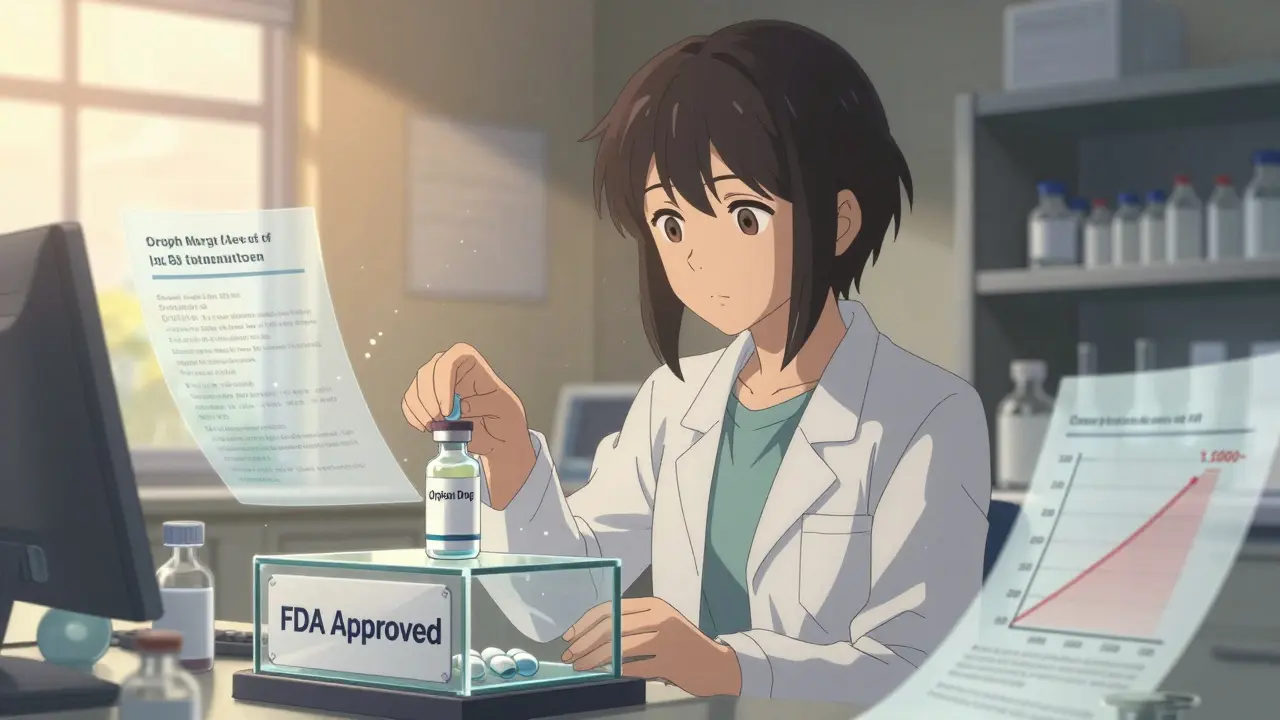
Before 1983, fewer than 40 treatments existed for rare diseases in the U.S. Today, more than 1,000 are approved. What changed? The orphan drug exclusivity system. It didn’t just help patients-it rewrote the rules of pharmaceutical economics.
Why orphan drug exclusivity exists
Developing a drug for a disease that affects fewer than 200,000 people in the U.S. used to be a financial dead end. Companies couldn’t recoup the $150 million or more it often costs to bring a drug to market. Why spend millions on a treatment for just a few thousand patients when you could target millions with a common condition? The Orphan Drug Act of 1983 changed that. Signed by President Ronald Reagan, the law gave companies a powerful incentive: seven years of exclusive rights to sell a drug for a specific rare disease. No other company could get FDA approval for the same drug treating the same condition during that time-unless they proved their version was clinically superior. This wasn’t charity. It was a business trigger. Suddenly, rare diseases became viable markets. The result? From just 38 treatments in the decade before the law, we now have over 1,000 approved orphan drugs. That’s a 25-fold increase.How orphan exclusivity actually works
Orphan exclusivity isn’t a patent. It’s a separate legal shield. Patents protect the chemical structure or method of use. Orphan exclusivity protects the drug for one specific disease indication. Here’s how it plays out in practice:- A company applies for orphan designation with the FDA during early clinical trials-usually Phase 1 or 2.
- If the disease affects fewer than 200,000 Americans, the FDA grants the designation.
- When the drug is finally approved, the seven-year clock starts.
- During those seven years, no other company can get approval for the same drug to treat the same disease.
What doesn’t count as a violation
Orphan exclusivity doesn’t block everything. It’s narrow. If a drug is approved for both an orphan and a common condition, generics can still enter the market for the common use. For example, a drug might be approved for a rare nerve disorder (orphan) and also for chronic back pain (common). Once the orphan exclusivity expires, generics can sell the same pill for back pain-even if it’s still protected for the rare disease. The same goes for different forms of the drug. If Company A gets exclusivity for an oral tablet for a rare blood disorder, Company B can still get approval for an injectable version of the same molecule for the same disease-if they prove it’s better. But proving “clinical superiority” is extremely hard. The FDA requires a “substantial therapeutic improvement,” like better survival rates, fewer side effects, or improved quality of life. Since 1983, only three cases have met that bar.
How it compares to Europe
The U.S. gives seven years. The European Union gives ten. That’s a big difference. The EU also allows a two-year extension if the company studies the drug in children. And if a drug turns out to be wildly profitable-selling more than expected-the EU can cut the exclusivity from ten years down to six. The U.S. has no such adjustments. Once you get the seven years, you get all of it. No cuts. No extensions. Just a fixed, no-exceptions clock. This has led to some tension. U.S. companies often push to launch first in Europe to lock in the longer protection. Meanwhile, European regulators are now considering reducing the exclusivity period to eight years for drugs that earn more than expected.Who benefits-and who doesn’t
Patients with rare diseases are the obvious winners. Before orphan exclusivity, many had no treatment at all. Now, conditions once considered untreatable have multiple approved therapies. Biotech startups also benefit. Without this protection, they’d never get funding. Investors won’t risk $100 million on a drug for 5,000 patients unless they know they’ll have a monopoly for years. But critics point to abuses. Some big pharma companies have used orphan designations to extend profits on drugs already making billions. Humira, for example, received multiple orphan labels for rare conditions-even though its main market was rheumatoid arthritis, affecting millions. A 2022 survey by the National Organization for Rare Disorders found that 78% of patient groups believe orphan exclusivity is essential. But 42% worry about the prices that come with it. Some orphan drugs cost over $500,000 per year.
What’s changing now
The FDA is tightening the rules. In May 2023, they released new draft guidance to clarify what counts as the “same drug.” This came after controversial approvals like Ruzurgi, where the same molecule was approved for a different rare disease, raising questions about whether exclusivity should extend across indications. The number of orphan designations has exploded-from 127 in 2010 to 434 in 2022. That’s good news for innovation, but it’s also raising red flags about whether the system is being stretched too thin. Industry analysts predict that by 2027, over 70% of new FDA-approved drugs will have orphan status. Oncology leads the pack, making up nearly half of all orphan approvals. But neurology, hematology, and metabolism are growing fast.What sponsors need to do to win
If you’re a company trying to get orphan exclusivity, timing matters. Apply as soon as you know your drug targets a rare disease. The FDA reviews applications in about 90 days-and approves 95% of those that meet the criteria. You’ll need solid data showing the disease affects fewer than 200,000 people in the U.S. That means working with patient registries, epidemiologists, and rare disease advocacy groups. Also, don’t wait until the end of clinical trials. The clock for exclusivity starts at approval, not at designation. The sooner you get the designation, the sooner you can start building your commercial plan around the seven-year window. And remember: exclusivity doesn’t replace patents. Use both. Orphan exclusivity protects the indication. Patents protect the molecule. Together, they create a nearly unbreakable barrier.Is the system broken?
No-but it’s under pressure. It works exactly as designed: it turns unprofitable markets into profitable ones. More than 200,000 patients in the U.S. now have access to treatments that didn’t exist 40 years ago. But the system was built for drugs that cost $10 million to develop and sold to 5,000 people. Now, some orphan drugs cost $1 billion to develop and sell to 50,000 people. The pricing model is out of sync with the reality. The real question isn’t whether orphan exclusivity should exist. It’s whether the rules need updating to prevent abuse while still protecting innovation. For now, the system stays. And for patients with rare diseases, that’s still the best chance they have.What is orphan drug exclusivity?
Orphan drug exclusivity is a seven-year period of market protection granted by the FDA to a drug approved for a rare disease affecting fewer than 200,000 people in the U.S. During this time, no other company can get approval for the same drug to treat the same condition, unless they prove their version is clinically superior.
How is orphan exclusivity different from a patent?
A patent protects the chemical structure or how the drug is made or used. Orphan exclusivity protects only the specific rare disease indication the drug is approved for. You can have both, but they work differently. Patents can be challenged in court; orphan exclusivity can’t be bypassed unless clinical superiority is proven.
Can multiple companies get orphan designation for the same drug?
Yes. Many companies can apply for orphan designation for the same drug and disease. But only the first one to get FDA approval gets the seven-year exclusivity. It’s a race-everyone lines up, but only the winner gets the reward.
Why do some orphan drugs cost so much?
Developing a drug for a small patient group still costs hundreds of millions. With no competition for seven years, companies set high prices to recover costs and make a return. While this drives innovation, it also leads to pricing debates-especially when the same drug is used for larger, non-orphan populations.
Does orphan exclusivity apply outside the U.S.?
No. Each country has its own rules. The U.S. offers seven years. The European Union offers ten, with possible extensions for pediatric studies. Other countries may have no formal orphan exclusivity system at all.
Can generics enter the market after exclusivity ends?
Yes. After the seven-year period, other companies can apply to sell the same drug for the same rare disease. But if the drug is still under patent, generics can’t enter until the patent expires. Many orphan drugs rely on both protections.
What happens if a company gets orphan designation but never gets approval?
Nothing. Orphan designation alone doesn’t grant any market protection. Only FDA approval triggers the seven-year exclusivity. Many companies apply for designation as a strategic move, but if the drug fails in trials, the designation expires without consequence.
How many orphan drugs have been approved since 1983?
As of 2023, the FDA has approved 1,085 orphan drugs since the Orphan Drug Act passed in 1983. Over 6,500 orphan designations have been granted, but only about 16% of those led to approved drugs.




13 Comments
Wow this is insane 😍 I had no idea so many rare disease drugs even existed before 1983. This law literally saved lives, period.
I’ve got a cousin with a rare metabolic disorder - her drug costs $400K/year, but without it she wouldn’t be alive. I get the pricing rage, but I also know what it’s like to watch someone fade because no one cared enough to make a treatment. This system? It’s messy, but it’s the only thing keeping hope alive for families like mine.
People don’t realize how much R&D goes into these drugs. For a disease affecting 5,000 people, you’re not just paying for the pill - you’re paying for 12 years of failed trials, specialized labs, and tiny patient cohorts. The $500K price tag? It’s not greed. It’s math. And honestly? If we kill orphan exclusivity, we kill the next generation of treatments before they even start.
Let’s be real - this isn’t about patients. It’s about pharma’s latest loophole. Humira got orphan status for *six* different ultra-rare conditions? That’s not innovation, that’s regulatory arbitrage. The FDA’s letting Big Pharma turn rare disease into a cash cow while real patients go bankrupt. And now they want to extend it? Please.
As someone who spent a decade in biotech regulatory affairs, I can tell you this system was designed with noble intent - but like all things, it’s been gamed. The 95% approval rate for orphan designations? That’s not because the science is easy - it’s because the bar for ‘rare’ is laughably low. A disease affecting 199,000 people? That’s not rare. That’s common enough to be profitable. And now we have 400+ orphan designations a year? The system is being flooded with opportunistic filings. The FDA needs to tighten ‘same drug’ definitions - not just for legal clarity, but for moral integrity.
Yes, patients benefit. But not all patients. The ones with truly ultra-rare conditions - under 1,000 patients - still get sidelined because no company wants to chase them. Meanwhile, companies are cherry-picking conditions that are just below the 200K threshold and then expanding use to massive populations. It’s not a bug. It’s a feature of the current design.
And don’t get me started on the ‘clinical superiority’ standard. Only three cases in 40 years? That’s not because no one’s trying - it’s because the FDA demands near-miraculous results. Why not allow bioequivalence with price caps? Or tiered exclusivity based on R&D cost? We’re clinging to a 1983 model in a 2024 world where gene therapies cost $2M per patient.
There’s a middle ground. We can protect innovation without enabling profiteering. But we won’t find it if we keep pretending this system is sacred. It’s not. It’s a policy. And policies evolve. Or they become relics.
Y’all are missing the point. The fact that we even HAVE 1,000+ treatments for diseases that used to mean certain death? That’s a miracle. Yes, prices are wild. But if you cut exclusivity, the next kid with a rare mutation won’t even get a shot. We need to fix pricing - not the incentive. Tax credits for low-income patients, mandatory price transparency, international pooling - those are the solutions. Not gutting the system that gave us hope.
So what? Big Pharma got rich. Patients got drugs. Everyone’s happy. Except the ones paying $500K/year. But hey, that’s capitalism. If you can’t afford it, don’t have kids with rare diseases. Problem solved.
I work with families who’ve waited 10+ years for a diagnosis - then another 5 to find a treatment. This system? It’s not perfect. But it’s the reason my friend’s daughter can walk now. The same drug that costs $450K/year? It’s the only thing keeping her alive. I don’t care if it’s ‘abused’ - I care that she’s here. Let’s fix the cost. Don’t take away the lifeline.
It’s fascinating how we’ve turned medical innovation into a zero-sum game. On one hand, we celebrate the fact that a child with a once-fatal condition now has a 90% survival rate. On the other, we vilify the company that made it possible because they charge $600K a year. But here’s the thing - if that company hadn’t been allowed to profit, the drug wouldn’t exist. Ever. Not even as a prototype. The tragedy isn’t the price - it’s that we’ve created a world where the only way to save a life is to let a corporation become a monopoly. We’re not debating policy. We’re debating whether we’re willing to pay the cost of compassion.
From India, I’ve seen how orphan drugs are completely inaccessible here. The U.S. system works for Americans, but globally? It’s a disaster. Why not link exclusivity to global access plans? If a company gets 7 years of monopoly, they must commit to supplying the drug in low-income countries at cost. Otherwise, the exclusivity is just privilege disguised as innovation.
Let me tell you about my sister. She got diagnosed with a rare neuro disorder at 22. No one had heard of it. No treatment. Then, in 2018, a drug came out - $380K/year. We sold our house. We took out loans. We cried every time the insurance denied it. But she’s alive. She’s teaching. She’s laughing. And I’ll never, ever say this system is broken - because it gave her back her life. The price? That’s a societal failure. Not the law’s.
From a pharmacoeconomics standpoint, the orphan exclusivity model is a classic example of a market failure correction via regulatory intervention. The positive externalities - reduced long-term care costs, increased productivity, and diminished caregiver burden - far outweigh the direct expenditure. The key insight is that the marginal cost of drug development is not linear across indications; the fixed costs are sunk, and the marginal cost for an additional rare indication is negligible. Hence, the 7-year exclusivity incentivizes the internalization of these externalities. However, the current expansion into oncology and neurology - where the patient pools are expanding due to better diagnostics - risks diluting the original intent. A dynamic exclusivity window, calibrated to prevalence trends and R&D cost elasticity, may be the next evolutionary step.
So you’re saying we should let kids die because the drug is too expensive? That’s your solution? You’re the reason I hate this country.
Write a comment