

You might be surprised to learn that the same pill costs vastly different amounts depending on where you buy it. In some places, generic drugs are the default choice, filling over 80% of prescriptions. In other nations, they are nearly impossible to find on a standard shelf. This isn't just about luck; it is about strict rules, manufacturing history, and how each country values medicine access. Understanding these differences helps you navigate your health choices better, especially when you travel.
Generic drugs are pharmaceutical products containing the same active ingredients as brand-name drugs but typically sold at lower prices after patent expiration. They form the backbone of affordable healthcare globally, yet their presence fluctuates wildly from nation to nation. While the concept sounds simple-copying a formula once the original patent expires-the reality involves complex international trade and varying safety nets.
Why Markets Vary So Much
The reason you see such a gap in availability comes down to policy decisions made decades ago. The modern system largely sprang from legislation like the U.S. Hatch-Waxman Act, which created a shortcut for approval. However, not every government adopted similar paths. Some countries prioritize cost-saving aggressively, forcing doctors to prescribe cheaper versions whenever possible. Others prioritize brand loyalty or reimbursement structures that favor original products.
This creates a patchwork landscape. For example, look at the United Kingdom. It leads industrialized nations with about 83% of prescriptions filled with generics. Just across the channel in Switzerland, that number drops precipitously to around 17%. That means Swiss patients are much more likely to pay full price for a brand version compared to their British neighbors. These aren't small statistical blips; they represent billions in healthcare spending and direct effects on patient wallets.
The Geography of Production
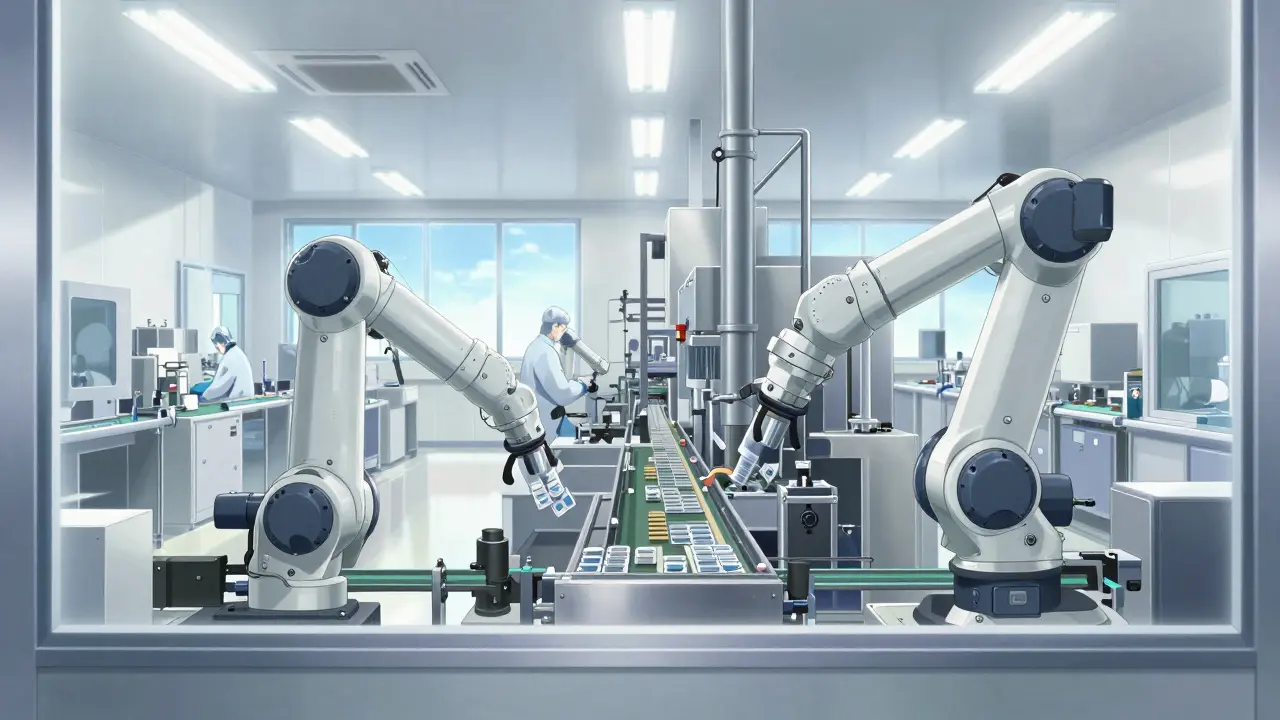
Where a pill is made dictates where it ends up. If you check the global supply chain, you will find that manufacturing is heavily concentrated in Asia. India alone produces roughly 20% of the world's generic drug volume. The United States gets about 40% of its imported generic supplies from Indian facilities. This dominance is supported by hundreds of FDA-approved plants there, making it hard for Western markets to decouple from Asian production.
China is rapidly catching up too. In 2010, they had a dozen approved sites. By 2023, that number jumped to over 180. This shift changes the dynamic of who controls the supply. If one region faces a shutdown or export ban, shortages can ripple through Europe and North America almost immediately. During the pandemic, temporary restrictions in India caused shortfalls in antibiotics and blood pressure meds in 22 other countries, highlighting how interconnected everything has become.
| Region/Country | Prescription Volume Share | Relative Pricing | Market Notes |
|---|---|---|---|
| United Kingdom | 83% | Low | High utilization, mandatory substitution policies |
| United States | 84% | High | High volume but higher absolute prices than EU |
| Switzerland | 17% | Very High | Patient preference favors brand names |
| Germany | 80% | Moderate | Strong physician push towards generics |
Safety and Quality Concerns
While low cost is great, does it mean lower quality? It depends on where you buy. Regulations act as a filter. The FDA requires generic manufacturers to prove bioequivalence, meaning the drug works in the body within 80% to 125% of the original brand product. The European Medicines Agency uses similar but not identical standards. Ideally, this ensures the medicine hits your bloodstream effectively.
However, audits tell a mixed story. Research from Ohio State University flagged that generics made in certain high-risk zones showed higher rates of severe side effects compared to domestic U.S. products. This was particularly true for older drugs where production margins are razor-thin. If you import medication online from unofficial sources, you bypass the inspection protocols that flag these issues before drugs reach the shelf.
It is worth noting that pre-announced inspections in foreign facilities create gaps. When inspectors know they are coming, factories prepare differently than during random unannounced visits. Experts suggest this difference in oversight allows lower-quality batches to slip through occasionally, even if the overall system remains robust.
Price Paradoxes
You might think high usage equals low prices, but the U.S. breaks that rule. Despite having the highest generic prescription volume, American prices remain significantly higher than in OECD nations. On average, drug costs there are nearly three times higher than in peer countries. This happens because the U.S. lacks centralized price negotiations. Insurers and pharmacies set prices independently, creating huge arbitrage opportunities.
For a traveler, this creates a confusing situation. You might leave home with a prescription, cross a border, and find your exact medication costs 60% less or 60% more nearby. Canada, Mexico, and parts of Europe all sit in different pricing tiers. This disparity drives parallel trade, where middlemen buy low in one country and sell high in another to profit off the difference.
The Role of Substitution Laws
How fast you get switched from a brand drug to a generic depends on local law. Some regions mandate immediate switching once a patent expires. In places with mandatory substitution, uptake climbs to 60% within a year. Where laws are optional, that process drags on for years. Germany and the Netherlands enforce aggressive switching, keeping costs down quickly. Italy and Switzerland rely more on doctor discretion, slowing down the transition.
This impacts competition. More competitors mean lower prices. In the U.S., about two-thirds of off-patent drugs have multiple makers fighting for sales. In Norway, that figure is lower. Competition drives the price per pill down, but it also introduces supply volatility. If a manufacturer exits the race due to thin margins, few remain, leading to shortages.

Biosimilars: The Next Wave
Genuine chemical copies are evolving. We are moving toward biosimilars-copies of complex biological medicines like insulin or cancer therapies. These save money too, dropping prices by half at launch. Yet, adoption lags behind standard tablets. Patients worry about interchangeability, and insurance hurdles delay uptake. By 2028, analysts project this segment will hit $60 billion, showing this is where the industry is focused next.
Can I take my prescription generic to another country?
It depends on the country. Many nations treat prescription drugs strictly controlled substances. Bringing meds across borders can be illegal or require special permits. Always check customs regulations before traveling with medication. Different salt forms exist abroad that might react poorly in your body.
Are foreign generic drugs safe?
Most major imports follow strict safety rules. However, quality issues can occur in facilities with lower inspection frequency. Buying from verified, licensed pharmacies reduces risk. Unverified online orders carry higher risks of receiving substandard products.
Why are generic prices lower in India?
Production costs are lower, and local regulations encourage affordability. India supplies a large share of global needs. Prices can average 63% lower than in European nations like Belgium for the same molecule.
What affects the speed of generic entry?
Patent lengths and "evergreening" tactics delay entry. Companies add minor formulation tweaks to extend protection. Regulatory harmony also matters; fragmented systems take longer to approve new contenders.
Will AI improve drug access?
Artificial intelligence could shorten development timelines significantly. Current projections suggest cutting review times from several years to under two. This may reduce global disparities faster, assuming regulations adapt.
Next Steps for Patients
If you are managing chronic conditions, stay aware of where your medicines come from. Check the label for the manufacturer location. Ask your pharmacist about therapeutic equivalence if you switch brands or makers. Understanding the landscape empowers you to spot shortages early and communicate better with providers when supply chains shift. While we cannot control global politics, knowing the system helps you navigate it safely.



8 Comments
The discrepancy between UK prescription rates and Swiss preferences illustrates a fundamental failure in global regulatory harmonization. We see a panoply of policies where one side mandates substitution while the other prioritizes patient autonomy regardless of fiscal impact. This creates a cacophony of supply chains that ultimately hurts the consumer through price volatility rather than access barriers. Manufacturers are essentially gaming regional weaknesses to maintain margins on molecules that should be commoditized by now. It is frustrating that basic healthcare economics remain so opaque to the general public when the data is right there.
big pharma controls the narrative to keep prices high while ignoring supply risks
it is nice to see more transparency on where medications come from now
hoping that ai helps speed things up for everyone soon
It is actually really reassuring to see someone break down the supply chain logistics so clearly! 😊 I often worry about my own prescriptions when I travel to different regions. The FDA standards are definitely strict! 👀 However! The international variance is the real kicker! 🚨 Many people forget about bioequivalence margins completely. That 80% to 125% window sounds precise but leaves gaps. ⚠️ We have to trust the oversight committees involved! 🤝 They generally do a fantastic job protecting public health overall! ❤️ Plus! The manufacturing shifts towards Asia make sense economically! 📈 Labor costs drive efficiency up significantly there. 🌏 Quality control is the main hurdle we face now. 🔍 Random inspections help catch the bad actors quickly enough! 🛡️ We cannot rely solely on pre-announced factory visits though! 🚫 That creates too much opportunity for manipulation. 🎭 I am optimistic about future regulatory harmony efforts globally! ✨ AI might fix these gaps soon! 🤖💊
There is definitely merit in understanding how national policies shape local availability outcomes. The Swiss preference for brand names is a clear outlier compared to the German approach. It highlights how deeply cultural attitudes toward medicine influence healthcare spending patterns. Neither model is inherently superior though as both function within their specific systems. We simply have to respect the choices made by different sovereign governments. Balance is necessary when comparing these diverse economic landscapes. Understanding the context prevents unnecessary alarmism during travel planning.
That is such a fair way to look at these complex differences 😊 Everyone worries about their health security honestly. Knowing the basics helps reduce anxiety about where pills come from 🌍. It is important to validate sources before traveling with meds 🧳. We can all support better transparency together 🤝. Staying informed empowers us to make smarter choices daily 💪.
it genuinely terrifies me that a simple blood pressure pill could vanish overnight
we rely entirely on foreign factories for our survival
the fragility of the system is quite shocking honestly
i dread thinking about a major export ban scenario
We need to examine the resilience metrics embedded in these supply networks. The redundancy built into Indian and Chinese production sites offers a buffer against single-point failures. However reliance on specific geographic clusters introduces latency in crisis response times. Diversification strategies are currently lacking in most national formularies. Stakeholders should invest in multi-sourcing protocols for critical therapeutics. The regulatory framework needs to evolve beyond reactive measures. Proactive risk modeling is essential for future stability.
Write a comment