
Imagine spending years faithfully taking your prescription for weak bones, only to find out your daily vitamin routine is silently canceling it out. It sounds like a plot twist from a medical drama, but for millions of people managing osteoporosis a condition that makes bones porous and fragile, increasing the risk of fractures, this is a very real danger. The culprit isn't usually a new disease or a change in diet-it’s often a simple supplement sitting on your nightstand: magnesium.
Magnesium is fantastic for your muscles, sleep, and heart. But when you take it at the same time as certain bone-building drugs, specifically bisphosphonates a class of drugs used to treat osteoporosis by slowing down bone loss, they don’t just ignore each other. They chemically bind together in your stomach, creating a clump that your body cannot absorb. You swallow both pills, but neither does its job. This article breaks down exactly why this happens, which medications are involved, and the strict timing rules you need to follow to keep your bones safe.
The Chemistry Behind the Clash
To understand why timing matters so much, we have to look at what happens inside your digestive system. Bisphosphonates, such as alendronate (Fosamax), risedronate (Actonel), and ibandronate (Boniva), are notoriously difficult for the body to absorb even under perfect conditions. Under optimal circumstances-meaning an empty stomach with plenty of water-your body absorbs only about 0.6% to 12% of the dose. That tiny percentage is enough to work wonders for bone density if it actually gets into your bloodstream.
Magnesium changes the game entirely. When magnesium ions meet bisphosphonate molecules in the gastrointestinal tract, they undergo a process called chelation. Think of it like two magnets snapping together. The magnesium binds to the phosphonate groups, forming an insoluble complex. This new compound is too large and heavy to pass through the intestinal wall. Instead of entering your system to protect your bones, it passes right through you, unused. Studies indicate that co-administering these substances can reduce the absorption of bisphosphonates by 40% to 60%. In practical terms, this means you might be taking half the effective dose without realizing it, leaving your bones vulnerable to further deterioration.
Which Medications Are Involved?
Not all osteoporosis treatments are affected by magnesium. The interaction primarily concerns oral bisphosphonates. If you are taking one of the following, you must be vigilant about timing:
- Alendronate (brand names include Fosamax and Binosto)
- Risedronate (brand names include Actonel and Atelvia)
- Ibandronate (brand name Boniva)
If you receive your treatment via injection, such as zoledronic acid (Reclast) or denosumab (Prolia), this specific interaction does not apply because these drugs bypass the digestive system entirely. However, for the vast majority of patients on daily, weekly, or monthly oral regimens, the risk is significant. Even non-prescription sources of magnesium can trigger this reaction. This includes over-the-counter antacids like Maalox or Mylanta, laxatives like Milk of Magnesia, and standard magnesium supplements found in health food stores. Many people assume "natural" means harmless in combination with prescriptions, but chemistry doesn't care about marketing labels.
The Golden Rule: The Two-Hour Window
So, how do you fix this? The solution is temporal separation. The consensus among major health organizations, including the National Institutes of Health (NIH) and the FDA, is clear: you must separate the intake of oral bisphosphonates and magnesium by at least two hours. This window allows your stomach to empty the first medication before introducing the second, preventing them from meeting and binding.
But there’s a catch. Bisphosphonates have their own strict set of rules. They must be taken on an empty stomach with plain water (not coffee, juice, or mineral water), and you must remain upright for at least 30 minutes afterward to prevent esophageal irritation. This creates a tight scheduling puzzle. Here is the most effective protocol recommended by geriatric specialists:
- Wake up and take your bisphosphonate immediately. Use 8 ounces of plain tap water. Do not eat or drink anything else yet.
- Wait 30 minutes. Stay upright. You can check your phone or read, but do not lie down. After 30 minutes, you may eat breakfast.
- Wait another 90 minutes. This brings you to the full two-hour mark since taking the bisphosphonate.
- Take your magnesium supplement. You can now take your magnesium, along with any other vitamins or minerals like calcium or iron.
This schedule ensures that the bisphosphonate has moved out of the stomach and into the small intestine where it can be absorbed, while the magnesium stays in the upper digestive tract initially, missing the bus so to speak. If you prefer taking magnesium at night for sleep benefits, you can reverse the order: take magnesium in the evening, wait two hours, then wake up early to take your bisphosphonate. Just ensure the two-hour gap is always respected.
| Medication Type | Common Brand Names | Affected by Magnesium? | Required Separation Time |
|---|---|---|---|
| Alendronate | Fosamax, Binosto | Yes | At least 2 hours |
| Risedronate | Actonel, Atelvia | Yes | At least 2 hours |
| Ibandronate | Boniva | Yes | At least 2 hours |
| Zoledronic Acid | Reclast | No (IV Injection) | N/A |
| Denosumab | Prolia | No (Injection) | N/A |

Hidden Sources of Magnesium
One of the biggest challenges patients face is identifying all sources of magnesium. It’s not just the bottle labeled "Magnesium Citrate." Many common household items contain high levels of magnesium that can interfere with your osteoporosis medication.
Antacids are the most frequent offender. Products containing magnesium hydroxide or magnesium carbonate are widely used for heartburn and indigestion. A single dose of Milk of Magnesia contains approximately 800mg of magnesium, which is well above the typical supplemental dose. If you take an antacid for morning heartburn and then take your bisphosphonate, you’ve likely neutralized your bone medication. Similarly, some laxatives use magnesium as an active ingredient. Always check the "Active Ingredients" list on any over-the-counter remedy. If you see "magnesium," treat it with the same caution as a dedicated supplement.
Even your water supply might play a role. Hard water, which is high in minerals, can contribute to your daily magnesium intake. While the amount is usually lower than in supplements, consistency matters. Some bottled waters, like San Pellegrino, have higher mineral content. If you are strictly adhering to the bisphosphonate protocol, stick to plain tap water or distilled water for the initial 30-minute window after taking your pill to ensure no unexpected minerals are present.
Real-World Consequences of Poor Timing
Why is this level of precision necessary? Because the stakes are high. Osteoporosis is often called a silent disease until a fracture occurs. A study published in the *Journal of Clinical Endocrinology & Metabolism* followed patients over 24 months and found that those who properly separated their magnesium and bisphosphonate doses achieved an 8.2% greater improvement in lumbar spine bone mineral density compared to those who did not. That difference is substantial. It’s the difference between stabilizing bone loss and continuing to weaken.
Failure to adhere to these timing protocols is cited by experts as a leading cause of treatment failure. Dr. Felicia Cosman, clinical director of the National Osteoporosis Foundation, has noted that non-adherence to dosing protocols is the single largest preventable cause of treatment failure in osteoporosis management. When patients report that their medication "isn't working," pharmacists often discover that they are taking multivitamins or magnesium gummies at the same time as their prescription. The result? Accelerated bone density loss and an increased risk of hip, wrist, and vertebral fractures.
Practical Tips for Staying on Track
Managing multiple medications with strict timing requirements can feel overwhelming, especially for older adults who may be managing five or more drugs daily. Here are some practical strategies to make adherence easier:
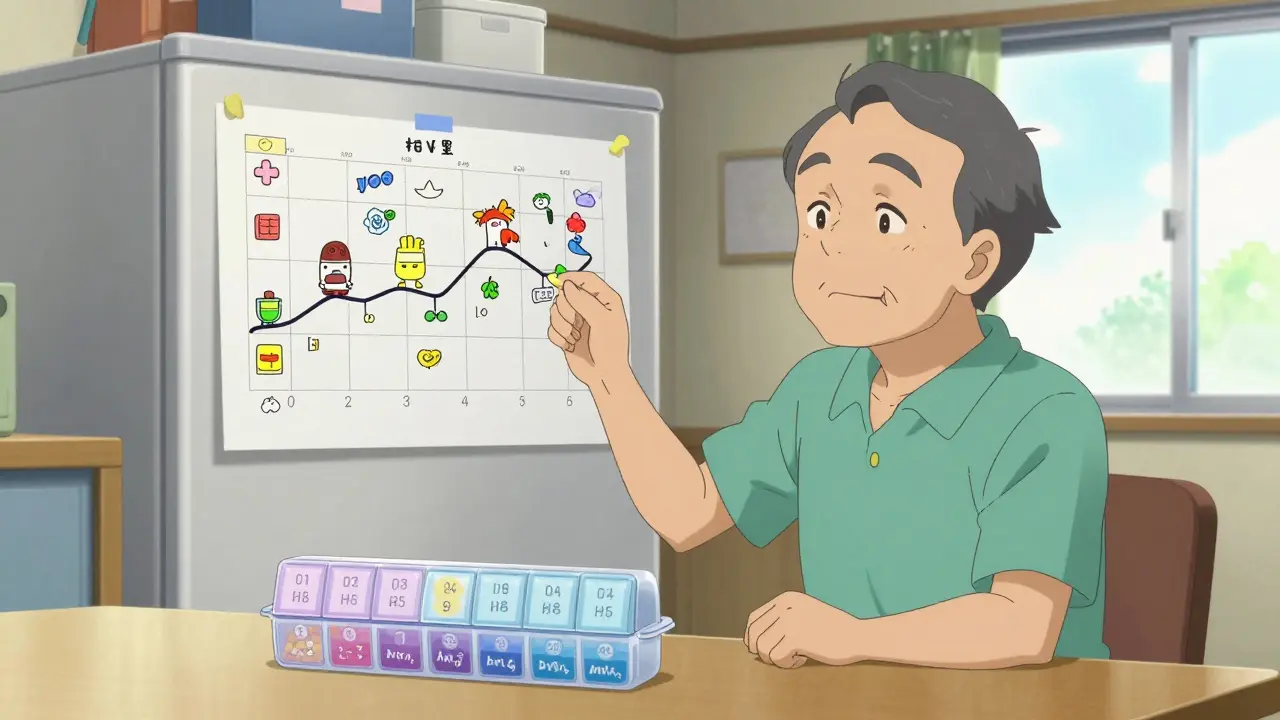
- Use a specialized pill organizer. Standard AM/PM boxes aren't enough. Look for organizers with four compartments per day (e.g., Early Morning, Late Morning, Afternoon, Evening). Label them clearly with times, not just meals.
- Create a visual timeline. Print out a simple clock diagram showing when to take each medication. Place it on your bathroom mirror or refrigerator. Visual cues are often more effective than written lists.
- Leverage technology. Set alarms on your phone for the critical windows. One alarm for "Take Bone Pill," another for "Can Eat Breakfast," and a third for "Safe to Take Magnesium." Smart pill bottles with Bluetooth reminders have shown high success rates in recent pilot studies.
- Talk to your pharmacist. Pharmacists are trained to spot these interactions. Ask them to review your entire medication list, including OTC products. They can provide personalized counseling and may offer printed guides tailored to your specific regimen.
Remember, consistency is key. It’s easy to slip up on weekends or during travel. Make the timing rule a non-negotiable part of your daily routine, just like brushing your teeth. Your bones rely on that small percentage of absorbed medication to stay strong.
Future Developments in Treatment
The pharmaceutical industry is aware of these challenges. Researchers are developing new formulations designed to minimize interactions. For example, time-release bisphosphonates currently in Phase 3 trials aim to release the drug slowly, potentially reducing susceptibility to mineral binding. Additionally, electronic health record systems now include mandatory alerts for doctors and pharmacists when prescribing bisphosphonates alongside magnesium-containing products, helping to catch errors before they reach the patient.
Until these newer options become widely available, the old-fashioned approach remains the best defense: knowledge and discipline. By understanding the chemical dance happening in your stomach and respecting the two-hour rule, you ensure that every pill you take counts toward stronger, healthier bones.
Can I take calcium and magnesium together with my osteoporosis medication?
No, you should not take calcium or magnesium at the same time as oral bisphosphonates. Both minerals can bind to the medication and prevent absorption. You must wait at least two hours after taking your bisphosphonate before consuming calcium or magnesium supplements, antacids, or fortified foods.
Does this timing rule apply to Prolia (denosumab)?
No, the strict two-hour timing rule applies specifically to oral bisphosphonates like Fosamax and Actonel. Prolia is an injectable medication given every six months, so it bypasses the digestive system and does not interact with dietary magnesium or supplements in the stomach.
What if I accidentally took magnesium with my bisphosphonate?
If this happens once, don't panic. It simply means that particular dose was less effective. Do not take an extra dose to make up for it, as this increases the risk of side effects like esophageal irritation. Just resume your normal schedule the next day, ensuring you maintain the two-hour separation going forward. Inform your doctor if this happens frequently.
Are natural food sources of magnesium a problem?
Whole foods like leafy greens, nuts, and seeds contain magnesium, but they also contain fiber and other compounds that slow digestion. While it's generally safer than concentrated supplements, it is still best to avoid eating a magnesium-rich meal within two hours of taking your bisphosphonate to ensure maximum absorption of the medication.
Why can't I just take the magnesium at night?
You actually can! Taking magnesium at night is a great strategy for many people. As long as you take your bisphosphonate first thing in the morning with water and wait at least two hours before taking your magnesium later in the day or evening, you will satisfy the separation requirement. This often helps with sleep and avoids the busy morning rush.