
PHQ-9 Depression Screening Tool
What is this tool?
This interactive PHQ-9 questionnaire helps you track depression symptoms that might be related to opioid use. Based on CDC and pain management guidelines, it takes less than 5 minutes.
Important: This tool is for self-assessment only. It is not a diagnostic tool. Always discuss your results with your healthcare provider.
Over the last 2 weeks, how often have you felt down, depressed, or hopeless?
How often have you had little interest or pleasure in doing things?
How often have you felt tired or had little energy?
How often have you had trouble falling or staying asleep, or sleeping too much?
How often have you felt bad about yourself—or that you're a failure or have let yourself or your family down?
How often have you had trouble concentrating on things, such as reading the newspaper or watching television?
How often have you been bothered by feeling tired or having little energy?
How often have you had poor appetite or eaten too much?
How often have you been bothered by moving or speaking so slowly that other people could have noticed? Or the opposite—being so fidgety or restless that you have been moving around a lot more than usual?
Your PHQ-9 Score
Recommended Next Steps
When you’re on opioids for chronic pain, the last thing you expect is to feel more down than usual. But it happens-often. Between 30% and 54% of people with long-term pain also have depression. And for many, the opioids meant to help with pain might be quietly making it worse.
Why Opioids Can Make Depression Worse
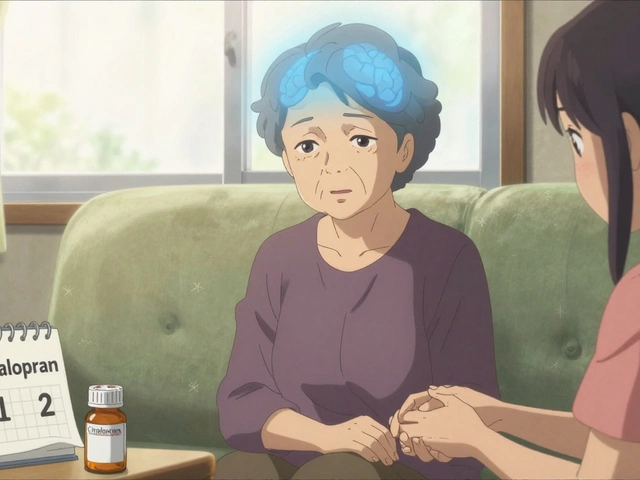
It sounds confusing: opioids activate the same brain pathways that lift mood. In fact, in lab studies, drugs like morphine and buprenorphine reduce signs of despair in animals. So why do people on long-term opioids report feeling more depressed? The answer lies in time and dose. Short-term use may ease pain and temporarily improve mood. But over months or years, the brain adapts. The natural opioid system-responsible for pleasure, motivation, and emotional balance-starts to shut down. Your body gets used to the drug, so it produces less of its own feel-good chemicals. That’s when sadness, numbness, and loss of interest creep in. A 2020 study in JAMA Psychiatry used genetic data from over 300,000 people to show something critical: people with a genetic tendency to use prescription opioids were more likely to develop major depression. This wasn’t just correlation-it pointed to a likely cause. The higher the daily dose, the greater the risk. People taking more than 50 mg of morphine equivalent per day had more than three times the risk of depression compared to those not using opioids. And it’s not just about pain. A study of burn patients found that the total amount of opioids received over time directly matched higher depression scores on the Hamilton Depression Scale. The more you take, the more your mood can sink.Depression Can Make Opioid Use Worse
It’s a loop. Depression doesn’t just follow opioid use-it can start it. People with untreated depression are more likely to seek pain relief, and more likely to be prescribed opioids. Once on them, they’re twice as likely to move from short-term to long-term use. A study of over 10 million patients showed that depression doubled the chance someone would keep using opioids for months or years. Depressed patients also tend to get higher doses. One study found they were 2.65 times more likely to be prescribed doses above 50 mg morphine equivalent daily than those without depression. This isn’t just about physical dependence. Depression makes pain feel sharper and harder to manage. It saps motivation to try non-drug treatments like physical therapy or mindfulness. So the cycle tightens: more pain → more opioids → worse mood → more pain.What Mood Changes to Watch For
Depression from opioids doesn’t always look like crying or saying you’re sad. Often, it’s quieter:- Loss of interest in things you used to enjoy-hobbies, friends, even food
- Feeling emotionally flat or numb, even when good things happen
- Difficulty getting out of bed, even when you’re not in pain
- Increased irritability or anger over small things
- Feeling hopeless about the future
- Sleeping too much or too little
How to Monitor Your Mood
The CDC and the American Pain Society both say: screen for depression when you start opioids-and keep screening. The simplest tool is the PHQ-9 (Patient Health Questionnaire-9). It’s free, takes less than five minutes, and asks questions like:- Over the last two weeks, how often have you felt down, depressed, or hopeless?
- How often have you had little interest or pleasure in doing things?
Buprenorphine: A Double-Edged Sword
One opioid stands out: buprenorphine. It’s used for opioid addiction, but it also shows promise for depression. In studies of people with opioid use disorder, buprenorphine treatment led to big drops in depression scores. One group saw their Beck Depression Inventory (BDI) scores fall from 24.7 (severe) to 13.4 (mild) in just three months. Even more surprising: low doses of buprenorphine (1-2 mg/day) helped people with treatment-resistant depression who didn’t respond to standard antidepressants. One study found nearly half improved within a week. But here’s the catch: the FDA hasn’t approved buprenorphine for depression. So doctors can’t legally prescribe it for that purpose alone. It’s only approved for addiction or pain. That means if you’re struggling with depression and opioids, you might need to explore other options-even if buprenorphine could help.What to Do If You’re Struggling
If you’re on opioids and your mood has changed:- Don’t stop cold turkey. Withdrawal can make depression worse.
- Ask for a depression screening. Use the PHQ-9 or ask your doctor for the BDI.
- Request a referral to a mental health provider who understands chronic pain. Not all therapists do.
- Ask about non-opioid pain treatments: physical therapy, acupuncture, CBT for pain, or nerve blocks.
- If you’re on high doses (>50 mg MED), ask if tapering might help your mood-even if your pain doesn’t fully go away.
- Track your mood daily. Use a simple app or notebook. Note sleep, pain levels, and mood. Patterns will emerge.
The Bigger Picture: Integrated Care Works
Treating pain and depression separately doesn’t work. You need both. In the COMBINE trial, patients who got cognitive behavioral therapy (CBT) along with pain management reduced their opioid use by 32%-without worsening pain. That’s because CBT helped them cope with emotional suffering, not just physical pain. The best outcomes come from teams: a pain specialist, a psychiatrist or therapist, and a pharmacist who understands both conditions. If your doctor doesn’t offer this, ask for a referral. Or look for a pain clinic that includes mental health services.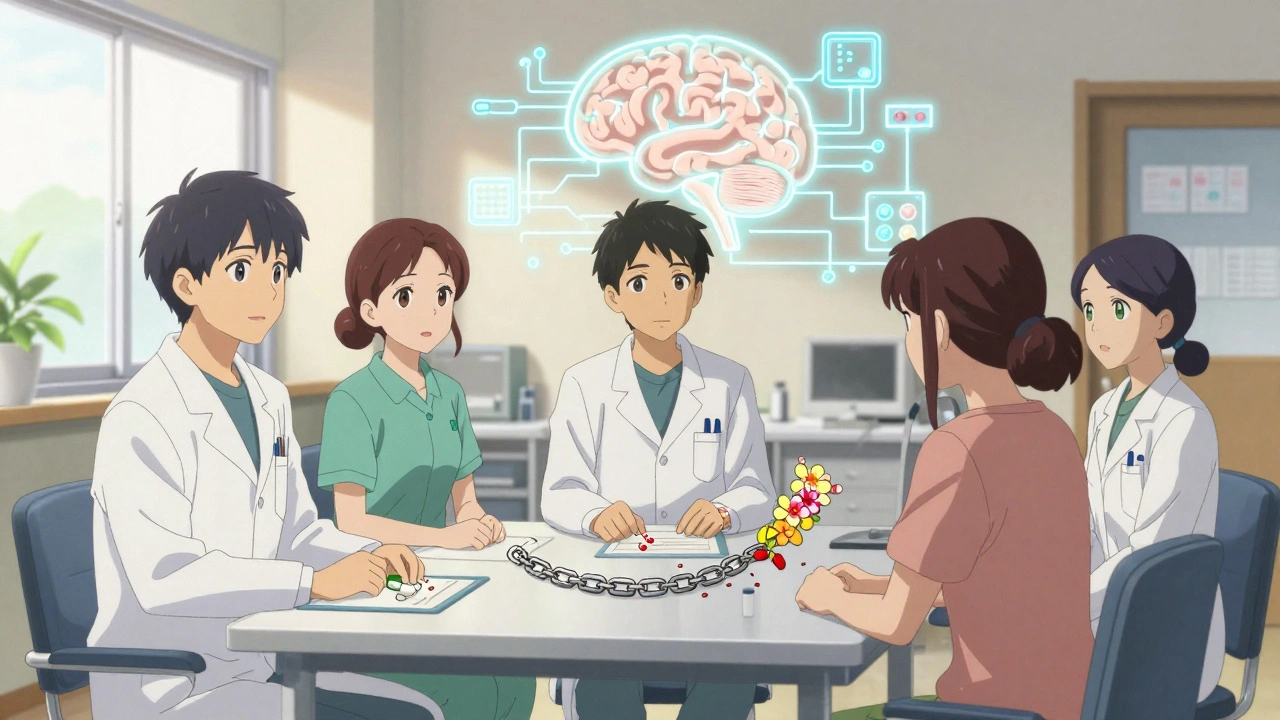
What’s Next for Research
Scientists are trying to solve the mystery: why do opioids help mood short-term but hurt it long-term? A $4.2 million NIH grant is funding brain imaging studies to see how opioid use changes brain circuits tied to emotion. Another study is tracking 5,000 people with chronic pain and depression for years to see how their mood and opioid use shift over time. The emerging theory? Short-term opioid use boosts mood by mimicking natural brain chemicals. Long-term use breaks the system. The brain stops making its own opioids. The reward system slows down. And depression follows. This isn’t just about avoiding addiction. It’s about protecting your mental health while managing pain.Final Thoughts
Opioids aren’t the enemy. For many, they’re necessary. But they’re not harmless. If you’re using them long-term, your mood matters as much as your pain level. You don’t have to choose between pain relief and mental health. You can have both-but only if you’re watching for the signs, asking the right questions, and getting the right support. Don’t wait until you’re in crisis. Check in with yourself. Talk to your doctor. And remember: feeling low isn’t weakness. It’s a signal.Can opioids cause depression even if I’m not addicted?
Yes. Addiction isn’t required for opioids to affect mood. Even people taking prescribed opioids for pain, with no misuse, can develop depression due to changes in brain chemistry. Studies show depression risk increases with dose and duration, regardless of whether someone is dependent.
How long does it take for opioids to affect mood?
Mood changes can start within weeks, but the strongest link appears after 3-6 months of regular use. One study found that 27.3% of patients developed new or worsening depression within 3 months of starting long-term opioid therapy. This is why monthly screening in the first six months is recommended.
Is buprenorphine approved to treat depression?
No. The FDA has not approved buprenorphine for depression. It’s approved for opioid use disorder and pain. However, research shows it can improve depressive symptoms in people on maintenance therapy or with treatment-resistant depression. Some doctors prescribe it off-label, but insurance may not cover it for this use.
Should I stop my opioids if I feel depressed?
No-not without medical guidance. Stopping suddenly can cause withdrawal, which worsens depression and pain. Work with your doctor to assess whether your mood changes are linked to opioids. A slow, monitored taper may help, but only if paired with mental health support.
What’s the best way to screen for depression while on opioids?
Use the PHQ-9 (Patient Health Questionnaire-9). It’s quick, free, and validated for chronic pain patients. Ask your doctor to give it to you at your first visit and every 3 months. If you’re not being screened, ask for it. You can also take it yourself at home and bring the results to your appointment.
Next Steps
If you’re on opioids and feel off:- Download the PHQ-9 from the CDC website and fill it out.
- Write down when your mood changed and what else was happening (sleep, pain, stress).
- Call your doctor and say: “I’m concerned my mood may be tied to my opioid use. Can we review this?”
- If your doctor dismisses you, seek a second opinion. Look for a pain clinic with integrated mental health care.
- Consider therapy-CBT for pain is proven to reduce opioid use and improve mood.

9 Comments
Life is pain. Opioids just make you notice it louder.
Thank you for this comprehensive breakdown. As someone managing chronic pain for over a decade, I’ve seen the slow erosion of joy-no dramatic breakdown, just a quiet fading. The PHQ-9 was a game-changer for me. I started tracking it monthly and realized my mood had been declining for six months before I admitted it. Asking my doctor about buprenorphine led to a referral to a pain psychiatrist. We’re now tapering slowly while adding CBT. It’s not easy, but it’s the first time in years I feel like I’m healing, not just surviving.
Oh, please. Another ‘opioids are evil’ scare piece. You cite studies, but ignore the fact that depression is rampant in chronic pain populations-regardless of medication. Are you suggesting we leave people in agony because some neuroscientists got bored and ran a correlation? The real crisis is that doctors don’t take pain seriously enough. If you’re depressed on opioids, maybe you need better pain control-not less medication. And don’t get me started on ‘buprenorphine for depression’-that’s just pharmaceutical wishful thinking dressed up as science.
There’s a neurochemical paradox here that speaks to the ontological fragility of human homeostasis. Opioids, as exogenous ligands for the mu-opioid receptor, initially hijack the endogenous reward cascade-dopaminergic, serotonergic, and endorphinic pathways are co-opted, creating a transient euphoric equilibrium. But prolonged exposure induces receptor internalization and downregulation, leading to a state of anhedonic dysregulation. The brain’s intrinsic opioid tone is suppressed, not merely displaced. This isn’t addiction-it’s neuroplastic betrayal. The tragedy is that the very mechanism meant to restore equilibrium becomes the architect of its collapse. We’re not treating pain; we’re rewiring the soul’s capacity for joy.
It is profoundly irresponsible to suggest that patients should self-administer the PHQ-9 without clinical oversight. Mental health is not a DIY project. The CDC’s guidelines are merely recommendations-not mandates-and to imply that physicians are negligent for not following them is both arrogant and misleading. Depression is a complex, multifactorial disorder; reducing it to a 9-question quiz is not only reductive, it is dangerous. If you are experiencing mood changes, consult a licensed psychiatrist-not a website. Your life is not a Reddit thread.
Let’s be real-this whole opioid crisis is a Big Pharma psyop. They knew the long-term effects, but pushed it because insurance wouldn’t cover physical therapy, and doctors got kickbacks. The FDA? Controlled by lobbyists. Buprenorphine isn’t approved for depression because it’s too cheap-pharma wants you on $1,200/month antidepressants that don’t work anyway. And don’t even get me started on how the NIH is funded by the same companies that make opioids. You think this is science? It’s a money laundering scheme with a stethoscope. The real solution? Get off the grid. Move to a cabin. Grow your own food. Stop trusting institutions that sell your pain as a profit margin.
I’ve been on opioids for 8 years. I didn’t realize how numb I’d become until I took a weekend off to help a friend move. I laughed for the first time in months. That’s when I knew something was off. I didn’t go cold turkey-I talked to my pain specialist. We cut my dose by 20%, added weekly therapy, and I started walking every morning. It’s not perfect, but I feel like me again. If you’re reading this and you’re stuck-reach out. You’re not broken. You’re just in a system that forgot to check on your heart.
TO ANYONE READING THIS: YOU ARE NOT ALONE. I was the person who thought ‘I should just be tougher.’ I hid my mood drops because I didn’t want to seem weak. But here’s the truth: asking for help isn’t weakness-it’s the bravest thing you can do. Start with the PHQ-9. Print it. Bring it to your next appointment. Tell your doctor you’re worried. If they brush you off, find someone who listens. There are clinics out there that treat pain AND mental health together. They exist. You deserve that care. And if you’re scared to start the conversation-I’ll be right here with you. Message me. I’ve been there.
😂😂😂 I love how everyone’s acting like this is some groundbreaking revelation. Opioids = depression? Newsflash: everything in modern medicine has side effects. You take insulin, you gain weight. You take beta-blockers, you feel like a zombie. You take SSRIs, you lose libido. So why is this any different? The real problem? We’ve turned every human experience into a medical diagnosis. Feeling sad? Must be depression. Feeling tired? Must be a disorder. We’ve forgotten how to just… live with discomfort. Maybe the answer isn’t more screening, more drugs, more therapy-but more resilience. Or maybe, just maybe, you’re supposed to feel a little down sometimes. That’s not a symptom. That’s being human. 🤷♂️
Write a comment