

Antibiotic-Dairy Timing Calculator
Select an antibiotic and set your dose time to see when you can safely consume dairy products.
Important: Dairy products containing calcium (milk, yogurt, cheese, fortified plant milks) can reduce antibiotic absorption by 20-90%. This calculator shows when you can safely consume dairy without affecting your medication effectiveness.
What Counts as Dairy?
Dairy products that contain calcium may interfere with antibiotics. This includes:
- Milk (cow, goat, sheep)
- Yogurt
- Cheese
- Ice cream
- Cottage cheese
- Fortified plant milks (if calcium is added)
- Calcium-fortified orange juice
- Calcium supplements
It’s a simple morning routine: coffee with milk, toast with yogurt, maybe a bowl of cereal. But if you’re on antibiotics like doxycycline or ciprofloxacin, that routine could be quietly sabotaging your treatment. The problem isn’t about stomach upset or food allergies-it’s about calcium. Dairy products contain enough calcium to bind tightly to certain antibiotics in your gut, forming a substance your body can’t absorb. That means the drug you just swallowed might as well be sitting in the toilet.
How Calcium Blocks Antibiotics
The science behind this is straightforward but powerful. Calcium ions in milk, yogurt, cheese, and even fortified plant-based drinks latch onto specific antibiotics like tetracyclines and fluoroquinolones. This binding creates a large, insoluble compound that can’t pass through the intestinal wall into your bloodstream. Without absorption, the antibiotic can’t reach the infection site. Studies show this can slash drug levels by 20% to over 90%, depending on the antibiotic and how much dairy you’ve eaten.Tetracycline, the original culprit, was first linked to dairy interference in the 1950s. Since then, we’ve learned that doxycycline and minocycline-commonly prescribed for acne, Lyme disease, and respiratory infections-are just as sensitive. Fluoroquinolones like ciprofloxacin (used for UTIs and sinus infections) and levofloxacin are also affected, though slightly less dramatically. Even some beta-lactams like cefalexin show reduced absorption with dairy, while others like amoxicillin don’t care at all.
Here’s the key: it’s not just milk. Yogurt, ice cream, cottage cheese, and even butter can trigger the reaction. Calcium-fortified orange juice, antacids, and mineral supplements? Same problem. The threshold? Around 200 mg of calcium-the amount in 6 ounces of milk. That’s less than you think.
Which Antibiotics Are Affected?
Not all antibiotics react the same way. Knowing which ones are sensitive can save you from treatment failure.- High-risk (avoid dairy completely): Tetracycline, doxycycline, minocycline, ciprofloxacin, levofloxacin, norfloxacin
- Moderate-risk: Cefalexin, cefradine
- Low or no risk: Amoxicillin, azithromycin, penicillin V, most cephalosporins
For example, if you take doxycycline with a glass of milk, your body absorbs only about half the dose. With yogurt, it can drop to 30% or lower. That’s not just inconvenient-it’s dangerous. If you’re treating a serious infection like Rocky Mountain spotted fever or pneumonia, subtherapeutic levels can let bacteria survive and mutate, fueling antibiotic resistance.
On the flip side, amoxicillin works fine with food-even dairy. If your doctor prescribes it, you don’t need to change your breakfast. But if you’re on doxycycline, you’re looking at a whole new schedule.
How Long Should You Wait?
Timing isn’t optional-it’s clinical. The rule isn’t “don’t eat dairy with your pill.” It’s: take antibiotics at least 2 hours before or 4 hours after dairy.Why the difference? Tetracyclines bind so tightly to calcium that your gut needs more time to clear the mineral before the drug can be absorbed. Fluoroquinolones are a bit less stubborn, so 2 hours is often enough. But here’s the catch: if you take your antibiotic at 7 a.m. and have yogurt at 8 a.m., you’ve already ruined the dose. Even a small amount of milk in your coffee counts.
For twice-daily dosing, this gets tricky. If you take your first dose at 7 a.m., you can’t have dairy until 11 a.m. Then your next dose is at 7 p.m.-meaning no dairy after dinner until 11 p.m. That’s not just inconvenient. It’s disruptive to sleep, meals, and daily life. Many patients skip doses or give up entirely because of this.
There’s one exception: doxycycline monohydrate (brand name Oracea). This version is specially formulated to be taken with food, including dairy. But if your prescription says “doxycycline” without specifying the form, assume you need the strict timing.
What Counts as Dairy?
It’s not just cow’s milk. Anything with calcium from dairy sources can interfere:- Milk (cow, goat, sheep)
- Yogurt (even probiotic or Greek)
- Cheese (soft, hard, cottage, cream cheese)
- Ice cream and frozen yogurt
- Cottage cheese
- Cream, butter, whey protein
- Fortified plant milks (soy, almond, oat) if they contain added calcium
- Calcium-fortified orange juice
- Antacids with calcium carbonate
- Calcium or multivitamin supplements
Here’s a common mistake: patients think almond milk is safe because it’s “non-dairy.” But if the label says “calcium carbonate” or “tricalcium phosphate” in the ingredients, it’s just as bad as cow’s milk. Always check the nutrition label. If it has 200 mg or more of calcium per serving, avoid it during your dosing window.

What Happens If You Mess Up?
You might not feel anything right away. No vomiting, no dizziness. That’s the problem. The damage is silent. Your infection doesn’t get the full antibiotic punch. Symptoms might improve temporarily, but bacteria that survive are stronger. That’s how resistance starts.Studies show that 68% of patients who take tetracyclines with dairy end up with subtherapeutic blood levels. That’s not a small risk-it’s the norm. In outpatient clinics, dairy-antibiotic interactions rank as the third most common preventable cause of treatment failure.
And it’s expensive. In the U.S. alone, this issue contributes to an estimated $1.3 billion a year in extra doctor visits, repeat prescriptions, and hospitalizations. For individuals, it means longer sickness, more antibiotics, and a higher chance of needing stronger drugs later.
Real Stories, Real Problems
Patients don’t ignore this advice because they’re careless. They do it because it’s hard.One Reddit user described taking doxycycline at 7 a.m., then not being able to have coffee with milk until 11 a.m. “I’d get so hungry by then I’d eat a whole bowl of yogurt,” they wrote. “I knew it was wrong, but I was exhausted.”
A Healthline survey found that 63% of people on tetracyclines got stomach upset when taking the drug on an empty stomach. Nearly 30% of them deliberately ate dairy anyway to feel better-even though they knew it could reduce effectiveness.
And then there’s the lactose-intolerant group. A study in Jundishapur University found these patients had 18% higher antibiotic absorption-not because they were more efficient, but because they naturally avoided dairy. Their bodies weren’t fighting calcium at all.
How to Get It Right
Here’s how to make this work without wrecking your day:- Check your prescription. Is it doxycycline? Ciprofloxacin? Then dairy is off-limits. Is it amoxicillin? Then you’re fine.
- Read the label. Look for “take on empty stomach” or “avoid dairy.”
- Plan your meals. Take your antibiotic first thing in the morning with a full glass of water. Wait 2-4 hours before eating anything with calcium.
- Use water only. Don’t take it with juice, tea, or coffee unless you’re sure it’s calcium-free.
- Ask your pharmacist. They can tell you exactly which form you have and what’s safe.
- Set phone alarms. One for your dose. One for when you can eat dairy again.
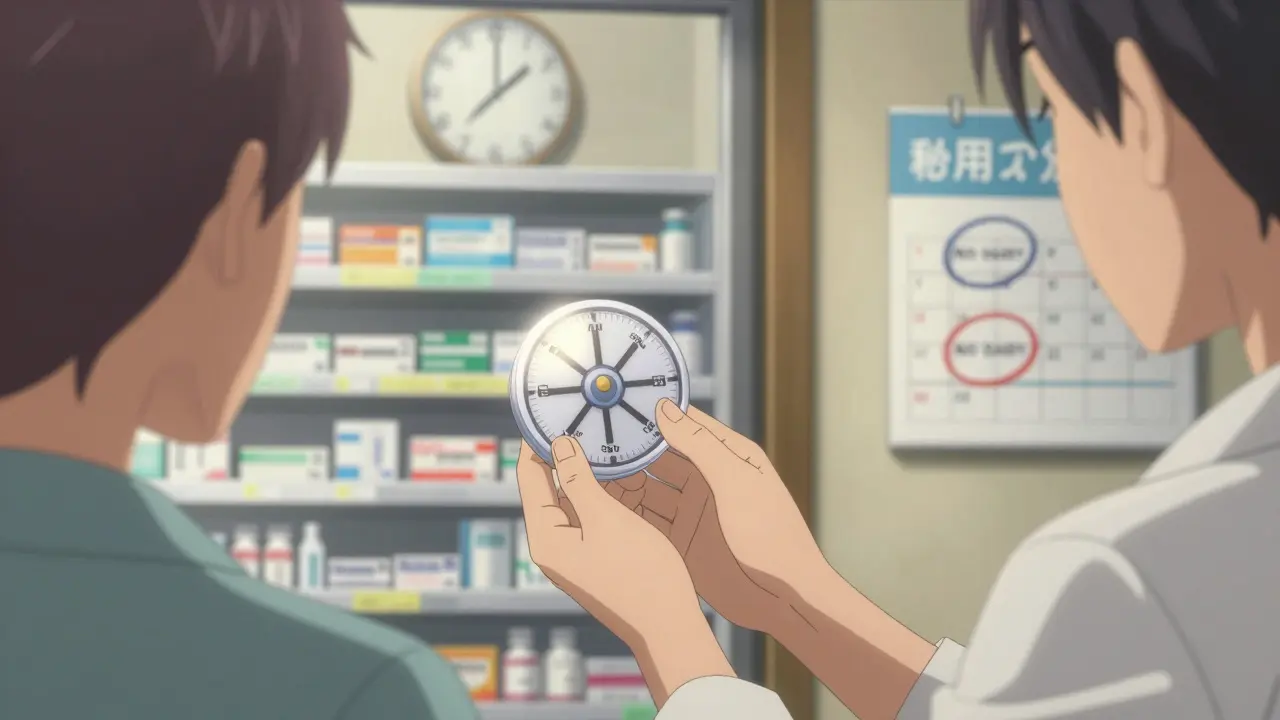
Some pharmacies now give out “timing wheels”-plastic disks that show you when to take your pill and when dairy is safe. If yours doesn’t, ask for one. It’s a small tool that can make a huge difference.
The Bigger Picture
This isn’t just about your next cold. It’s part of the global fight against antibiotic resistance. The World Health Organization calls antimicrobial resistance one of the top 10 public health threats. When antibiotics fail because patients don’t take them right, bacteria evolve. They become untreatable. That’s how superbugs spread.Doctors and pharmacists are pushing for better labeling, smarter EHR alerts, and patient education. But until those systems catch up, you’re the last line of defense. If you’re on one of these antibiotics, your job is simple: know the timing. Stick to it. Your body-and the rest of us-depend on it.
What About Calcium Supplements?
Same rules apply. If you take a calcium pill, don’t take your antibiotic within 2-4 hours. That includes chewables, gummies, and multivitamins with calcium. Iron supplements? Also a problem. Take them separately, too.Is There Any Hope for the Future?
Yes. Newer antibiotics like sarecycline (Seysara) and eravacycline are designed to resist calcium binding. Early data shows less than 10% absorption loss with dairy. That’s promising. But these drugs are expensive and not yet widely used. For now, the old rules still apply to the vast majority of prescriptions.For the next decade, at least, timing will remain critical. The science won’t change. The calcium in your yogurt will still bind to the doxycycline in your gut. The only thing that can change is your behavior.
Can I drink coffee with milk while taking doxycycline?
No. Even a splash of milk in your coffee contains enough calcium to interfere with doxycycline absorption. Wait at least 2 hours after taking the antibiotic before drinking coffee with milk-or switch to black coffee during your treatment window.
Is almond milk safe with antibiotics?
Only if it’s unsweetened and doesn’t contain added calcium. Most commercial almond milks are fortified with calcium carbonate-just like dairy milk. Always check the ingredient list. If it says “calcium carbonate” or “tricalcium phosphate,” avoid it for 2-4 hours around your antibiotic dose.
Can I eat yogurt after taking ciprofloxacin?
Wait at least 2 hours after taking ciprofloxacin before eating yogurt. Yogurt contains high levels of calcium and can reduce absorption by up to 92%. Even probiotic yogurt isn’t safe during this window. Stick to plain water until the timing window passes.
Why doesn’t amoxicillin have this problem?
Amoxicillin has a different chemical structure that doesn’t bind to calcium. It’s absorbed well even with food, including dairy. That’s why doctors often prescribe it for kids-it’s easier to take with meals. But don’t assume all penicillins are the same. Always check your specific drug.
What if I accidentally took my antibiotic with milk?
Don’t panic, but don’t repeat it. Take your next dose on time, but without dairy. Don’t double up on the missed dose-it won’t help and could cause side effects. If you’re treating a serious infection, call your doctor. You might need a different antibiotic or a longer course.
Do I need to avoid dairy for the whole course of antibiotics?
Yes. The interaction happens every time you take the drug and consume calcium. Even one glass of milk with one dose can reduce effectiveness. Stick to the timing for every dose until your prescription runs out.




11 Comments
Calcium binds to tetracyclines. That’s chemistry. Not opinion. Stop ignoring it.
It is both fascinating and lamentable that the general populace remains so egregiously uninformed regarding pharmacokinetic interactions. The mere presence of calcium ions in ostensibly innocuous dietary items-such as fortified plant-based milks-demonstrates a profound failure of public health literacy. One cannot help but wonder if this is the inevitable consequence of a society that prioritizes convenience over scientific rigor.
This is one of those quiet, invisible battles we all fight-like remembering to floss or drinking enough water. But this? This is the quiet hero of your immune system. You take that pill with water, you wait, you respect the science-and suddenly, your body’s got the full force of modern medicine on its side. No drama. No hype. Just quiet, disciplined care. That’s how we beat superbugs. Not with panic, but with patience.
And hey-if you’re doing this right? You’re not just saving yourself. You’re saving the next person who gets sick. That’s legacy stuff.
people still dont know this?? wow. i had a friend take cipro with yogurt and got pneumonia. again. like, twice. he still does it. he says "it doesnt matter". bro. it matters.
Wait-so if I take doxycycline at 7am, I can’t have almond milk until 11am? And my coffee? Black only? And my calcium supplement at noon? That’s a whole 5-hour gap? And what if I’m on a twice-daily schedule? That means no dairy after dinner until midnight? And what about cheese on my pizza at 8pm? Is that out? I mean… this is ridiculous. I’m not a lab rat. This is unsustainable. And nobody tells you this until you’re already halfway through your prescription. Why isn’t this on the bottle? Why isn’t the pharmacy yelling at you?
My mum took doxycycline with her porridge and blamed the doctor when it didn’t work. Classic.
so like… almond milk is bad if it has calcium? but if it doesnt… its ok? so i just gotta read the label? cool. i’ll do that. right after i finish my yogurt. lol jk lol jk lol
68% of patients have subtherapeutic levels? That’s not a side effect. That’s a systemic failure. The FDA should require warning labels in bold red. Pharmacies should print timing charts on the prescription bag. This isn’t patient negligence-it’s institutional negligence. And yet, nothing changes.
Look. I get it. Calcium binds. But you know what else binds? American capitalism. They don’t care if you take your pill right. They care if you buy the next one. The fact that we’re still using 70-year-old antibiotics with these flaws? That’s not science. That’s profit. And the real villain isn’t yogurt-it’s the pharmaceutical industry that refuses to reform the damn system.
Calcium chelation of divalent cations with tetracycline-class antibiotics is a well-documented pharmacokinetic interaction mediated by ion-pair formation in the gastrointestinal lumen. The resultant complex is non-absorbable, reducing bioavailability by up to 90% in high-calcium conditions. Fluoroquinolones exhibit similar but less pronounced binding kinetics due to structural differences in their C-3/C-4 keto-acid moieties. Clinical relevance is significant for pathogens with narrow therapeutic windows, such as Rickettsia and Borrelia burgdorferi. Mitigation requires temporal separation-minimum 2–4 hours depending on compound.
They don’t want you to know this… but what if the dairy industry paid the FDA to hide this? 🤔 I mean… why else would they let us keep drinking calcium-fortified almond milk with our antibiotics? 🤨 Big Pharma + Big Dairy = 🤫
Also, I heard the moon is made of cheese. Coincidence? 😈
Write a comment