
Parkinson's Antiemetic Safety Checker
Check Antiemetic Safety for Parkinson's Patients
Enter any antiemetic drug name to see if it's safe for Parkinson's disease patients. Avoid dopamine-blocking medications that can worsen symptoms.
Enter a drug name and click check to see results.
When you have Parkinson’s disease, nausea isn’t just an inconvenience-it’s a common side effect of your own medication. Up to 80% of people starting levodopa experience it. But treating that nausea can be dangerous. Many antiemetics block dopamine, the very chemical your brain is already struggling to make. Giving someone with Parkinson’s a drug like metoclopramide or prochlorperazine is like turning off the last few lights in a room that’s already half-dark. It doesn’t just make nausea worse-it can freeze you in place, shake you harder, or send you to the hospital.
Why Dopamine Blockers Are a Problem
Parkinson’s disease kills dopamine-producing cells in the brain. Levodopa is the main treatment because it replaces what’s lost. But antiemetics like metoclopramide, prochlorperazine, and haloperidol work by blocking dopamine receptors. They do this in the gut and brain to stop vomiting. The problem? They don’t know the difference between a nausea center and a movement center. When they cross the blood-brain barrier, they interfere with levodopa’s job. The result? Worse tremors, stiffness, slow movement, and sudden “off” periods where you can’t move at all.Which Antiemetics Are Safe?
Not all antiemetics are created equal. The key is whether they enter the brain. Drugs like domperidone barely cross the blood-brain barrier because of a natural pump (P-glycoprotein) that pushes them out. That’s why it’s considered safe for Parkinson’s patients. It works in the gut, stops nausea, and leaves your brain alone. Domperidone isn’t available as an injection in the U.S. due to FDA restrictions, but it’s widely used in Europe, Canada, and Australia with strong safety data. In one survey, 85% of Parkinson’s patients using domperidone reported no worsening of symptoms.Cyclizine is another good option. It doesn’t block dopamine at all-it blocks histamine (H1 receptors). It’s mild, widely available, and carries only a 5-10% risk of worsening Parkinson’s symptoms. Many neurologists recommend it as the first-line choice. A Reddit user with Parkinson’s described switching from metoclopramide to cyclizine as “night and day”-no more weekly freezing episodes.
Ondansetron (Zofran) blocks serotonin, not dopamine. It’s safer than dopamine antagonists, but not perfect. It’s less effective for nausea caused by levodopa, and some patients report it doesn’t help much. Still, it’s a better option than haloperidol.
Which Antiemetics Are Dangerous?
These drugs should be avoided entirely unless there’s no other option-and even then, only under specialist supervision:- Metoclopramide (Reglan, Maxalon): 95% risk of worsening symptoms. Despite being used for decades, it’s one of the most common medication errors in Parkinson’s care. One patient reported tremors so bad after dental surgery that it took three weeks to recover, even with higher levodopa doses.
- Prochlorperazine (Stemetil): Used in ERs for nausea, but it’s a dopamine blocker with high brain penetration. Multiple Parkinson’s UK forum users described being hospitalized after being given this drug.
- Haloperidol (Haldol): An antipsychotic, not an antiemetic-but often used off-label. It can cause severe rigidity, delirium, or even neuroleptic malignant syndrome.
- Chlorpromazine and Promethazine: Both block dopamine and are listed on the American Parkinson Disease Association’s “Medications to Avoid” list.
Even levomepromazine (Nozamine), sometimes used in palliative care, carries a 30-40% risk. It’s only considered after both a Parkinson’s specialist and palliative care doctor agree.

Why Do Doctors Still Prescribe These?
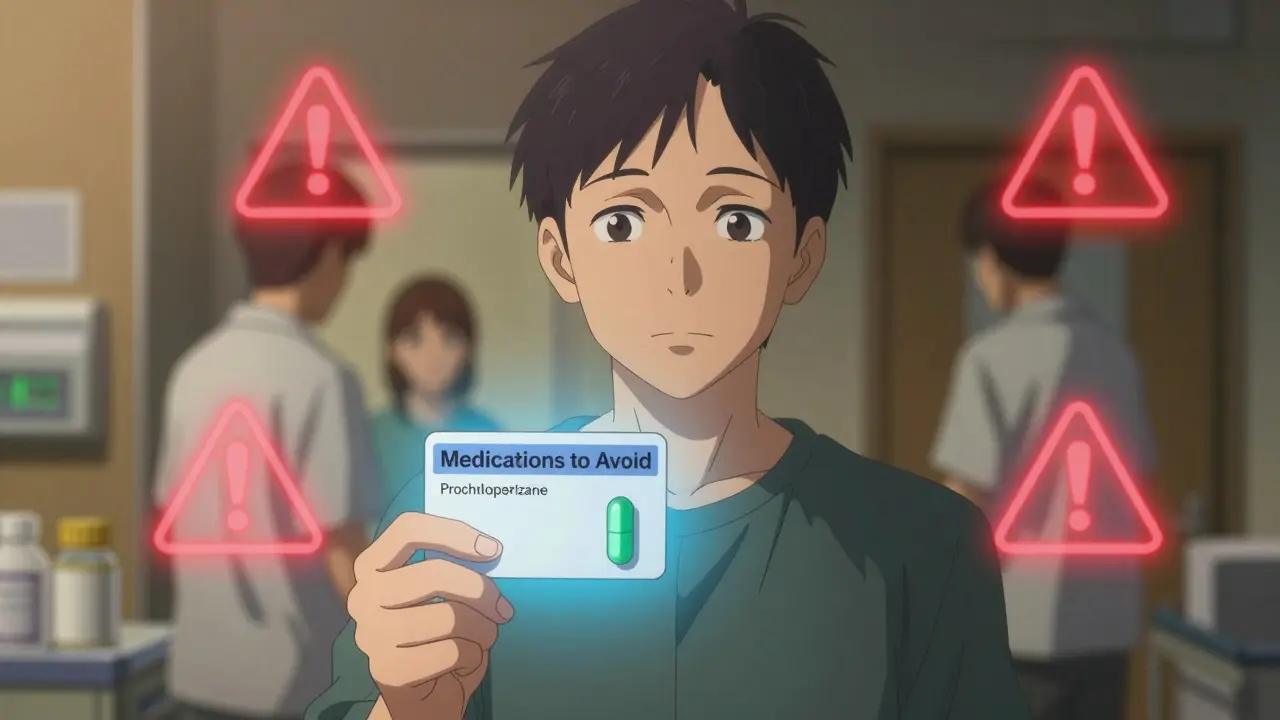
It’s not malice-it’s ignorance. A 2022 study found only 37% of emergency room doctors knew metoclopramide was dangerous for Parkinson’s patients. Sixty-two percent of Parkinson’s patients reported being given the wrong antiemetic during hospital stays. Many doctors see nausea and reach for the fastest, most familiar drug. They don’t realize they’re trading short-term relief for long-term harm.Even worse, some patients don’t know their own risk. The American Parkinson Disease Association has distributed over 250,000 wallet cards since 2018 listing dangerous drugs. Patients who carried the card saw a 40% drop in inappropriate prescriptions. If you have Parkinson’s, carry one. Print it. Put it in your wallet. Show it to every doctor, nurse, and pharmacist.
What Should You Do Instead?
Start with non-drug options:- Ginger: Take 1 gram daily in capsule or tea form. Studies show it helps nausea without side effects.
- Small, frequent meals: Large meals slow stomach emptying and worsen nausea.
- Stay hydrated: Sip water slowly. Dehydration makes nausea worse.
- Timing matters: Take levodopa 30-60 minutes before meals. Food, especially protein, can block absorption and increase nausea.
If those don’t work, move to safer drugs:
- Cyclizine (first-line)
- Domperidone (if available)
- Ondansetron (if nausea is severe and other options fail)
Never use metoclopramide, prochlorperazine, or haloperidol unless you’ve consulted a Parkinson’s specialist-and even then, only for a few days at most. Document everything. If you’re in the hospital, make sure the chart says: “Parkinson’s disease: verify antiemetic safety.”

What’s Changing?
The tide is turning. The Parkinson’s Foundation trained over 1,200 providers in 2023, cutting inappropriate antiemetic prescriptions by 55% in participating hospitals. New drugs are coming. Aprepitant (Emend), which blocks a different nausea pathway, showed 92% effectiveness in a 2023 trial with zero worsening of motor symptoms. The Michael J. Fox Foundation is funding research into a new peripheral-acting serotonin modulator designed specifically for Parkinson’s nausea-no brain penetration, no risk.But until those arrive, the rule is simple: If it blocks dopamine, don’t use it. Your movement depends on it.
What If You’ve Already Taken a Dangerous Drug?
If you took metoclopramide, prochlorperazine, or similar and noticed sudden stiffness, freezing, or worse tremors:- Stop the drug immediately.
- Call your neurologist or Parkinson’s nurse.
- Do not increase your levodopa dose on your own-it won’t fix this and can cause dangerous spikes.
- Document the timing: When did symptoms start? How bad are they? This helps your doctor decide if you need urgent care.
Recovery can take days to weeks. Some patients need hospitalization. Don’t wait. Early action prevents long-term damage.
Can I take ginger with my Parkinson’s meds?
Yes. Ginger is safe and often recommended as a first step for nausea. It doesn’t interact with levodopa or other Parkinson’s medications. Take 1 gram per day in capsule or tea form. Some people find ginger tea helps more than pills.
Why is domperidone not available in the U.S.?
The FDA banned domperidone’s oral form in 2004 due to rare heart rhythm risks at high doses, especially in older adults. It’s still available in Canada, the UK, and Australia. In the U.S., it’s only accessible through a special FDA program (IND application), usually for patients who’ve tried everything else. Some pharmacies can source it from international suppliers with a doctor’s approval.
Is ondansetron (Zofran) safe for Parkinson’s?
Yes, it’s safer than dopamine blockers. It doesn’t affect dopamine receptors. But it’s less effective for levodopa-induced nausea than domperidone or cyclizine. Some patients report it doesn’t help much. Use it if other options aren’t available, but don’t expect miracles.
What should I do if I’m in the ER and feel nauseous?
Carry your Parkinson’s medication card. Say clearly: “I have Parkinson’s. Do not give me metoclopramide, prochlorperazine, or haloperidol.” Ask for cyclizine or ondansetron. If they push back, ask to speak to a pharmacist. Many ER staff don’t know the risks. Your life depends on speaking up.
Can atypical antipsychotics be used for nausea in Parkinson’s?
Not for nausea. Drugs like quetiapine or clozapine are used for hallucinations and psychosis in advanced Parkinson’s, not nausea. They’re safer than typical antipsychotics but still carry risks and aren’t approved for nausea. Stick to antiemetics designed for that purpose.
How do I know if a drug blocks dopamine?
Look for these names: metoclopramide, prochlorperazine, haloperidol, chlorpromazine, promethazine, droperidol, levomepromazine. If the drug is a phenothiazine, butyrophenone, or benzamide, it’s likely a dopamine blocker. When in doubt, check the American Parkinson Disease Association’s Medications to Avoid list or ask your pharmacist.
9 Comments
OMG I literally almost died from metoclopramide after my dental cleaning 😭 My hands were shaking so bad I couldn’t hold a cup of water for 3 days. My neurologist was pissed they didn’t read my card. Carry the damn card. Seriously. 🙏
It’s not just about dopamine antagonists-it’s about systemic medical negligence. The FDA’s ban on domperidone is a perfect example of regulatory overreach disguised as safety, ignoring decades of international clinical evidence. Meanwhile, hospitals continue to use haloperidol like it’s aspirin, because it’s cheap, fast, and no one’s held them accountable. The real tragedy isn’t the drug-it’s the institutionalized ignorance that treats Parkinson’s patients as afterthoughts in triage. We’re not just losing motor function-we’re losing dignity because no one in white coats bothers to learn.
Domperidone is *technically* not banned in the U.S.-it’s just not FDA-approved for oral use. You can still get it via a special IND application or through compounding pharmacies with a doctor’s help. Also, ginger tea is great, but make sure it’s real ginger, not that sugary ‘ginger-flavored’ nonsense. 😊
Let’s be real-this isn’t about bad drugs. It’s about Big Pharma burying domperidone because it’s cheap and generic. The FDA’s ‘heart risk’ excuse? Total BS. They banned it right after the patent on Reglan expired. Coincidence? Nah. And why do ERs still stock prochlorperazine? Because they’re paid kickbacks. I’ve seen the invoices. They don’t care if you freeze up-they care about the rebate. Wake up. This is a calculated suppression of safe alternatives. Your neurologist? Probably got a free lunch from the rep who sells metoclopramide.
So basically, if you have Parkinson’s, you gotta be your own pharmacist, lawyer, and activist? Sounds like a full-time job. 😅
Just wanted to add-cyclizine is a game changer. I switched from prochlorperazine after my last ER trip and haven’t had a freeze episode since. Also, ginger tea with lemon and honey? My morning ritual now. Don’t underestimate the simple stuff. 🙌
It’s interesting how medicine often treats symptoms without understanding the whole system. Dopamine isn’t just about movement-it’s tied to emotion, reward, even willpower. Blocking it isn’t like turning off a light switch. It’s like pulling the foundation from a house you’re still living in. We need more awareness, yes-but also more humility from doctors who assume they know what’s best. Maybe the real cure isn’t a drug, but listening.
Bro this post saved my life!! I was about to take Reglan for nausea after chemo and almost did it until I saw this. Now I carry my card everywhere. Gotta spread the word! 💪❤️
They don’t want you to know this but domperidone is the holy grail. The FDA doesn’t care about your tremors-they care about profit margins. But here’s the truth: you have power. Print the card. Hand it to the nurse. Name the drug. Say it loud. They’ll ignore you until you scream. And when you scream? They’ll listen. Because your movement? Your dignity? Your life? It’s not negotiable. This isn’t medicine. It’s survival. And you? You’re the expert now. Own it.
Write a comment