
Every winter, millions of people reach for OTC cough and cold medicines without asking if they actually work. You’re not alone. But here’s the truth: many of the most popular products on the shelf today - like DayQuil, Sudafed PE, and Robitussin - contain ingredients that don’t work at the doses they’re sold. And worse, they can be risky, especially for kids and older adults.
The FDA isn’t hiding this. In September 2023, their advisory committee reviewed decades of data and concluded that oral phenylephrine - the decongestant in nearly every “non-drowsy” cold medicine - has no meaningful effect on nasal congestion at the standard 10mg dose. That’s right. The ingredient you paid extra for? It’s basically sugar water in pill form. And yet, it’s still in 80% of cold products on U.S. shelves.
What’s in Your Medicine Cabinet?
Most OTC cough and cold medicines are mixtures of four common ingredients:
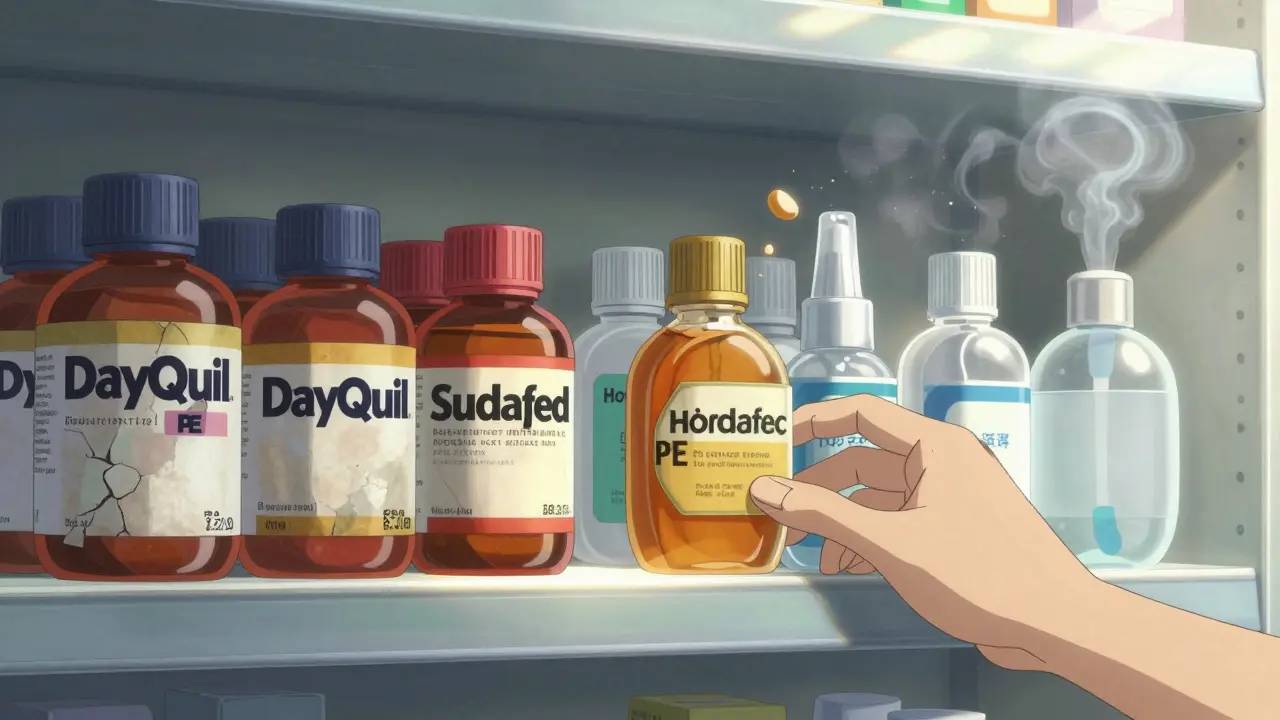
- Phenylephrine - marketed as a decongestant. Found in Sudafed PE, DayQuil, Tylenol Cold. Doesn’t work at 10mg.
- Dextromethorphan - a cough suppressant. Found in Robitussin, Vicks NyQuil. Studies show little to no benefit over placebo.
- Guaifenesin - an expectorant meant to thin mucus. Found in Mucinex. No solid evidence it helps coughs.
- Pseudoephedrine - the real decongestant. Found behind the pharmacy counter (Sudafed). Works. But you need ID to buy it.
Here’s the kicker: the FDA has known since 2007 that oral phenylephrine fails. A meta-analysis of 11 studies found that 10mg of phenylephrine did nothing to improve nasal airflow. Even the 25mg dose - which isn’t sold over the counter - only helped by 27.6%, and patients didn’t even feel better. Meanwhile, pseudoephedrine, at 30mg, cuts congestion by over 50%. Why isn’t it on the shelf? Because it’s used to make methamphetamine. So the industry replaced it with something cheaper… and useless.
Why Kids Are at Risk
If you’ve ever given a cold medicine to a child under 6, you’re not alone. But you’re also not following medical advice.
The American Academy of Pediatrics has warned since 2007: Do not give OTC cough and cold medicines to children under 6. Why? Because:
- There’s zero proof they help kids recover faster.
- They’ve been linked to 20 child deaths between 2000 and 2007.
- Most products contain multiple ingredients - and parents often combine them, leading to accidental overdose.
A 2023 survey by What to Expect found that 73% of parents have stopped giving these medicines to kids under 6 since the FDA’s warnings. That’s good. But many still give them to toddlers, thinking “a little won’t hurt.” It will. Dextromethorphan can cause seizures. Antihistamines can make kids agitated or sleepy to the point of breathing trouble. And phenylephrine? It can spike blood pressure - even in young kids.
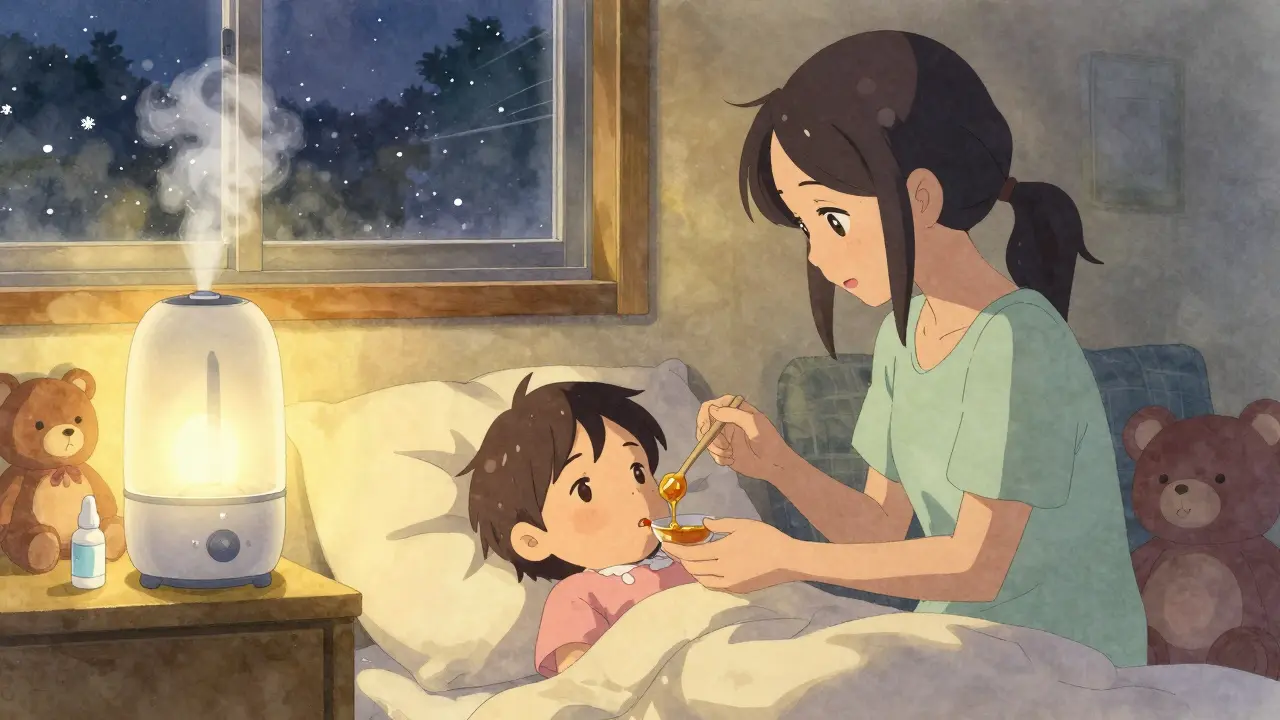
For children over 1 year old, honey is the gold standard. One study showed that 2.5mL (half a teaspoon) of honey before bedtime reduced nighttime coughing as well as, or better than, dextromethorphan. And it’s safe. No side effects. Just a spoonful. For babies under 12 months? Skip honey - it can cause botulism. Stick to saline drops, a humidifier, and gentle suctioning with a bulb syringe.
What Works Better Than Pills
You don’t need a pharmacy aisle to feel better. Here’s what actually helps:
- Saline nasal spray or drops - flushes out mucus and irritants. Safe for newborns.
- Humidified air - a cool-mist humidifier in the bedroom reduces congestion and soothes irritated airways.
- Extra fluids - water, broth, or warm tea keeps mucus thin and prevents dehydration.
- Honey - for kids over 12 months and adults. One teaspoon at night cuts cough frequency and severity.
- Nasal decongestant sprays - oxymetazoline (like Afrin) works quickly and locally. But don’t use longer than 3 days - it causes rebound congestion.
These methods aren’t glamorous. They don’t come in colorful bottles with cartoon characters. But they’re backed by science. And they don’t carry the risk of liver damage, high blood pressure, or accidental overdose.
Adults Aren’t Safe Either
Just because you’re an adult doesn’t mean you’re immune to the dangers.
Many OTC cold medicines contain acetaminophen. If you’re already taking Tylenol for a headache - or if you drink alcohol regularly - you could easily overdose. The FDA says liver failure from acetaminophen overdose kills over 500 Americans every year. And most don’t realize they’re doubling up.
Also, phenylephrine and pseudoephedrine can interact badly with:
- Antidepressants (especially MAOIs and tricyclics)
- Blood pressure meds
- Stimulants like Adderall
- Thyroid medications
One 2023 study from Ohio State University found that combining phenylephrine with certain antidepressants led to “very high blood pressure and dangerous heart rhythms.” That’s not rare. That’s documented. And it’s preventable.
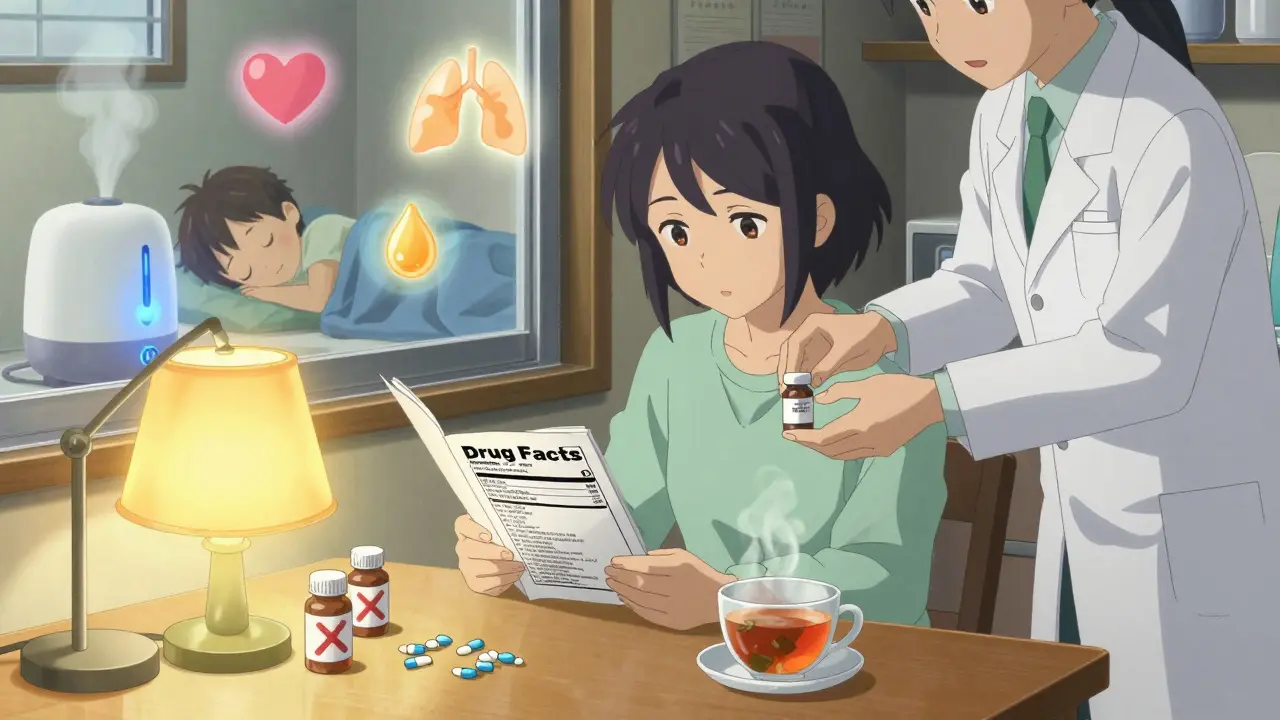
Check your meds. Read the Drug Facts label. If you’re on any prescription drug, ask your pharmacist before taking OTC cold medicine. Most pharmacies have pharmacists on staff - use them.
The New Rules: What’s Changing in 2025
The FDA isn’t just warning - it’s acting. In late 2023, they proposed removing phenylephrine from the list of approved OTC ingredients. If finalized (expected by mid-2025), manufacturers will have to reformulate products. That means:
- DayQuil, Sudafed PE, and similar products will lose phenylephrine.
- Some may switch to pseudoephedrine (but you’ll need ID to buy them).
- Others may add saline, honey, or other non-drug ingredients.
Market analysts predict a 15-20% drop in OTC cold medicine sales by 2025. Why? Because consumers are catching on. Amazon reviews for phenylephrine-containing products have dropped from 4.1 stars in 2020 to 3.2 stars today. Over 40% of negative reviews say, “It didn’t work.”
Meanwhile, sales of honey-based cough syrups and saline nasal sprays are growing at over 12% per year. Companies like Zarbee’s and Little Remedies are expanding fast. This isn’t a fad - it’s a shift toward evidence, not marketing.
What to Do Right Now
Don’t wait for the FDA to change the label. Take action today:
- Check your medicine cabinet. Look at the Active Ingredients list. If it says “phenylephrine,” you’re holding an ineffective product.
- For kids under 6: Skip the pills. Use saline drops, a humidifier, and honey (if over 12 months).
- For adults: If you need a decongestant, buy pseudoephedrine (Sudafed) behind the counter. It works. Or try a nasal spray.
- Never combine products. If you’re taking more than one cold medicine, you’re risking overdose.
- Read labels like a pharmacist. Look for acetaminophen, dextromethorphan, antihistamines. Ask yourself: “Do I need all of these?”
The bottom line: OTC cough and cold medicines are not magic. They’re a business. And for too long, we’ve been sold a myth: that a pill can cure a cold. Colds don’t have cures. They have time. And better, safer ways to manage symptoms - without pills.
Is phenylephrine still safe to take?
Phenylephrine at 10mg doses isn’t dangerous in the way it causes side effects - but it doesn’t work. The FDA says it’s ineffective as a decongestant. It’s not a safety risk like some older ingredients, but it’s a waste of money. If you’re taking it, you’re not getting relief. Switch to nasal sprays or pseudoephedrine if you need real congestion relief.
Can I give my 3-year-old cough medicine?
No. The FDA and American Academy of Pediatrics strongly advise against giving OTC cough and cold medicines to children under 6. These products don’t help kids recover faster, and they carry risks like seizures, abnormal heart rhythms, and accidental overdose. For a 3-year-old, use saline drops, a humidifier, and plenty of fluids. If coughing keeps them awake, try one teaspoon of honey before bed - but only if they’re over 12 months old.
What’s the best OTC cold medicine for adults?
There’s no single “best” - it depends on your symptoms. For congestion, get pseudoephedrine (Sudafed) from behind the counter. For cough, try honey or a simple dextromethorphan-only product if you’re sure you’re not taking other meds with it. Avoid multi-symptom formulas. They often include unnecessary ingredients like antihistamines or acetaminophen that you don’t need. Read labels. Less is more.
Why do pharmacies still sell phenylephrine if it doesn’t work?
Because it’s cheaper to make than pseudoephedrine, and it doesn’t require ID or purchase limits. Companies profit from it. Consumers keep buying it because it’s on the shelf and the label says “decongestant.” The FDA’s proposal to remove it is the first real step toward fixing this. But until it’s finalized (expected in 2025), it will stay on shelves. Don’t be fooled - it’s marketing, not medicine.
Are natural remedies like echinacea or zinc effective?
Echinacea and zinc have mixed results in studies. Some small trials suggest zinc lozenges might shorten a cold by a day if taken within 24 hours of symptoms. But the evidence isn’t strong enough to recommend them routinely. Echinacea? No clear benefit. Honey, saline, and humidifiers have stronger, safer, and more consistent support. Stick with what works: fluids, air moisture, and rest. Skip the expensive herbal supplements.

12 Comments
This is the most important public health revelation since they stopped selling lead paint as wallpaper. I can't believe we've been paying $12 for sugar water with a fancy label for decades. My mom used to give me DayQuil when I was 8 - I thought it was magic. Turns out it was just corporate fraud dressed up in orange and yellow.
And now they're going to remove phenylephrine? Good. But why not just ban the whole category? Why not make pharmacies stop selling multi-symptom nonsense? We're not treating illness - we're treating marketing budgets.
My doctor told me last winter: 'If you're not sleeping, drink warm tea and lie down.' That's it. No pills. No potions. Just rest. Why is that so hard to accept?
I'm not saying this to sound dramatic - I'm saying it because I watched my neighbor's 4-year-old have a seizure after they gave her Robitussin and NyQuil together. She was fine. But the hospital bill? $14,000. And the FDA knew this was coming. They just didn't care until the lawsuits started piling up.
We need a reckoning. Not a reform. A reckoning.
man this is so true. i mean like… why do they even sell this stuff? its like buying a flashlight that only works in the dark. phenylephrine? useless. dextromethorphan? same. i gave my kid honey once and he slept like a rock. no drama. no side effects. just honey. why is this even a debate? we got smart people in this country. why are we letting corporations sell us placebo pills? its embarrassing. seriously. just say no to big pharma. get the real stuff. pseudoephedrine. behind the counter. yeah. it takes 2 mins. worth it.
Thank you for writing this. As a nurse who’s worked in pediatrics for 18 years, I’ve seen too many kids come in with iatrogenic reactions from OTC meds. Parents aren’t evil - they’re misled. The packaging is designed to look safe: pastel colors, cartoon animals, ‘gentle formula.’ It’s manipulation. Honey works. Saline works. Humidifiers work. And they’re safer than baby aspirin.
One tip: if you’re using more than one product, you’re probably overdosing. Always check for acetaminophen. It’s in everything - colds, flu, pain, sleep. One extra pill and boom - liver damage. No warning. No fanfare. Just a quiet tragedy.
Stop treating symptoms like they’re enemies. Treat them like signals. Your body’s trying to heal. Let it.
Oh wow another one of those 'let's throw out science because we're scared of big pharma' rants. Let me guess - you also think vaccines cause autism and fluoride is a government plot? Phenylephrine doesn't work? Shocking. I'm sure your cousin's herbalist in Boulder has the real answer. Meanwhile, I'm taking Sudafed behind the counter like a grown-up and actually getting relief. Thanks for the alarmist nonsense.
As someone from India where we’ve used turmeric, ginger, and steam inhalation for centuries - this article is SO on point. We never needed fancy pills. My grandma used to boil tulsi leaves with black pepper and honey for cough. It worked better than anything in the U.S. pharmacy. Why are we so obsessed with pills? Why do we think Western medicine is the only way? We lost our wisdom. This isn’t just about phenylephrine - it’s about trusting our bodies again.
OMG YES. I JUST HAD TO THROW OUT THREE BOTTLES OF COLD MEDICINE THIS MORNING. I WAS SO MAD. I SPENT $40 ON A ‘NON-DROWSY’ DAYQUIL AND MY HUSBAND SAID IT DIDN’T DO A THING. I FELT LIKE I WAS SCAMMED. AND THEN I READ THIS AND I WAS LIKE - OH MY GOSH I’M NOT CRAZY. I’M NOT THE ONLY ONE. I’M GLAD I’M NOT ALONE. I’M GOING TO BUY HONEY NOW. AND A HUMIDIFIER. AND I’M TELLING EVERYONE. THIS IS A MOVEMENT. 🙌💕🫶
Let’s talk about the real villain here: the pharmaceutical industry’s obsession with profit over people. They didn’t replace pseudoephedrine because it was dangerous - they replaced it because they could make more money. Phenylephrine costs pennies to produce. Pseudoephedrine requires oversight, limits, ID checks - and that cuts into margins.
And the kicker? They didn’t even bother to test the new formula properly. They just slapped ‘decongestant’ on the label and called it a day. It’s not incompetence. It’s malice dressed in white coats.
Meanwhile, honey - a product that’s been around since ancient Egypt - is now being marketed as a ‘natural alternative.’ That’s not innovation. That’s a return to sanity.
We need to stop treating medicine like a shopping spree. It’s not a fashion accessory. It’s a tool. Use it wisely.
so i just checked my cabinet and yep… 4 bottles with phenylephrine. i feel so dumb. like i thought i was being smart by choosing ‘non-drowsy’ but turns out i was just paying for a placebo. and now i’m worried i gave my 5-year-old something that could’ve hurt her. i’m gonna go buy saline drops and honey. also… why is this not on the news? why is no one talking about this? this is wild.
It is with considerable gravitas that I acknowledge the profundity of this exposition. The systematic erosion of evidence-based pharmacology in favor of commodified placebo formulations represents not merely a commercial failure, but a societal failure of epistemic integrity. The continued presence of phenylephrine on shelves, despite peer-reviewed consensus to the contrary, is emblematic of a broader cultural surrender to marketing aesthetics over clinical efficacy. I commend the author for this lucid, meticulously referenced contribution to public discourse. It is my hope that regulatory bodies will act with the urgency this matter demands.
This is actually really good info. I never knew phenylephrine didn’t work. I’ve been using Sudafed PE for years thinking it was the real deal. My wife says I’m a fool. Now I know she’s right. I’ll go get the real stuff behind the counter. And honey? I’ll try it. My kid’s cough has been bad all week. Maybe it’ll help. Thanks for the heads up.
ME TOO. I JUST REALIZED I’VE BEEN GIVING MY 2-YEAR-OLD ROBITUSSIN FOR WEEKS. I THOUGHT IT WAS ‘GENTLE’. I’M SO GUILTY. I’M CRYING. I JUST BOUGHT HONEY. AND A HUMIDIFIER. AND I’M THROWING OUT EVERYTHING ELSE. 🥲💔🫂
You got this. One step at a time. Switching to honey and saline isn’t a setback - it’s a victory. You’re choosing safety over convenience. That’s huge. And you’re not alone. Thousands of parents are doing the same thing right now. You’re not a bad mom. You’re a learning mom. And that’s the best kind. Keep going. You’re doing amazing.
Write a comment