
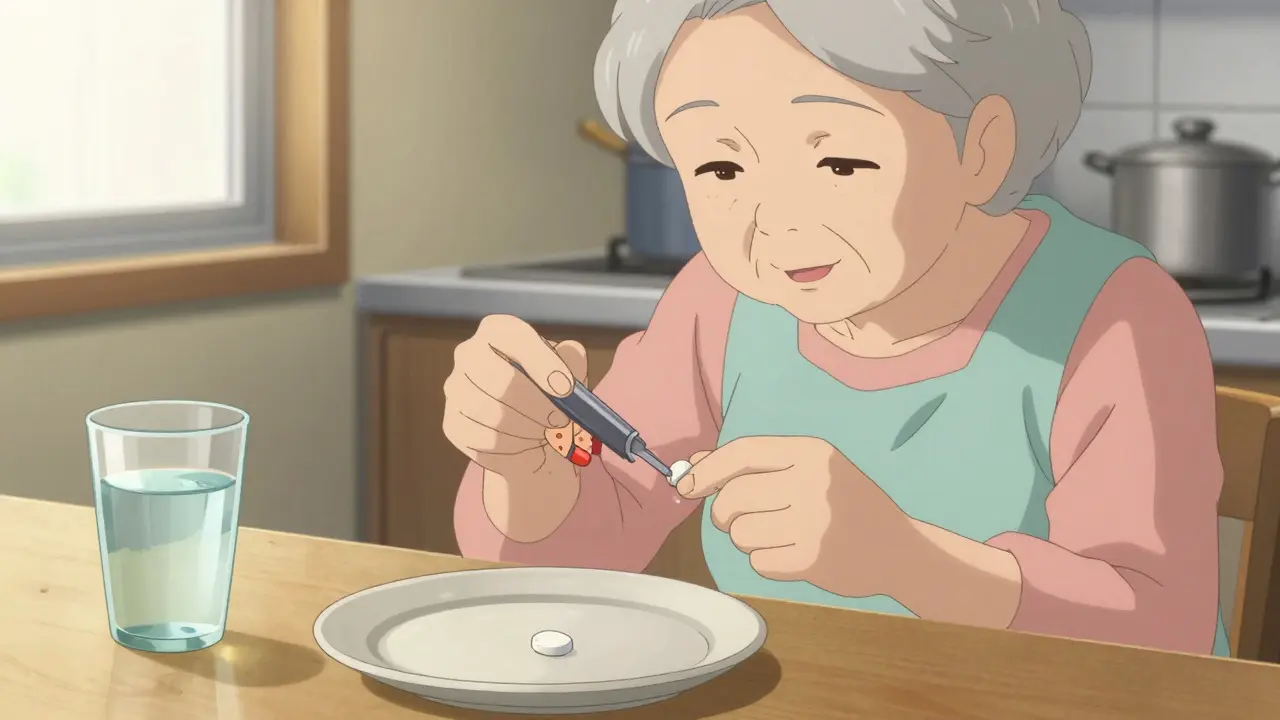
People split pills and crush tablets all the time-usually to save money, make swallowing easier, or adjust a dose when the right strength isn’t available. But here’s the thing: crushing tablets and splitting pills isn’t as simple as snapping a pill in half. One wrong move, and you could be giving yourself too much medicine-or not enough. And in some cases, it’s not just ineffective-it’s dangerous.
Why People Split or Crush Pills
Most people do it out of necessity. Maybe they’re on a high-dose pill and can’t afford the lower strength. Or they have trouble swallowing large tablets. Some do it because their doctor didn’t mention it’s risky. A 2022 survey found that nearly 45% of people who split pills do it mainly to cut costs. For example, splitting a 40mg atorvastatin tablet in half can save $35 a month compared to buying two 20mg tablets. That kind of savings matters, especially on fixed incomes. But cost isn’t the only reason. Elderly patients often split pills because they’re prescribed a dose that doesn’t come in the right size. Kids might get crushed medication mixed into applesauce. Caregivers crush pills to get them into feeding tubes. All of these seem harmless-until something goes wrong.The Hidden Dangers of Crushing Tablets
Not all pills are created equal. Some are designed to release medicine slowly over hours. These are called extended-release or sustained-release tablets. Examples include OxyContin (oxycodone), Concerta (methylphenidate), and Topamax ER (topiramate). Crush one of these, and you’re basically turning a time-release capsule into a bomb. When you crush an extended-release tablet, the entire dose can flood into your system at once. For opioids like oxycodone, that means blood levels can spike 300% to 500% within 30 minutes. That’s not just risky-it’s life-threatening. There are documented cases of people dying after crushing these pills, thinking they were just taking a regular tablet. Then there are enteric-coated pills. These have a special coating that keeps them from dissolving in your stomach. They’re made to pass through to the intestines before releasing the drug. Medications like aspirin EC (Ecotrin), potassium chloride, and nitrofurantoin fall into this category. Crush them, and the acid in your stomach burns the lining. That can cause ulcers, bleeding, or severe stomach pain. Even film-coated pills can be problematic. The coating hides bitter tastes. Crush them, and you’re left with a chalky, awful-tasting powder that’s hard to swallow-especially for kids or older adults. Many people just give up and stop taking the medicine altogether.What About Splitting Pills?
Splitting is less risky than crushing-but only if you do it right. Not every scored tablet is safe to split. A score line doesn’t mean it’s approved for splitting. The FDA says only about half of scored tablets are actually safe to divide. Many patients assume the line means it’s okay. It doesn’t. Safe to split: immediate-release tablets with uniform drug distribution. These include atorvastatin (Lipitor), rosuvastatin (Crestor), citalopram (Celexa), sertraline (Zoloft), lisinopril (Prinivil), and losartan (Cozaar). These drugs have wide therapeutic windows-meaning small variations in dose won’t cause big problems. Never split: extended-release, enteric-coated, sublingual (like nitroglycerin), effervescent, or any drug with a narrow therapeutic index. That includes digoxin, carbamazepine, and warfarin. With these, even a 10% difference in dose can cause serious side effects. One study showed a patient’s blood pressure jumped from 130/85 to 165/100 after splitting an amlodipine tablet incorrectly.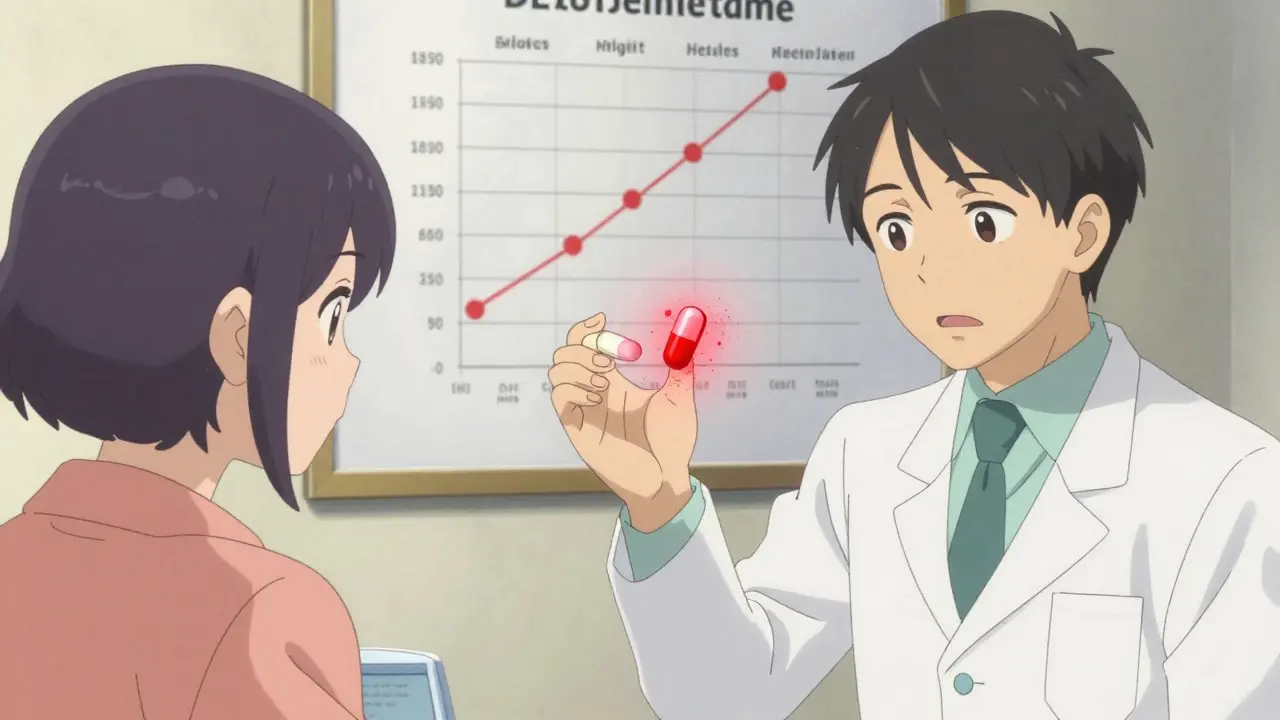
How to Split Pills Safely (If You Must)
If your doctor or pharmacist says it’s okay to split a pill, here’s how to do it right:- Use a proper pill splitter-not a knife, not scissors. A V-shaped splitter with a retractable blade keeps the pill steady and cuts cleanly.
- Place the score line exactly in the center of the splitter.
- Press down quickly and firmly. Slow pressure causes crumbling.
- Split only one pill at a time. Don’t pre-split a week’s supply.
- Store split pills in a dry, cool place. Humidity ruins potency. Some meds, like clopidogrel (Plavix), lose effectiveness within 48 hours after splitting.
- Check your vision. If your corrected vision is worse than 20/40, you’re nearly five times more likely to split unevenly. Ask a family member or pharmacist for help.
The Hazardous Drug Warning
Some pills aren’t just risky for the patient-they’re dangerous for anyone who handles them. The National Institute for Occupational Safety and Health (NIOSH) lists 261 oral medications as hazardous, including most chemotherapy drugs, certain antidepressants like paroxetine (Paxil), and tamoxifen. Crushing these can release toxic dust into the air. Healthcare workers have gotten sick from handling crushed methotrexate without gloves or masks. One unprotected incident led to reproductive toxicity. Even family members helping at home can be exposed. If you’re handling any cancer drug, antiviral, or hormone therapy, wear gloves. Don’t crush them unless absolutely necessary-and only under professional supervision.What to Do Instead
Before you reach for a pill splitter, ask your pharmacist or doctor if there’s a better option. Many medications now come in multiple strengths. Between 2018 and 2023, the percentage of new drugs approved with multiple dosages jumped from 52% to 67%. That means fewer people need to split pills. There are also liquid forms, orally disintegrating tablets, and patches. For example, instead of crushing a tablet for a loved one in a nursing home, ask if a liquid version exists. Many pharmacies can compound medications into easier-to-swallow forms. If cost is the issue, ask about generic alternatives or patient assistance programs. Many drug manufacturers offer free or discounted medications to people who qualify. Splitting a pill might save $35 a month-but it could cost you a hospital visit if something goes wrong.
When to Say No
Here’s a quick checklist of when NOT to split or crush:- The pill has “ER,” “SR,” “XR,” or “CR” on it
- It’s enteric-coated (look for “EC” or “delayed release”)
- It’s a capsule (never open or crush capsules)
- It’s a sublingual tablet (dissolves under the tongue)
- It’s on the NIOSH hazardous drugs list
- The tablet isn’t scored and looks uneven
- You’re unsure-ask your pharmacist
What the Experts Say
The Institute for Safe Medication Practices (ISMP) calls improper pill splitting a “deadly error.” They’ve documented cases where people ended up in the ER after splitting the wrong pill. The American Society of Health-System Pharmacists says splitting should only happen after consulting a pharmacist. And the FDA doesn’t approve pill splitting-it considers it an unlicensed use of the medicine. The bottom line? Don’t guess. Don’t assume. If you’re thinking about splitting or crushing a pill, talk to your pharmacist first. They see what happens when things go wrong. And they know which pills can be split-and which ones could kill you.Is it safe to split a scored pill?
Not always. A score line doesn’t guarantee safety. Only about half of scored tablets are approved for splitting. Check with your pharmacist or look up the specific drug in the FDA’s guidelines. Medications like atorvastatin and lisinopril are generally safe. Extended-release, enteric-coated, or narrow-therapeutic-index drugs are not.
Can I crush a pill and mix it with food?
Only if your pharmacist says it’s okay. Crushing extended-release, enteric-coated, or hazardous drugs can be dangerous. Even some safe pills lose potency or taste awful when crushed. If swallowing is hard, ask about liquid versions, orally disintegrating tablets, or compounded formulations instead.
What’s the best tool to split pills?
Use a dedicated pill splitter with a V-shaped holder and retractable blade. Kitchen knives, scissors, or fingernails increase the risk of uneven splits by 300%. Professional splitters reduce dose variation to under 8%. They’re inexpensive and available at most pharmacies.
How long can I store a split pill?
Split pills lose potency faster than whole ones, especially in humid environments. Some, like clopidogrel (Plavix), become ineffective within 48 hours. Store split pills in a dry, cool place-ideally in a sealed container with a desiccant. Never pre-split more than a few days’ supply unless your pharmacist says otherwise.
Can splitting pills cause side effects?
Yes. Uneven splits can lead to too much or too little medication. One patient’s blood pressure spiked after splitting amlodipine. Others report feeling “too strong” or “no effect” after splitting. This is especially risky with drugs like warfarin, digoxin, or carbamazepine, where small dose changes cause big effects.
Are there alternatives to splitting pills?
Yes. Many drugs now come in multiple strengths. Ask your doctor or pharmacist if a lower-dose tablet, liquid, patch, or disintegrating tablet is available. Compounding pharmacies can also make custom doses. Patient assistance programs may cover the cost of the right strength, making splitting unnecessary.
Is it safe to crush chemotherapy pills?
No. Chemotherapy drugs like methotrexate and tamoxifen are hazardous. Crushing them releases toxic dust that can harm anyone nearby-even caregivers. These drugs require special handling with gloves and masks. Never crush them at home unless instructed by a trained professional. Always ask your oncology team for safer alternatives.

12 Comments
I’ve been splitting my lisinopril for years and never had an issue. My pharmacist said it’s fine. Just use a real splitter, not a knife. 🙏
Oh wow, so crushing pills is like playing Russian roulette but with your liver and kidneys? How did we get to a point where people need to become pharmacists just to take their meds? 😔
Meanwhile, Big Pharma is busy inventing 17 new ways to make you pay $200 for a pill that could’ve been $5 if they just made smaller ones. The real crime isn’t splitting pills-it’s the system that forces you to.
People are idiots. If you can’t afford your meds, don’t play doctor. Go on Medicaid. Get a job. Stop being lazy and thinking crushing a pill is a smart move. You think you’re saving money? You’re just buying a one-way ticket to the ER.
And don’t even get me started on those ‘I crushed my OxyContin for my grandma’ stories. That’s not compassion, that’s criminal negligence.
Just wanted to add that if you’re splitting pills, always check the expiration date on the bottle. Split pills degrade faster, especially if they’re exposed to air. I’ve seen people keep split pills in a drawer for weeks-big mistake.
Also, if you’re taking warfarin or digoxin, don’t even think about it. Those are the kind of meds where 5% off can send you to the hospital. Your pharmacist is your best friend here. Ask them. They’ve seen it all.
They don’t want you to know this but the FDA doesn’t approve splitting because they’re scared of lawsuits. The real reason? They make more money off you buying two pills instead of one.
And what about those ‘hazardous drug’ warnings? Ever wonder why chemo drugs are so expensive? Because they’re designed to be dangerous. They want you to pay for gloves, masks, and special disposal. It’s all a scam.
My cousin crushed her tamoxifen and didn’t get sick. Coincidence? I think not.
So many of us are doing this out of necessity, not carelessness. I split my citalopram because I’m on a fixed income and the 20mg is $120 a month. The 10mg is $80. I split it, use a splitter, and store it right. I’m not reckless-I’m resourceful.
And yes, I asked my pharmacist. She gave me a pamphlet. She didn’t judge. That’s the kind of care we need more of.
Look, I’m American and I love my pills. But I also love my country. And our healthcare system is a joke. We’re the only country where you need a PhD to figure out how to take your own medicine.
Meanwhile, Canada and the UK just give you the right dose. We’re not broken because people split pills. We’re broken because we let corporations decide what’s safe.
OMG I JUST CRUSHED MY TOPAMAX ER AND NOW I’M HAVING A SEIZURE 😱😭
JK I’M FINE BUT I DID IT ONCE AND NOW I’M SCARED TO DEATH. I’M GOING TO TALK TO MY PHARMACIST TOMORROW. 😫💊
It’s not about whether you can split a pill-it’s about whether you should. The body isn’t a machine you can tweak with a knife. There’s wisdom in trusting the design.
But also, we live in a world where a man can’t afford his blood pressure pill and has to gamble with his life. That’s the real tragedy. The pill isn’t the problem. The system is.
Splitting pills? I used to do it with my dad’s atorvastatin. He’d use a knife and say ‘it’s fine, mate’. Then he ended up in A&E with a weird heart rhythm. Turned out he got a double dose one day. Never again.
Now we just get the 10mg. Costs more but my dad’s still alive. Worth it.
Thank you for this detailed and responsible post. Many people are unaware of the risks involved in pill manipulation. It is a reminder that medical advice should always be sought before altering prescribed medications. Even well-intentioned actions can lead to unintended consequences.
Pharmacists are trained for this reason. Their role is not merely to dispense but to educate. Let us not underestimate their value.
They’re hiding something. Why do they put the ‘ER’ on the pill but won’t tell you what it really means? I think the government and Big Pharma are working together to make us sick so they can sell us more pills. I saw a video where a guy crushed his meds and his hair fell out. That’s not a coincidence. 🧪👁️🗨️
Write a comment