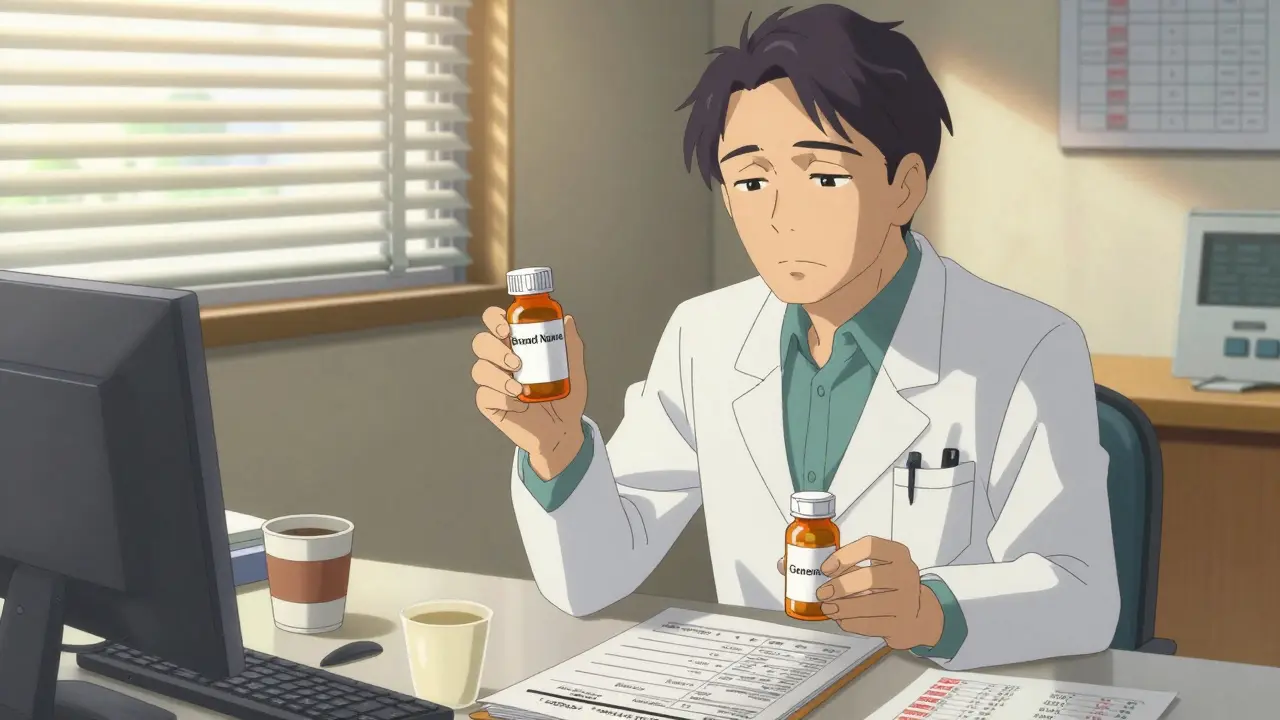
Most people assume doctors prescribe generic drugs because they’re cheaper and just as good. But the truth? Many physicians still hesitate - not because they don’t care about cost, but because they’re unsure if generics really work the same way. A 2023 survey of over 1,200 U.S. doctors found that nearly one in three still question whether generic medications match brand-name drugs in effectiveness. That’s not a small number. It’s a gap in trust that affects millions of prescriptions every year.
Why Do Some Doctors Doubt Generics?
The biggest issue isn’t ignorance - it’s misinformation. Many doctors were taught in medical school that generics are identical to brand-name drugs. But the reality is more complicated. The FDA requires generics to be bioequivalent, meaning they deliver 80% to 125% of the active ingredient compared to the brand. That’s a wide range. For most drugs, it doesn’t matter. But for drugs with a narrow therapeutic index - like warfarin, levothyroxine, or epilepsy meds - even small differences can cause problems.
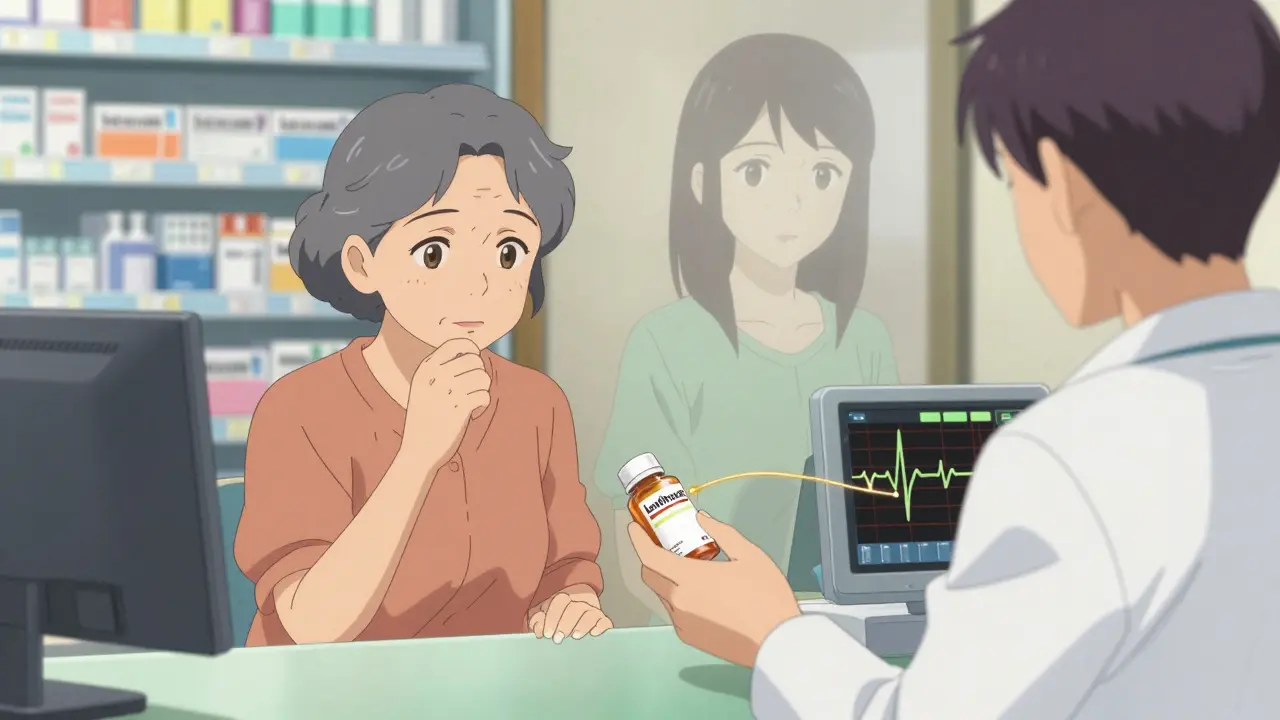
One doctor in a rural clinic in Ohio told me about a patient who switched from brand-name Synthroid to a generic levothyroxine and suddenly developed heart palpitations. The lab results showed her TSH levels had jumped. She went back to the brand, and everything normalized. That story isn’t rare. A 2023 Reddit thread in r/medicine with over 12,000 views had 62% of participating physicians reporting at least one case where they believed a generic switch caused an adverse reaction.
Then there’s the manufacturing issue. Generic drugs are made by dozens of companies - some based overseas. While all must meet FDA standards, quality control can vary. One 2022 analysis of FDA inspection reports found that 37% of generic drug manufacturing sites had serious compliance issues, compared to 19% of brand-name facilities. That doesn’t mean generics are unsafe. But it does mean some doctors feel uneasy.
Who’s Most Skeptical?
It’s not random. Research shows certain types of doctors are more likely to distrust generics. Male physicians, specialists (especially cardiologists and neurologists), and those with over 10 years of experience show the strongest resistance. A 2017 study of 134 Greek doctors found that male specialists were nearly twice as likely as female primary care doctors to say they wouldn’t prescribe a generic for a chronic condition.
Age matters too. Doctors over 55 are significantly more likely to believe generics cause more side effects. Why? Many of them started practicing before generics became widespread. They remember prescribing brand-name drugs that worked - and they haven’t updated their mental model. A 2018 study showed a clear correlation: the older the doctor, the lower their confidence in generic equivalence (p < 0.001).
And then there’s the time factor. Primary care doctors, who see 30+ patients a day, say they simply don’t have time to research every generic alternative. One doctor in Chicago told me, “I know I should check if the generic for this blood pressure pill is really equivalent. But I’ve got a patient with chest pain waiting, and my lunch break is in five minutes.”
What Do Doctors Actually Know?
Here’s the irony: 78% of doctors say they’re familiar with bioequivalence standards. But only 44% can correctly define what those numbers mean. That’s a massive knowledge gap. In a 2021 survey of U.S. primary care physicians, only 1 in 3 knew that the FDA allows a 25% variation in absorption between brand and generic. Most assumed it was 5% or less.
That lack of clarity leads to overcaution. A doctor who doesn’t understand the science might default to the brand name - not because they think it’s better, but because they don’t want to risk a bad outcome. Especially with older patients who are already on multiple meds. Switching to a generic feels like adding another variable to an already complex equation.
Where Do Patients Get Their Ideas?
Patients don’t form opinions in a vacuum. They listen to their doctors. A CDC study found that 68% of people decide whether to take a generic based on what their provider says. If a doctor says, “I’m not sure about this one,” the patient hears, “Don’t take it.”
That’s dangerous. In rural areas, 42% of patients stopped taking their medication after being offered a generic - not because it didn’t work, but because they were told to be wary. One woman in West Virginia told researchers she stopped her generic statin because her doctor said, “I’d never take that one myself.” She ended up having a heart attack six months later.
It’s a feedback loop: doctor skepticism → patient refusal → poor outcomes → doctor doubles down on brand names. And the cycle keeps spinning.
What’s Changing?
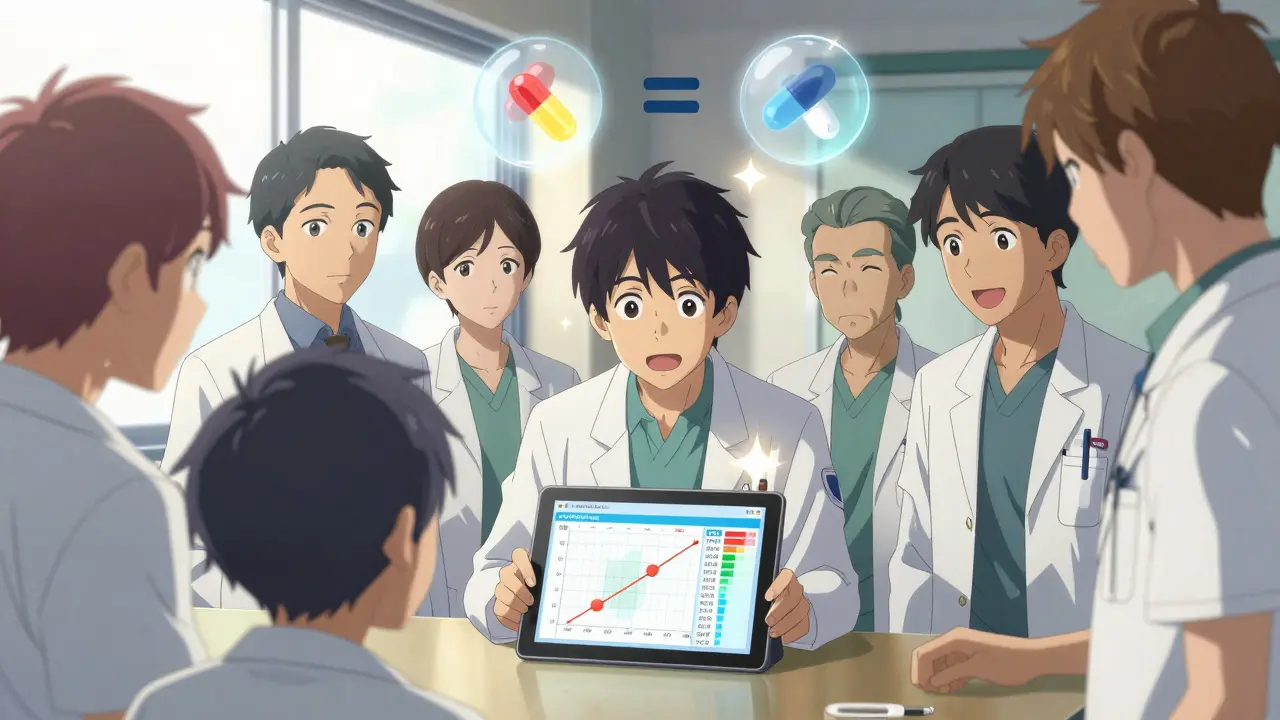
But things are shifting. A 2023 pilot program at Johns Hopkins showed that when doctors were given real-world data on how generics performed in actual patients - not just lab studies - their prescribing rates for new generics jumped by 28.6%. That’s huge. When you show a doctor that 12,000 people took the generic version of a cholesterol drug and had the same number of heart attacks as those on the brand, skepticism starts to fade.
Medical schools are also waking up. Only 39% of U.S. medical schools currently include detailed training on generics. But that’s changing. The American Medical Association’s 2024 policy update now recommends standardized naming for generics - replacing confusing chemical names like “atenolol 50 mg” with simpler ones like “CardioAte 50 mg.” That’s a direct response to physician complaints. One doctor told me, “I used to have to look up what ‘amlodipine besylate’ even was. Now I can just say ‘BloodPressureX’ and patients get it.”
Education works. A 90-minute workshop for doctors in Greece led to a 22.5% increase in generic prescribing over six months. The biggest boost? Among doctors with 5-10 years of experience. Not the rookies. Not the veterans. The ones in the middle - the ones still open to learning.
The Real Cost of Hesitation
Generics make up 90% of all prescriptions in the U.S. But they account for only 23% of drug spending. That means we’re saving billions - if we’d just use them. The $528 billion global generics market is growing fast. But doctors are holding back. Especially for mental health and heart drugs, where brand loyalty remains stubbornly high.
Every time a doctor prescribes a brand-name drug over a generic - even when the generic is just as effective - it costs the system an extra $50 to $200 per prescription. Multiply that by millions of prescriptions. That’s billions. And for patients? It’s out-of-pocket costs they can’t afford. A 65-year-old on Medicare might skip their pill because the generic is still $15 a month and the brand is $85. That’s not a choice. That’s a crisis.
What Needs to Happen
It’s not about forcing doctors to switch. It’s about giving them the right tools. First: better education. Not just in medical school, but every year. Quarterly updates on new generic approvals, real-world outcome data, and side effect reports. Second: simpler naming. No more Latin-sounding chemical names. Third: trust-building. Doctors need to hear from other doctors who’ve made the switch successfully. Peer influence is 43% more effective than outside experts.
And patients need better communication. Instead of saying, “I’m switching you to a generic,” doctors should say, “This is the same medicine, made by a different company. Here’s what the data shows.” That small change in language cuts patient anxiety in half.
The science is clear. Generics work. But trust doesn’t come from data alone. It comes from understanding, communication, and time. The next generation of doctors is more open. But the ones prescribing today? They need support - not pressure.
What Patients Can Do
If you’re prescribed a generic and you’re unsure, ask: “Is this equivalent to the brand? Has it been used successfully in other patients?” Don’t assume your doctor knows all the details - but don’t assume they’re wrong either. Many are just working with outdated info.
And if your doctor refuses to switch you to a generic without explanation, ask why. Their answer might surprise you. Sometimes, it’s not about distrust - it’s about not knowing the latest data. That’s fixable.