
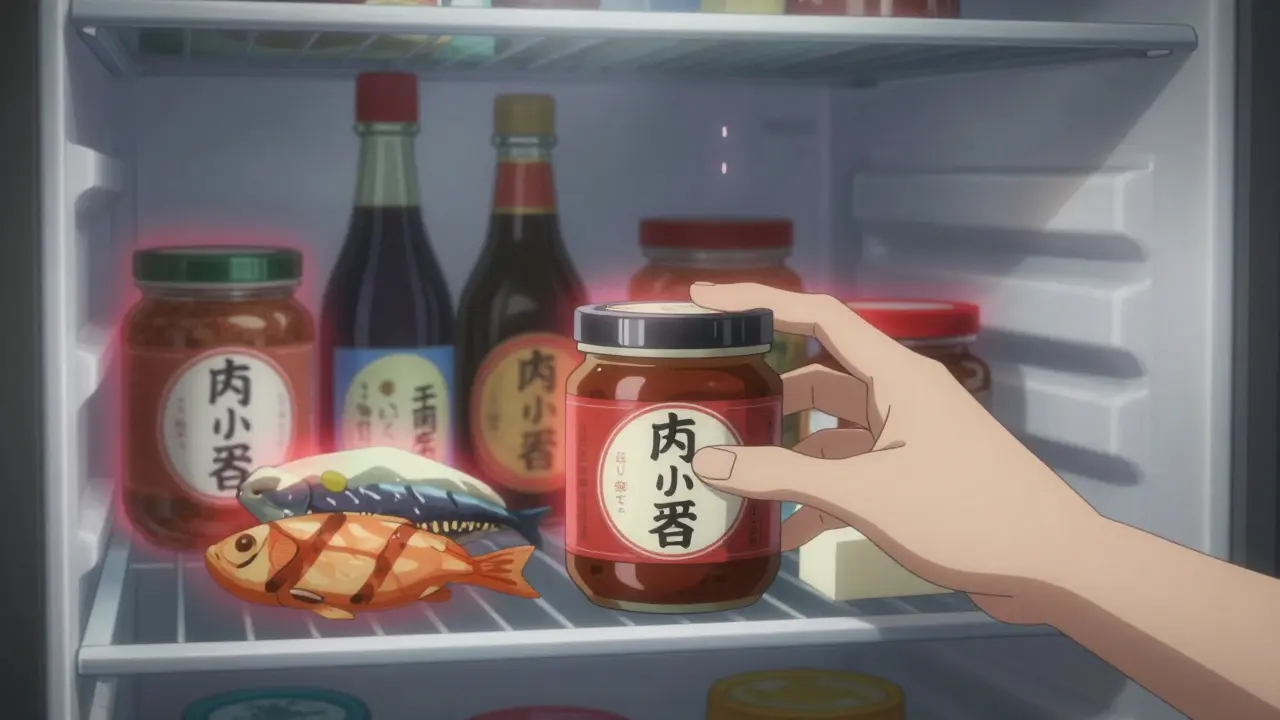
Tyramine Safety Calculator
Check Food Safety
Tyramine can cause a hypertensive crisis when combined with MAOIs. Even small amounts of high-tyramine foods can be dangerous. Always consult your doctor for personalized advice.
This tool is for informational purposes only and does not replace medical advice.
The FDA estimates that over 1.2 million Americans are prescribed MAOIs. For them, avoiding tyramine isn't optional—it's a matter of survival.
Enter food and quantity to see results...
When you're taking MAOIs for depression, the warning about cheese is everywhere. But if you think that's the only food you need to avoid, you're in for a dangerous surprise. The real risk isn't just aged cheddar or blue cheese-it's the everyday fermented foods hiding in your pantry, your fridge, and even your favorite restaurant meals. Tyramine, a naturally occurring compound formed during fermentation and aging, can trigger a sudden, life-threatening spike in blood pressure when combined with MAOIs. And it's not just cheese. From soy sauce to sauerkraut, from miso soup to smoked fish, many common foods carry hidden dangers.
What Exactly Is Tyramine and Why Does It Matter?
Tyramine is a byproduct of protein breakdown. When foods like meat, fish, soy, or dairy sit for days or weeks-especially under temperature fluctuations-bacteria and enzymes break down the amino acid tyrosine into tyramine. Normally, your body breaks down excess tyramine using an enzyme called monoamine oxidase. But when you're on an MAOI (monoamine oxidase inhibitor), that enzyme is blocked. Tyramine builds up, causing your blood pressure to skyrocket. Systolic pressure can jump past 180 mmHg. That’s not just a headache. That’s a hypertensive crisis: pounding headache, blurred vision, chest pain, nausea, and sometimes stroke or heart attack. Emergency care is often needed.
The FDA estimates that over 1.2 million Americans are prescribed MAOIs like phenelzine (Nardil) or tranylcypromine (Parnate). For them, avoiding tyramine isn’t optional-it’s a matter of survival. And while cheese gets all the attention, research shows many other foods contain equal or even higher levels of tyramine.
High-Tyramine Foods You Probably Didn’t Know Were Dangerous
Let’s cut through the myths. You’ve heard about blue cheese. But what about:
- Dry-aged salami: 95-115 mg/kg tyramine
- Pepperoni: 80-100 mg/kg
- Smoked fish (like lox or kippers): 75-90 mg/kg
- Miso paste: 60-85 mg/kg
- Soy sauce: 45-70 mg/kg
- Sauerkraut: 50-75 mg/kg
- Kimchi: 40-65 mg/kg
- Worcestershire sauce: 25-45 mg/kg
- Fish sauce: 35-55 mg/kg
- Marmite or yeast extract: 40-60 mg/kg
- Tomato paste: 20-35 mg/kg
- Sherry or vermouth: 35-75 mg/L
- Draft beer: 15-30 mg/L (bottled is safer)
These numbers come from peer-reviewed food safety studies, including data from the European Food Safety Authority and the USDA’s 2023 FoodData Central database. A single tablespoon of soy sauce can contain more tyramine than a small slice of aged cheese. And it’s not just about quantity-it’s about frequency. Eating small amounts daily can lead to dangerous accumulation.
Why Refrigeration Doesn’t Fix the Problem
You might think, “If I just keep it cold, it’s safe.” Not true. Refrigeration slows down tyramine production-but it doesn’t reverse it. Once tyramine forms, it stays. In fact, research from Harvard Medical School shows that tofu, which starts at just 5 mg/kg when fresh, can climb to 25 mg/kg after only 72 hours in a standard fridge. That’s a fivefold increase in just three days. The same applies to miso, soy sauce, and even pickled vegetables. If it’s been sitting for weeks, even in the fridge, it’s risky.
Also, avoid overripe or spoiled foods. Overripe bananas, avocados, or onions can develop tyramine too. One patient in a 2022 survey had a hypertensive crisis after eating a banana that had started to turn black. The warning isn’t just “avoid aged cheese.” It’s “avoid anything fermented, aged, spoiled, or left too long.”
The Hidden Culprits: Restaurant Meals and Condiments
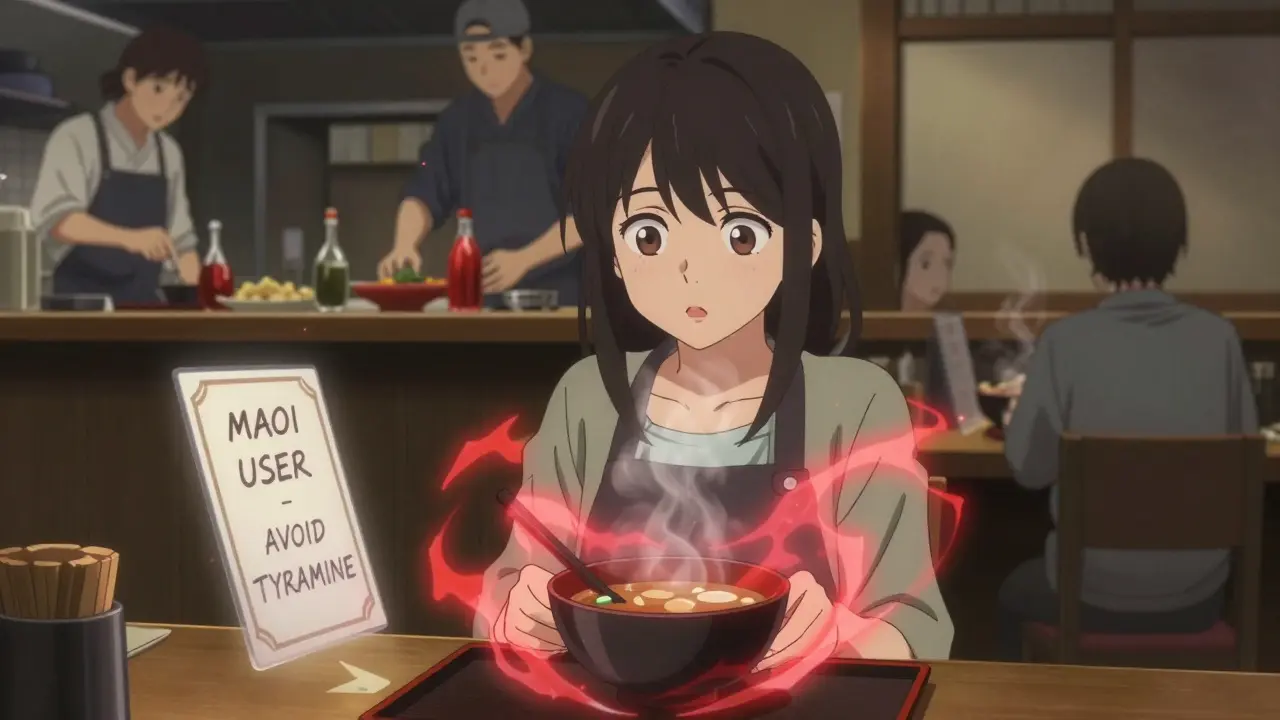
Most MAOI users are fine at home-they read labels. But restaurants? That’s where things go wrong. A 2023 investigation found that 7 out of 10 popular chain restaurants couldn’t tell you if their menu items contained soy sauce, Worcestershire sauce, or fish sauce. These aren’t listed as “ingredients” on menus. They’re hidden in stir-fries, marinades, dressings, and dipping sauces.
One Reddit user, 'NeurotransmitterNancy,' described a terrifying ER visit after eating miso soup at a Japanese restaurant. “No one warned me,” she wrote. “I thought it was just broth.” Her blood pressure hit 210/115 within 45 minutes. She needed IV medication and 12 hours of monitoring.
Even “healthy” meals can be traps. A salad with soy-based dressing, a stir-fry with tamari instead of soy sauce (it’s still soy), or a sandwich with deli meat and mustard containing yeast extract-all are ticking time bombs.
What About Soy? Is It Safe?
This is where confusion runs deep. Some experts say small amounts of soy sauce (under a tablespoon) are okay for some people. Others say no soy at all. The truth? There’s no universal answer. It depends on your sensitivity, your dose of MAOI, and your metabolism. But the safest rule? Avoid all fermented soy products unless your psychiatrist specifically says otherwise. Miso, tempeh, soy sauce, and tamari all contain tyramine. Even “low-sodium” versions aren’t safer-they’re just lower in salt, not tyramine.
And don’t assume “organic” or “artisanal” means safer. In fact, small-batch fermented foods often have higher tyramine levels because they’re aged longer for flavor. Commercial brands using controlled starter cultures have reduced tyramine by about 30% since 2015-but that doesn’t mean they’re safe.
How to Stay Safe: Practical Rules
If you’re on an MAOI, here’s what you need to do:
- Read every label. Look for: fermented, aged, cured, smoked, pickled, marinated, brewed, or yeast extract.
- Throw out anything past its prime. If it’s been in the fridge for more than 5 days and isn’t fresh-packaged, assume it’s risky.
- Ask restaurants if their dishes contain soy sauce, fish sauce, Worcestershire, miso, or yeast extracts. If they hesitate, don’t eat it.
- Stick to fresh, unprocessed foods. Fresh meat, plain vegetables, and unfermented grains are your safest bets.
- Carry a warning card. Emergency rooms across the U.S. now recommend patients carry a printed card stating they’re on an MAOI and must avoid tyramine. 87% of ER doctors say it saves time and lives.
Also, avoid alcohol. Draft beer, red wine, sherry, and vermouth all contain tyramine. Bottled beer is lower risk, but still not zero. Stick to non-alcoholic drinks unless your doctor says otherwise.
What About New Solutions?
There’s hope on the horizon. In 2023, the FDA approved a new enzyme supplement called TyraZyme, designed to break down tyramine in the gut before it enters the bloodstream. In trials, it reduced tyramine absorption by 58%. But experts warn it’s not a license to eat whatever you want. It’s still experimental.
Another development: the selegiline patch (Emsam). Unlike older MAOIs, this skin patch allows limited tyramine intake at the lowest dose (6 mg/day). But even then, you can’t eat salami or soy sauce. It’s a partial improvement-not a cure.
Long-term, researchers are exploring genetic testing to identify who naturally breaks down tyramine better. Some people might tolerate small amounts. But until that’s widely available, the rule stays simple: if it’s fermented, aged, or pickled-skip it.
The Emotional Cost
It’s not just physical. A 2022 survey of 347 MAOI users found that 41% canceled social events because they couldn’t find safe food. One woman stopped going to dinner parties. A man turned down his son’s wedding reception because the menu included miso-glazed salmon. The medication saved his life-but it cost him connection.
Yet, 78% of those same users said the dietary restrictions were worth it. Their depression lifted. Their energy returned. Their anxiety faded. The trade-off isn’t easy, but for many, it’s the only path to real recovery.
If you’re struggling, find support. Groups like the MAOI Support Network on Facebook have over 12,000 members sharing restaurant tips, safe recipes, and emergency advice. You’re not alone. But you must be vigilant.
Final Rule: When in Doubt, Leave It Out
There’s no gray area. You can’t guess. You can’t test. One bite can send you to the ER. If a food is fermented, aged, cured, or has been sitting for more than a few days-don’t eat it. Even if it’s labeled “natural” or “organic.” Even if your friend says it’s fine. Even if you’ve eaten it before without problems. MAOIs change how your body responds. What was safe last year might kill you this year.
Your life depends on this one simple rule: When in doubt, leave it out.
Can I eat tofu if it’s fresh?
Even fresh tofu can develop tyramine after just 72 hours in the fridge. If it’s been sitting for more than 2 days, it’s unsafe. Always check the expiration date and avoid any tofu that looks or smells off. Stick to freshly opened, refrigerated tofu and use it within 24 hours.
Is all cheese dangerous?
Not all cheese, but most aged or hard cheeses are. Cheddar, blue, Swiss, parmesan, feta, and Camembert all contain high tyramine levels. Fresh cheeses like mozzarella, ricotta, cottage cheese, and cream cheese are generally safe-but only if they’re truly fresh and unaged. Always check labels for “aged” or “ripened.”
What about kombucha?
Kombucha is fermented and contains yeast and bacteria that can produce tyramine. Even if it’s labeled “low sugar” or “organic,” it’s not considered safe for MAOI users. Avoid it completely.
Can I drink wine?
Red wine, sherry, and vermouth contain significant tyramine (20-75 mg/L). Even small amounts can trigger a reaction. If you must drink, stick to non-alcoholic beverages. Bottled white wine has lower levels than red, but it’s still not recommended. The safest choice is no alcohol.
How long do I need to avoid these foods?
You must avoid high-tyramine foods for the entire time you’re on the MAOI-and for 14 days after you stop taking it. Tyramine can still cause a reaction during this period because the enzyme hasn’t fully returned to normal function. Never assume it’s safe just because you’ve stopped the medication.
If you’ve been on MAOIs for more than a few weeks, talk to your psychiatrist about a detailed dietary plan. Ask for a referral to a dietitian who specializes in psychiatric nutrition. Many hospitals now offer free 30-minute sessions to help you navigate this safely. Don’t try to figure it out alone. Your life depends on it.


10 Comments
So let me get this straight-my favorite miso ramen is a death trap? And I thought my weekend binges were just bad choices. Now I’m sitting here wondering if my soy sauce bottle is plotting my demise. This article turned my pantry into a crime scene. I’m gonna need a hazmat suit just to make a sandwich.
Read this cover to cover. Key takeaway: if it’s fermented, aged, or has been sitting more than 48 hours-skip it. Fresh tofu? Safe for 24 hours max. Soy sauce? One tablespoon = cheese-level risk. No gray areas. Your life isn’t worth guessing.
My mom made kimchi every winter. I grew up eating it with rice. Now I’m terrified. What if I’ve been poisoning myself for years? I just checked my fridge-there’s a jar from last December. Should I throw it out? Or is it too late? I feel like I need a blood test just to eat lunch.
It’s fascinating, really, how modern food preservation has inadvertently created a silent killer for those on MAOIs. The irony is thick: we’ve engineered foods to last longer, to taste richer, to be more ‘authentic’-and in doing so, we’ve created biochemical landmines disguised as comfort food. I’ve read the FDA data, the Harvard studies, the USDA databases. The numbers don’t lie. It’s not paranoia. It’s pharmacology. And yet, the cultural normalization of these foods makes compliance nearly impossible. We’re not just avoiding ingredients-we’re avoiding tradition, community, memory.
I think this is all a Big Pharma scam. They want you to believe soy sauce is dangerous so you keep buying their expensive meds. I’ve been eating kimchi for 15 years on MAOIs. No problems. They’re just scared you’ll figure out the truth: the real danger is the drug itself. The FDA? Controlled by corporations. Don’t trust labels. Don’t trust doctors. Trust your body. I’ve got 3 jars of miso and I’m not touching them. Wait-why am I typing this? Maybe they’re watching me. Maybe they put something in my coffee. I think I’m being tracked.
Let me be clear: if you are on an MAOI, and you consume any fermented product-regardless of how ‘natural,’ ‘organic,’ or ‘artisanal’ it is-you are not just being reckless, you are displaying a profound lack of responsibility toward your own life. The science is unequivocal. The FDA, the USDA, Harvard-all agree. You are not a rebel. You are a statistic waiting to happen. And if you think your ‘personal experience’ overrides peer-reviewed data, you are not just ignorant-you are dangerous.
One thing everyone’s missing: the 14-day post-MAOI window. People think once they stop the med, they’re safe. Nope. The enzyme takes weeks to regenerate. I had a patient who ate smoked salmon two weeks after quitting Nardil. Ended up in the ER. Don’t assume safety. Always wait. Always check. Always confirm with your prescriber. No exceptions.
As someone from India, I’ve seen how fermentation is woven into our food culture-fermented rice batter for dosa, pickled mangoes, yogurt-based curries. I understand the fear. But I also know that not all fermented foods are equal. Traditional methods, small batches, controlled fermentation-some of these may be lower in tyramine than industrial versions. Maybe we need a global database of traditional fermented foods with tyramine levels. Not blanket bans. Nuanced guidance. Food is culture. We shouldn’t lose it to fear.
yo so i read this and i thought ok cool but then i remembered i had some fish sauce in my fridge from like 3 months ago and i used it in my pad thai last week… i think im gonna die. also i eat marmite on toast every morning. is it too late? i dont wanna die. also i think the government is hiding the real truth about soy. they dont want us to know that tofu is actually a mind control agent. i saw it on a video. its true. i just need to know if i should go to the er or just wait for the angels to come.
There is a pattern here. The same institutions that promoted trans fats as healthy now warn against tyramine. The same agencies that approved aspartame now caution against fermented soy. This is not science-it is control. The pharmaceutical industry profits from fear. They want you to believe that every traditional food is a weapon. They want you dependent. They want you isolated. They want you to distrust your grandmother’s recipes. They want you to buy their ‘TyraZyme’-a product that, coincidentally, is patented by a subsidiary of a major drug conglomerate. The truth is buried. The data is manipulated. The warning labels? A distraction. You are being led. Question everything.
Write a comment