
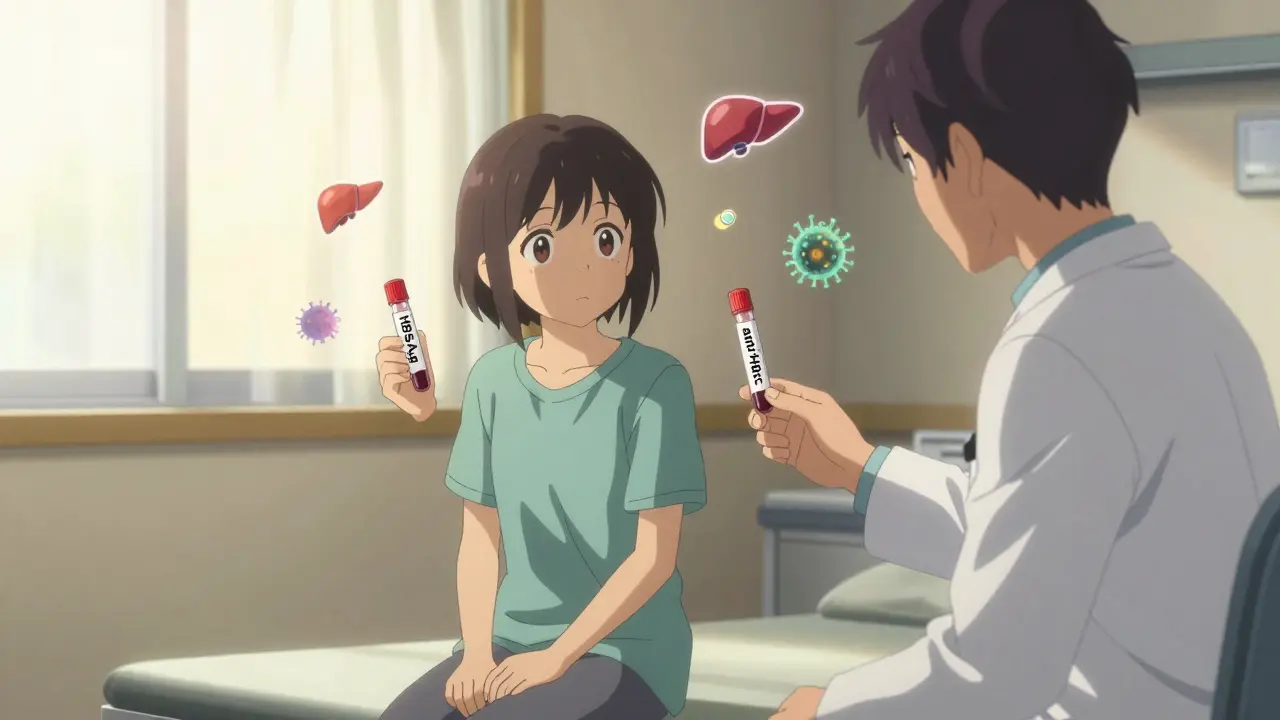
When someone is about to start treatment for cancer, rheumatoid arthritis, or another serious condition, the last thing they think about is a virus they might have forgotten they ever had. But for people with past or current hepatitis B virus (HBV) infection, starting powerful drugs like biologics or chemotherapy can wake up HBV from its quiet state - and that wake-up can be deadly.
What Is HBV Reactivation?
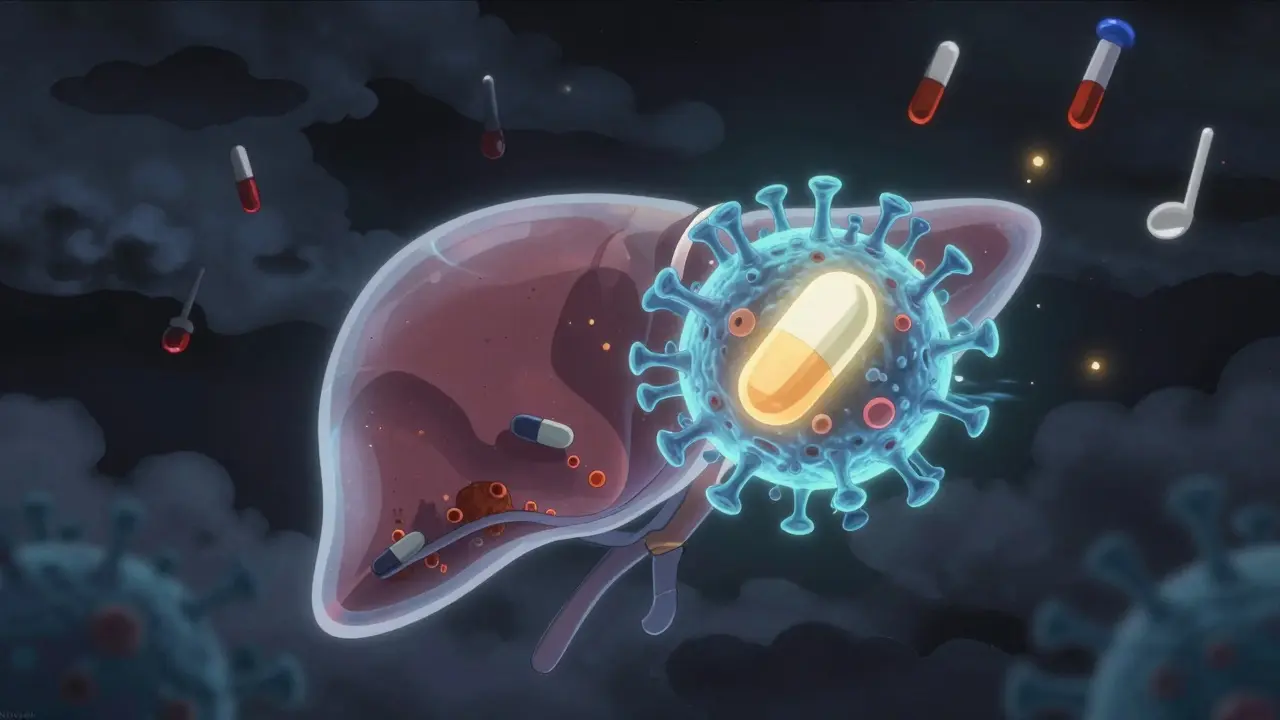
HBV reactivation isn’t a new infection. It’s when a virus that’s been sleeping in your liver suddenly wakes up and starts copying itself again. This happens because your immune system gets turned down - by drugs meant to treat cancer, autoimmune diseases, or other conditions. When your body can’t keep HBV in check anymore, the virus multiplies fast. Liver enzymes spike. Inflammation flares. And without quick action, you could end up with liver failure.
This isn’t rare. Studies show that among people with chronic HBV (HBsAg-positive) who get strong immunosuppressants like rituximab, reactivation rates can hit 73%. Even people who think they’re clear - those with only antibodies to HBV (anti-HBc-positive) - can still face a 10-18% risk if they’re on high-dose chemo or stem cell transplants.
Who’s at Risk?
Not everyone on immunosuppressive therapy is at the same risk. It all depends on two things: what drug you’re taking, and your HBV history.
- High-risk drugs (20-81% reactivation): Rituximab, ofatumumab (anti-CD20), anthracycline chemo, stem cell transplants (especially allogeneic), and high-dose corticosteroids. If you’re HBsAg-positive and on one of these, your chance of reactivation is over 50% without prevention.
- Intermediate-risk drugs (1-10%): Conventional chemo without steroids, TNF-alpha inhibitors like infliximab, and tyrosine kinase inhibitors like ibrutinib.
- Low-risk drugs (<1%): Most non-cytotoxic targeted therapies and non-TNF biologics.
But here’s the twist: even if you’re HBsAg-negative, you’re not off the hook. If you’ve ever had HBV - even decades ago - and your body cleared it (you’re anti-HBc-positive), you’re still at risk. Radiation therapy for liver cancer? That’s a 14% reactivation risk in this group. Checkpoint inhibitors like pembrolizumab? They’ve caused reactivation in 21% of HBsAg-positive patients who weren’t on antivirals.
How It Happens: The Three Stages
HBV reactivation isn’t just a sudden spike. It follows a pattern:
- Stage 1: Viral Replication - Your immune system is suppressed. HBV starts copying itself. No symptoms yet. Liver enzymes are normal.
- Stage 2: Immune Reconstitution - Your immune system starts to recover (often after treatment ends). It attacks the infected liver cells. This is when you get jaundice, fatigue, nausea, and dangerously high liver enzymes. This stage causes most of the damage.
- Stage 3: Resolution - If caught early and treated, the inflammation settles. If not? Liver failure.
The real danger? Stage 1 flies under the radar. By the time you feel sick, it’s often too late.
Prevention: Screening and Prophylaxis
The good news? HBV reactivation is almost entirely preventable. And it’s simple: screen everyone before starting immunosuppressive therapy.
Two blood tests are all you need:
- HBsAg - tells you if HBV is currently active
- anti-HBc - tells you if you’ve ever had HBV, even if you cleared it
If either test is positive, you need antiviral prophylaxis. The two go-to drugs are tenofovir and entecavir. They’re powerful, safe, and rarely cause side effects.
Here’s how it works:
- Start antivirals at least one week before your immunosuppressive therapy begins.
- Keep taking them for at least 6 months after treatment ends - and up to 12 months for high-risk cases like stem cell transplants or anti-CD20 drugs.
Studies show this cuts reactivation risk from 50% down to under 5%. One trial of 1,245 patients found that those on entecavir had only a 3.2% reactivation rate - versus 48.7% in those who got no treatment.
Why Isn’t Everyone Getting Screened?
Despite clear guidelines from AASLD, EASL, and IDSA, many doctors still skip screening. A 2020 survey found only 58% of community oncologists follow HBV screening rules - compared to 89% at academic hospitals.
Why? Some think it’s not their job. Others assume their patient is from a low-risk region. Some don’t know how to interpret the tests. And too many patients are lost between the initial blood draw and the start of treatment.
The consequences are brutal. A 2019 case report described a 52-year-old man with lymphoma who died from HBV reactivation after being started on rituximab without any screening. He had no symptoms before treatment. No warning. Just sudden liver failure.
Real-World Successes
Some places have cracked the code. At UCSF Medical Center, they added an automatic alert in their electronic health record system. Every patient scheduled for chemo or biologics had to have HBV screening done before their first appointment. In just five years, reactivation rates dropped from 12.3% to 1.7%.
At Memorial Sloan Kettering, they built automated tracking - if a patient tested positive for anti-HBc, the system flagged them for antiviral prophylaxis and reminded clinicians when to stop treatment. No more forgetting. No more gaps.
These aren’t fancy tech miracles. They’re simple systems built on a single rule: screen everyone. Treat everyone who needs it.
The Cost of Inaction
Some argue that screening everyone is overkill - especially in places where HBV is rare. But the math doesn’t lie. The cost of a simple blood test is under $50. The cost of treating HBV reactivation? Hospitalization, ICU stays, liver transplants - easily over $100,000. And that’s not counting the human cost: a 5-10% fatality rate in severe cases.
Dr. Robert G. Gish of the Hepatitis B Foundation says it plainly: “The cost of screening is negligible compared to the human and financial costs of managing HBV reactivation.”
And it’s not just about money. In 2019, 12% of infectious complications in oncology malpractice claims were tied to missed HBV screening. That’s not a glitch - it’s negligence.
What’s Next?
Guidelines keep improving. In 2022, a major study in the New England Journal of Medicine showed that 6 months of antiviral prophylaxis is enough for most patients - not the old 12-month standard. That means less drug exposure, lower cost, and fewer side effects.
Point-of-care tests are coming too. The OraQuick HBV rapid test, expected to get FDA approval in late 2023, could let a doctor test for HBV during a 10-minute office visit. No lab wait. No delay. Just a finger prick and a result before you start treatment.
And companies like Tempus Labs are now embedding HBV status into genomic reports for cancer patients - making it part of precision medicine, not an afterthought.
Bottom Line
If you’re about to start biologics, chemotherapy, or any strong immunosuppressant - ask your doctor: “Have I been screened for hepatitis B?” If they say no - push back. Demand the two simple blood tests: HBsAg and anti-HBc.
It’s not about fear. It’s about control. HBV reactivation is preventable. It’s predictable. And if you’re at risk, you deserve to know - before it’s too late.




9 Comments
Let me tell you something no one else will: I had a cousin on rituximab for lymphoma. They didn’t even test for HBV because ‘he’s Irish, he’s clean’ - turns out his granddad was a carrier from the 70s. Reactivation hit six weeks in. Liver enzymes through the roof. ICU for three days. They didn’t even know he had it until the ALT was 2800. This isn’t theoretical. It’s a ticking clock and we’re all ignoring the alarm.
And don’t get me started on how the guidelines are written by people who’ve never seen a real patient. The ‘low-risk’ category? That’s a death sentence waiting for someone to slip through the cracks. You think a 1% chance is low? That’s 1 in 100 people dying because someone thought ‘eh, probably fine.’
Just read this article after my oncologist mentioned HBV screening. I’ve been anti-HBc positive since my 20s - never knew what it meant. Now I’m on methotrexate for RA and suddenly I’m terrified. Is there a simple blood test I can ask for? Or is this something only specialists think about? I don’t want to be the person who ‘didn’t know’ and ended up in liver failure. Please, if anyone’s been through this, share your experience. I need to know what’s actually done in practice, not just what’s on paper.
Ive had chemo twice and never heard of this until now but lets be real if you dont get tested for HBV before starting biologics you deserve what you get
HBV reactivation kills. Not ‘can kill.’ Not ‘sometimes kills.’ It kills. And we’re still not screening everyone who needs it.
Man, this hits different when you realize your ‘quiet virus’ is basically a sleeper agent in your liver. I had a friend on infliximab for psoriasis - thought he was just getting better until his bilirubin went nuclear. Turned out he was anti-HBc positive. They caught it in time, gave him entecavir, and he’s fine now. But if they hadn’t tested? He’d be dead. Or on a transplant list. This isn’t some obscure footnote - it’s a mandatory checkpoint. Skip it, and you’re gambling with a liver. And nobody’s got that kind of spare organ lying around.
In India we have more HBV carriers than entire populations of European countries yet our doctors still dont screen properly because they think its a western problem or because they dont have resources I have seen too many cases where patients die because no one asked about past hepatitis history and now they are on biologics and its too late
It’s wild how medicine keeps forgetting that viruses don’t care about your diagnosis. You’re not ‘just’ getting treated for RA or cancer - you’re also a human host with a whole invisible ecosystem inside you. HBV doesn’t care if you’re a painter, a teacher, or a CEO. It just waits. And when your immune system gets dialed down? It pounces. But here’s the beautiful part: we can stop it. With a simple blood test. With a cheap antiviral. With a little bit of foresight. This isn’t rocket science. It’s basic human care. Why are we still making it optional? Maybe because we’re afraid of the paperwork. Or because we’re too busy chasing the next breakthrough to notice the quiet things that keep people alive.
Oh wow. A whole article about a virus that’s been around since the dawn of time. And you’re shocked people didn’t get tested? Maybe if you didn’t shove immunosuppressants into everyone like candy, this wouldn’t be a problem. But nooo, let’s just throw more drugs at every symptom and hope for the best. Classic medicine.
I work in a clinic in Delhi and we screen every patient on biologics now - even if they say ‘I’ve never had hepatitis.’ We’ve caught three silent carriers in the last year. One was a 22-year-old student who thought he was healthy because he never got jaundiced. He’s alive today because we asked one simple question. You don’t need fancy labs. You just need to ask. And listen. And care. It’s not that hard.
Write a comment