
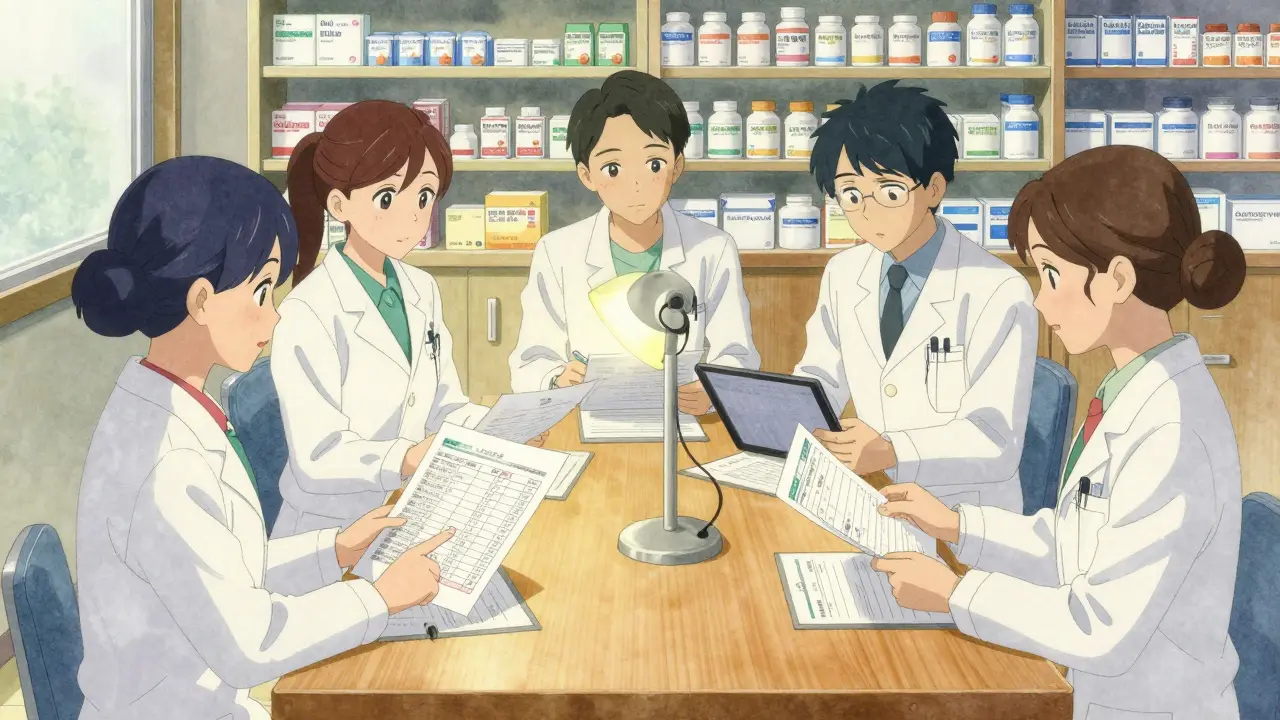
When a hospital decides to add a generic drug to its formulary, it’s not just a matter of picking the cheapest option. It’s a careful, evidence-driven process that balances patient safety, clinical outcomes, and financial responsibility. At the heart of this system is the Pharmacy and Therapeutics (P&T) committee-a multidisciplinary team that evaluates every drug request before it becomes available to patients. This isn’t bureaucracy for bureaucracy’s sake. It’s how hospitals ensure that when a patient gets a generic version of a blood pressure pill or an antibiotic, they’re getting something just as safe and effective as the brand name-without the high price tag.
What Exactly Is a Hospital Formulary?
A hospital formulary is a living list of approved medications. It’s not a static catalog you print once a year. It’s updated quarterly in most academic hospitals and semi-annually in smaller community hospitals. The list typically includes between 300 and 1,000 drug dosage forms. These aren’t random picks. Every medication on the list has gone through a formal review process. Most hospitals use a closed formulary, meaning only drugs on the list are routinely stocked and prescribed. If a doctor wants something off-formulary, they usually need to justify it through prior authorization.Why does this matter? Because hospitals spend about $650 billion a year on drugs in the U.S. Generic drugs make up 90% of prescriptions but only 26% of the cost. That’s where the real savings happen. But savings don’t mean cutting corners. The goal, as defined by the American Society of Health-System Pharmacists (ASHP), is to provide the safest, most effective medications at the most reasonable cost.
The Step-by-Step Process of Adding a Generic Drug
Adding a generic drug isn’t fast. It’s methodical. Here’s how it works:- Request submitted - A clinician, pharmacist, or department requests a new drug. They submit a dossier with clinical studies, pharmacology data, indications, and dosing info. No vague requests allowed.
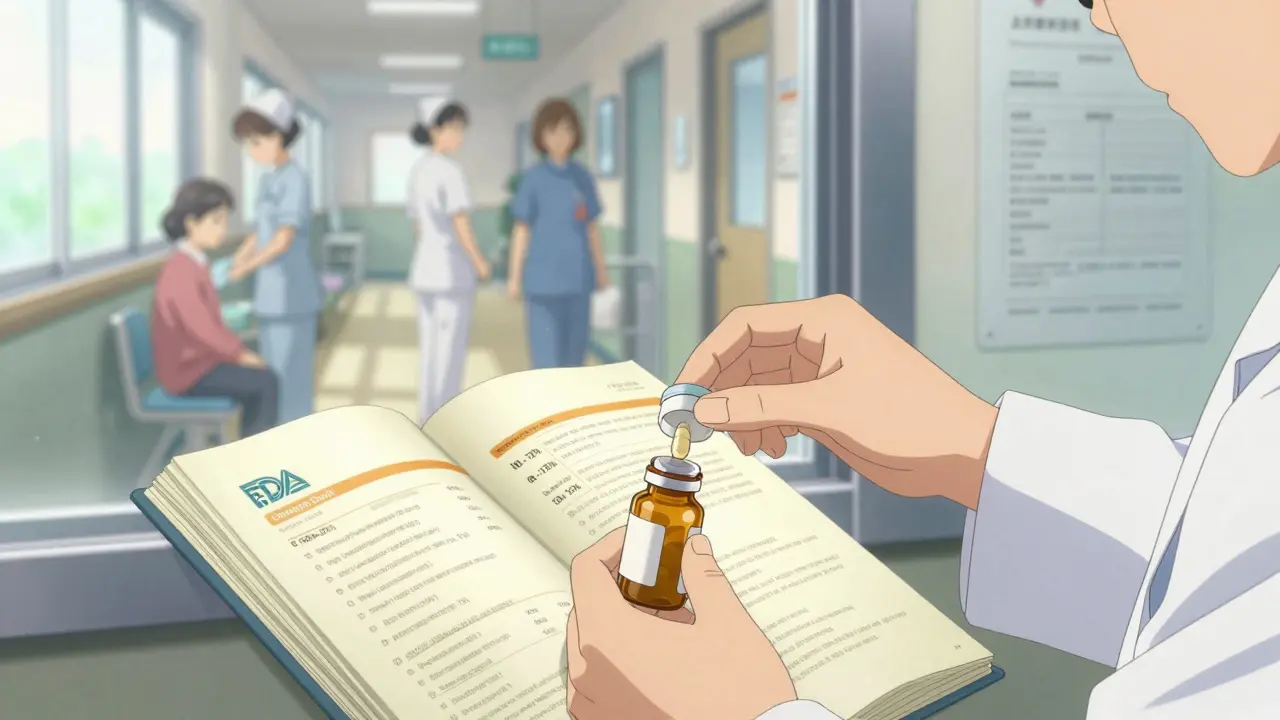
- Therapeutic equivalence verified - The FDA’s Orange Book confirms the generic is bioequivalent to the brand name. That means it delivers the same amount of active ingredient into the bloodstream within 80-125% of the reference drug. If it doesn’t meet this, it’s automatically rejected.
- Clinical evidence reviewed - The P&T committee looks at at least 15-20 peer-reviewed studies on efficacy and safety. They don’t just take the manufacturer’s word. They dig into real-world data from the FDA’s Adverse Event Reporting System and published trials.
- Cost-effectiveness analyzed - It’s not just about the sticker price. The committee models how the drug affects total care costs. Does it reduce hospital stays? Lower readmission rates? Prevent complications? A cheaper generic that leads to more ER visits isn’t a win.
- Formulary tier assigned - Generics almost always land in Tier 1-the lowest cost-sharing tier for patients. This encourages use and reduces out-of-pocket burden.
- Decision made - After 45-60 days (or 14-21 for urgent requests), the committee votes. A simple majority is usually enough. If approved, the drug gets added. If not, the requester gets detailed feedback.
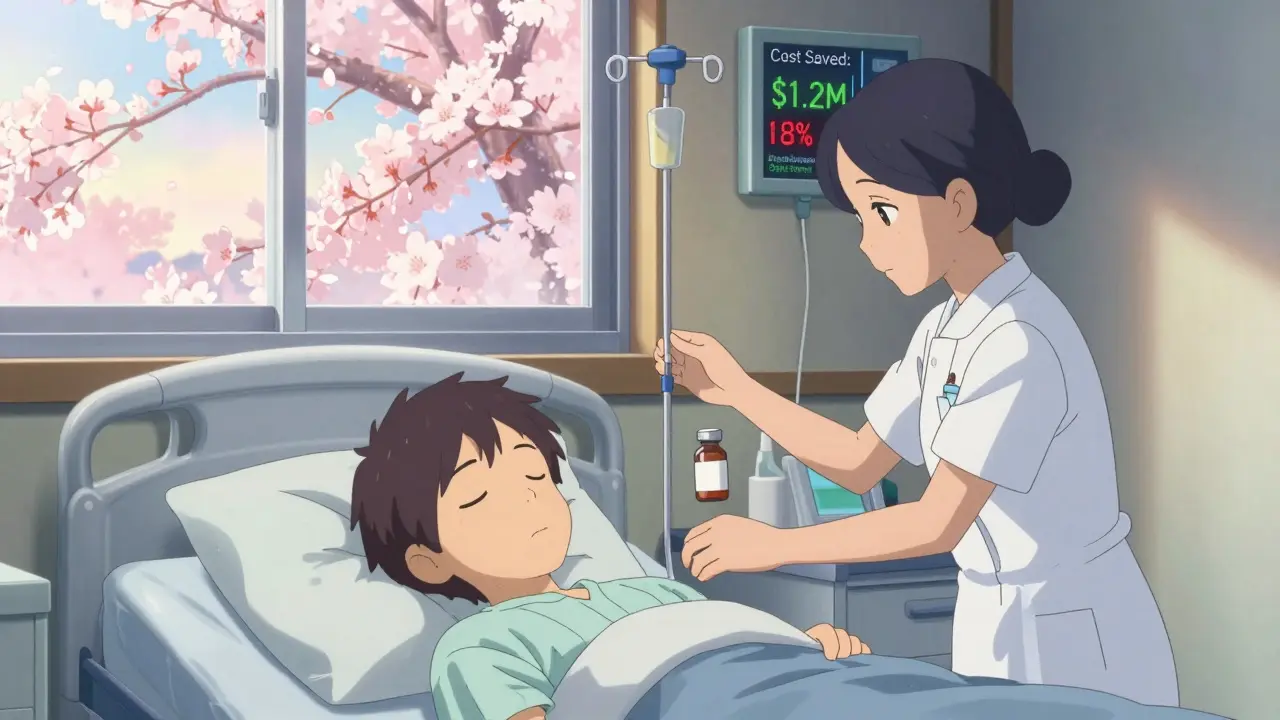
At Johns Hopkins, switching to formulary-preferred generic anticoagulants saved $1.2 million annually without increasing adverse events. That’s the kind of outcome the system is designed to produce.
Who Decides? The P&T Committee
The P&T committee isn’t made up of administrators in suits. It’s a mix of pharmacists, physicians, nurses, and sometimes a healthcare economist. Most committees have 12-15 members. Pharmacists often lead the review, especially those with Board Certification in Pharmacotherapy (BCPP). Physicians bring clinical context-what works in practice, not just in trials. Nurses help flag issues with administration or patient compliance.Conflict of interest is taken seriously. Since 2020, all ASHP-accredited programs require annual training on COI management. That means if a drug rep tries to influence the decision, it’s flagged and documented. Harvard’s Dr. Jerry Avorn found that pharmaceutical detailing still happens-and it still affects decisions, even with disclosures. That’s why independent reviews from groups like the Institute for Clinical and Economic Review (ICER) are now used by 65% of large hospital systems.
Why Generics? Not Just Cost, But Control
Hospitals don’t just pick generics because they’re cheap. They pick them because they’re predictable. When every hospital in a system uses the same generic version of a drug, pharmacists can safely substitute it without checking with the doctor each time. That’s called therapeutic interchange-and it’s a key advantage of hospital formularies over Medicare Part D, where substitutions are limited by patient cost-sharing rules.For chronic conditions like hypertension, 92% of ACE inhibitor prescriptions in hospitals are generic. That’s not by accident. It’s because the formulary system has standardized on the most reliable, cost-effective options. But it’s not always smooth. In 2022, 268 generic medications faced shortages. When that happens, hospitals have to temporarily remove a drug from the formulary and switch to an alternative. Mayo Clinic’s ‘therapeutic alternatives committee’ has a 98% success rate in keeping patients on effective therapy during these disruptions.
Challenges and Conflicts
The system works well-but it’s not perfect. Physicians report that formulary restrictions sometimes delay care. In a 2021 AMA survey, 32% said formulary rules affected patient outcomes. Pharmacists face pushback too. A 2022 American Pharmacists Association survey found 57% of pharmacists had conflicts with doctors over generic substitutions. One nurse on AllNurses.com summed it up: “We had to retrain the whole unit when they switched generics. Three patients got the wrong dose during the transition.”Another issue? Different formulations. A generic pill might look different from the brand, or have a different inactive ingredient. That can confuse patients or affect absorption. Formulary committees now evaluate how formulation changes impact compliance. A cheaper pill that patients stop taking because it causes stomach upset isn’t saving money-it’s costing more in the long run.
What’s Changing in 2026?
The landscape is evolving. Hospitals are moving beyond just acquisition cost. Now, 61% use predictive analytics to model how a generic drug affects downstream costs-like readmissions, ER visits, and length of stay. That’s a big shift. It’s no longer “Which one costs less?” It’s “Which one keeps the patient out of the hospital?”Some academic centers are even starting to use pharmacogenomic data. If a patient has a gene variant that makes them metabolize a drug slowly, the formulary might prefer a different generic version. Eighteen percent of teaching hospitals are piloting this.
The Inflation Reduction Act of 2022 is also reshaping things. By 2025, Medicare Part D rules will change, and hospitals will need to align their formularies to avoid penalties. And by 2028, the Agency for Healthcare Research and Quality predicts formularies will be mandatory for all Medicare-certified facilities.
One area still lagging? Biosimilars. Only 37% of hospital formularies have clear protocols for evaluating them. These are complex, biologic drugs-like those for rheumatoid arthritis or cancer-that mimic brand-name biologics. Their approval isn’t as straightforward as a generic pill. That’s the next frontier.
Real Impact, Real Numbers
The data speaks for itself. Hospitals following ASHP guidelines see 18-22% lower medication costs without worse outcomes. That’s not theoretical. That’s measurable. And it’s not just about saving money-it’s about ensuring consistency, reducing errors, and improving care across entire health systems.When a patient gets a generic blood thinner, a generic statin, or a generic antibiotic, they’re benefiting from a system designed to protect them-not just the budget. The formulary isn’t about limiting choices. It’s about ensuring every choice made is the right one.
How do hospitals decide which generic drugs to include?
Hospitals use a formal process led by a Pharmacy and Therapeutics (P&T) committee. They evaluate drugs based on FDA therapeutic equivalence, clinical evidence from at least 15-20 studies, safety data from the FDA’s adverse event reports, and cost-effectiveness-including downstream costs like hospital readmissions. Only drugs that meet all criteria are added.
Are all generic drugs the same in a hospital formulary?
No. Even though generics are bioequivalent, they can differ in formulation, inactive ingredients, or manufacturer. Hospitals often select one preferred generic per drug class to reduce confusion and errors. If one manufacturer has a shortage, the formulary may switch to another approved version.
Why do some doctors complain about formularies?
Some doctors feel formularies restrict their ability to prescribe the best drug for a specific patient. They may encounter delays due to prior authorization for non-formulary drugs, or face pushback when they want to use a newer generic that hasn’t been reviewed yet. In 32% of cases, physicians report formulary rules have affected patient care.
How often are hospital formularies updated?
Academic medical centers typically review their formularies quarterly. Community hospitals do it semi-annually. Urgent changes, like those due to drug shortages, can be processed in as little as two weeks.
Do formularies actually save money?
Yes. Hospitals that follow formal formulary guidelines see 18-22% lower medication costs without compromising patient outcomes. Generic drugs make up 90% of prescriptions but only 26% of total drug spending. Formularies help maximize that savings by standardizing on the most cost-effective, clinically sound options.
What’s the biggest challenge hospitals face with generic drugs?
Drug shortages are the most frequent operational issue. In 2022, 268 generic medications faced supply disruptions. Hospitals respond by temporarily removing affected drugs from the formulary and switching to approved alternatives. Another major challenge is resistance from clinicians when therapeutic substitutions are made without their input.





11 Comments
so basically hospitals are just playing 4d chess with our prescriptions and calling it 'evidence-based'... cool. i'm sure the guy who just got the wrong generic because the pill looked different is totally fine with this.
The P&T committee structure aligns with ASHP standards for therapeutic governance, ensuring pharmacoeconomic efficiency while maintaining clinical integrity through multidisciplinary validation. The tiered formulary model significantly reduces variance in prescribing patterns.
Let me tell you something, folks - this whole system is a beautiful, terrifying machine. You think you’re getting a cheap pill? Nah. You’re getting a carefully curated, statistically optimized, FDA-approved, cost-modelled, pharmacist-vetted, committee-approved, formulary-synchronized, bioequivalent, clinically monitored, adverse-event-tracked, readmission-predicting, pharmacogenomic-adjacent, insurance-aligned, Medicare-compliant, supply-chain-resilient, therapeutic-interchange-enabled, physician-frustrating, patient-confusing, nurse-retraining-required, manufacturer-switched, inactive-ingredient-variant, dosage-form-optimized, brand-name-replacement that somehow, against all odds, doesn’t kill you. And you call that healthcare? Nah. That’s corporate bioengineering with a side of bureaucracy. And it works. Somehow. I’m not saying it’s right. I’m saying it’s the only thing keeping us from drowning in $10,000 pills for blood pressure. The system is a glitch in the matrix… and we’re all just trying not to notice.
Ah yes, the sacred P&T committee - where pharmacists in lab coats act like medieval gatekeepers deciding who gets to live and who gets to pay extra for the 'brand experience'. How very noble. I'm sure the 32% of docs who say it delays care are just being dramatic. Probably just can't handle the tyranny of evidence.
Honestly, this is one of those systems that looks boring on paper but saves lives daily. The fact that a nurse in rural Ohio can give a patient the same generic statin as someone in Boston? That’s not luck. That’s system design. And yeah, it’s messy. But it’s the least bad option we’ve got.
This is so cool! 😊 I never knew hospitals had such a detailed process. In India, generics are everywhere, but we don’t always have the same checks. Maybe we can learn from this! 🙏
I think this is good. People need to know that cheap doesn't mean bad. But also, doctors should not be blocked too much. Everyone just wants to help.
this whole thing is a joke. they say 'evidence-based' but half the studies are funded by the same pharma companies that make the generics. and don't get me started on the 'therapeutic interchange' - that's just corporate speak for 'we switched your med and didn't tell you'. i've seen patients have seizures because they got a different filler. and now they want to use genomics? please. the system is rigged.
This is a PR brochure disguised as a medical article. 18-22% cost savings? That’s just shifting the burden to patients who can’t afford copays, or to nurses who have to retrain entire units. And don’t even get me started on the 'predictive analytics' - it’s just fancy math to justify cutting corners. This isn’t healthcare. It’s profit optimization with a white coat.
I love how this system values consistency - in India, we often get generics from different manufacturers every month, and patients get confused. This approach is actually very smart. Maybe we should adopt something like this back home.
i just had my blood pressure med switched last month and i was like... wait, why does this pill taste like chalk now? but then i read this and i'm like... ohhhhhhh. okay. i get it. kinda. still weird tho. 🤷♀️
Write a comment