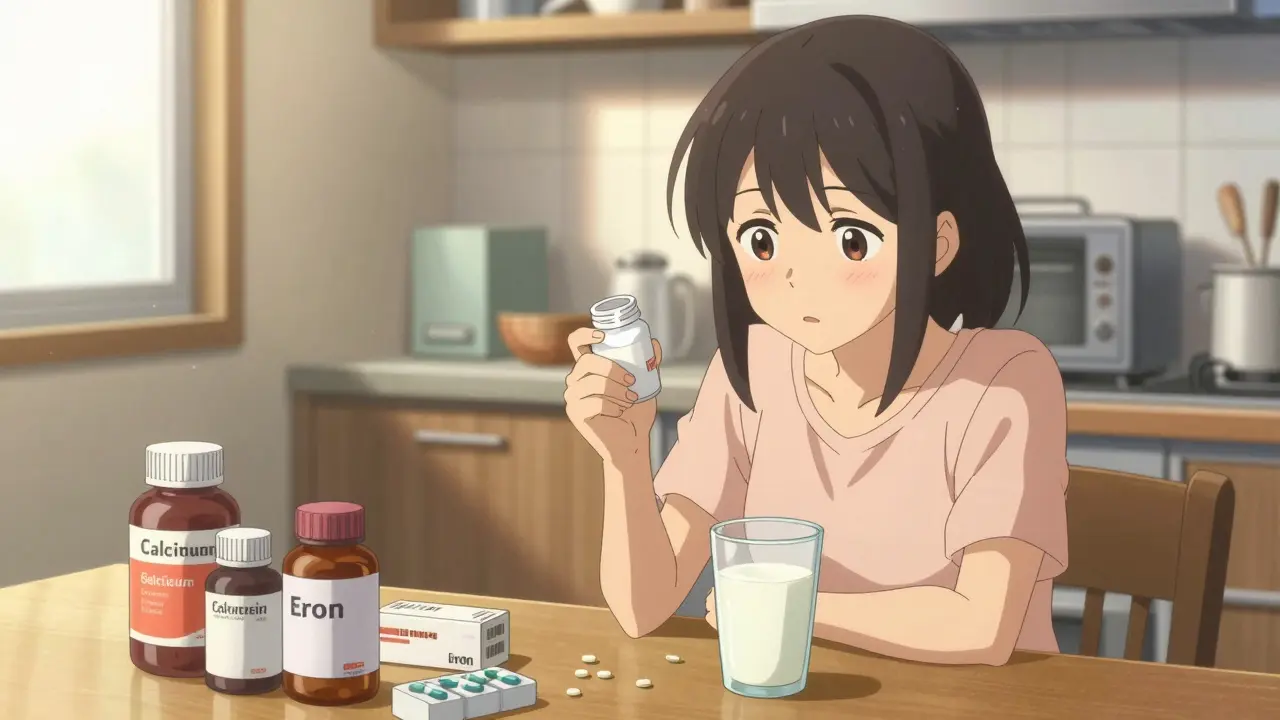
You swallow your morning coffee, pop a multivitamin, take your heartburn pill, and then wash it all down with your prescribed antibiotic. It feels efficient. It feels healthy. But inside your stomach, a chemical war is breaking out that could leave you unprotected against infection or suffering from untreated anemia.
Minerals like calcium and a vital mineral found in dairy and supplements and iron and a essential nutrient for blood health often taken as ferrous fumarate are not passive bystanders in your digestive tract. They are chemically active agents that bind to drugs, forming insoluble clumps that your body cannot absorb. This process, known as chelation, effectively neutralizes the medicine before it ever enters your bloodstream.
The problem isn't just rare; it's widespread. Research indicates that 67% of women and 25% of men regularly consume calcium supplements. When combined with the high prevalence of prescription antibiotics and thyroid medications, the potential for therapeutic failure is massive. Understanding how these minerals interact with specific drugs-and, crucially, how to time them-is the difference between a treatment that works and one that fails silently.
The Chemistry of Chelation: Why Minerals Block Drugs
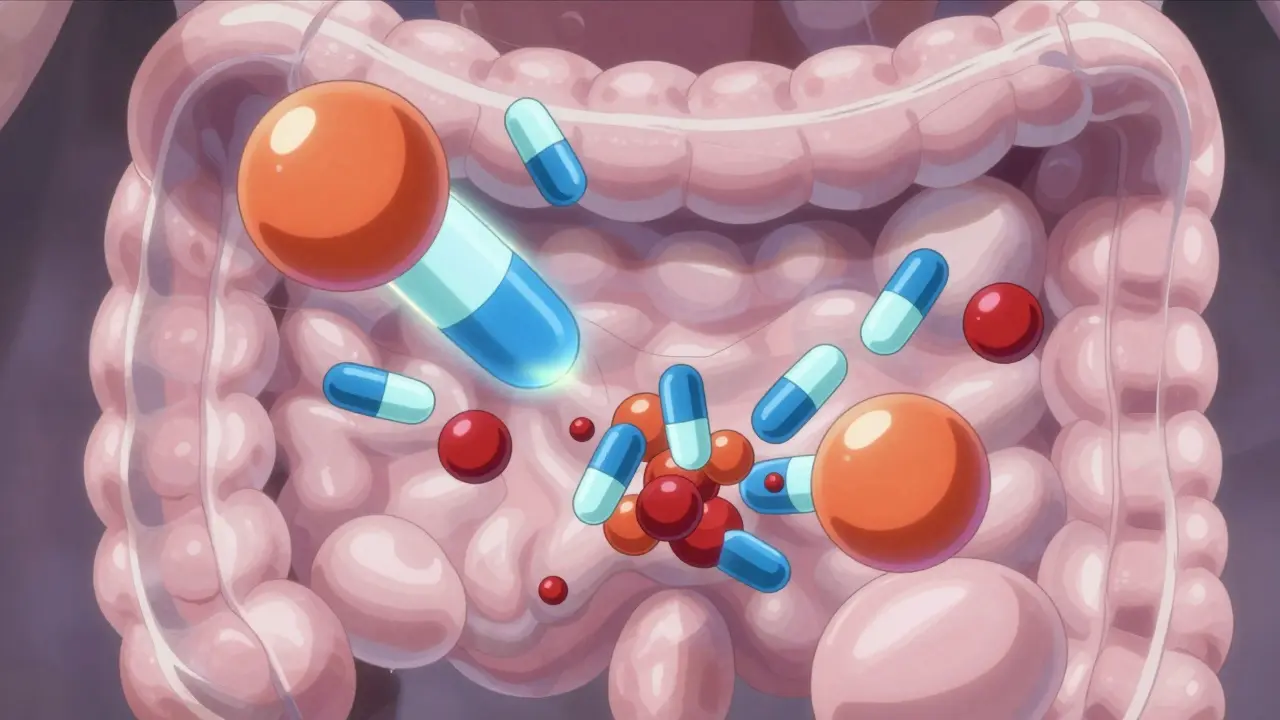
To understand why your iron supplement might be ruining your antibiotic course, you have to look at what happens in your gut. Many medications, particularly certain classes of antibiotics, contain chemical structures that act like magnets for positively charged minerals. When calcium or iron meets these drugs in the acidic environment of the stomach, they don't just pass each other by. They lock together.
This binding creates a complex-a large, heavy molecule that is too big to pass through the intestinal wall. Instead of being absorbed into your blood to fight an infection, the drug remains trapped in this mineral-drug clump and is excreted from your body. The result? You've technically taken your dose, but your body has received none of it.
Chelation is the chemical process where a mineral binds to a drug molecule, preventing absorption. This is the primary mechanism behind most mineral-medication interactions. It affects two major categories of drugs significantly:
- Tetracyclines: Antibiotics like doxycycline, minocycline, and tetracycline itself.
- Fluoroquinolones: Powerful antibiotics such as ciprofloxacin and levofloxacin.
Both calcium and iron can trigger this reaction with these antibiotics. If you take a calcium carbonate tablet (like Tums) alongside ciprofloxacin, studies show bioavailability can drop by up to 40%. That means nearly half of your medication vanishes before it does any good. For a serious infection, that margin of error can lead to treatment failure and increased complications.
Calcium Interactions: Beyond Just Bones
We think of calcium as bone food, but its interaction profile extends far beyond skeletal health. While osteoporosis prevention is the main reason people take it, its chemical reactivity makes it a significant disruptor for several critical medications.
The most dangerous interaction involving calcium is with levothyroxine is a synthetic thyroid hormone used to treat hypothyroidism. Thyroid levels need to be precise. Even small fluctuations can cause fatigue, weight gain, or heart issues. Clinical documentation from the South Medical Journal highlights that calcium decreases the bioavailability of levothyroxine significantly. Because thyroid hormones are sensitive to absorption changes, taking them with calcium-even if separated by only an hour-can lead to suboptimal thyroid function tests over time.
Here is the practical reality for patients on levothyroxine:
- Levothyroxine requires an empty stomach. Take it first thing in the morning with water only.
- Wait at least four hours. Do not eat breakfast containing dairy, nor take your calcium supplement, until four hours after your thyroid medication.
Dr. Robert L. Talbert, a professor of pharmacy and medicine, emphasized this four-hour gap based on clinical evidence showing substantially reduced hormone absorption when the window was shorter. Many patients try to squeeze their vitamins in within an hour of their thyroid meds, assuming "close enough" is fine. In pharmacology, close enough often means ineffective.
Calcium also interacts with bisphosphonates (drugs for osteoporosis like alendronate). Ironically, while you take calcium to strengthen bones and bisphosphonates to protect them, taking them together prevents the bisphosphonate from working. The calcium blocks the drug's absorption entirely. These drugs require strict fasting conditions-usually 30 minutes to an hour before food or other meds-to work properly.
Iron Supplements: The pH Problem and Binding Risks
If calcium is a blocker, iron is a double-edged sword. It interacts via chelation similar to calcium, but it also has a unique relationship with stomach acid that complicates its use with common heartburn medications.
Ferrous fumarate is a common form of iron supplement prescribed for anemia. Like calcium, iron binds to tetracycline antibiotics and fluoroquinolones. The NHS guidance explicitly states that you must leave a gap between taking ferrous fumarate and these antibiotics. The standard recommendation is to take the antibiotic at least 2 hours before or 4 hours after the iron supplement.
However, iron has a second enemy: low stomach acid. Iron needs an acidic environment to dissolve and absorb efficiently. This creates a conflict for millions of people who take proton pump inhibitors (PPIs) like omeprazole or pantoprazole, or H2 blockers like famotidine, for acid reflux or ulcers.
These heartburn medications reduce gastric acidity. GoodRx medical reviewers note that this reduction in acid can significantly decrease iron absorption. If you are treating anemia with iron while managing chronic heartburn with PPIs, you may find your hemoglobin levels stagnating despite consistent supplementation. The solution isn't always stopping the heartburn med, but rather optimizing the timing or adjusting the iron dose under medical supervision.
A simple dietary hack can help here: take your iron with orange juice. The mild citric acid provides the necessary pH boost to aid absorption without interfering with the mineral. Conversely, avoid milk or calcium-rich foods with iron, as the calcium will bind the iron and block both from absorbing.
Timing Is Everything: A Practical Spacing Strategy
You don't need to memorize complex chemistry to manage these interactions. You need a schedule. The core strategy for avoiding mineral-drug conflicts is separation. By creating a time buffer, you allow one substance to clear the stomach and move into the intestines before the next one arrives.
| Mineral Supplement | Interacting Medication Class | Minimum Gap Required | Key Mechanism |
|---|---|---|---|
| Calcium | Tetracyclines & Fluoroquinolones | 2-4 hours | Chelation (binding) |
| Calcium | Levothyroxine | 4 hours | Reduced bioavailability |
| Iron | Tetracyclines & Quinolones | 2 hours before / 4 hours after | Chelation (binding) |
| Iron | PPIs / H2 Blockers | Take iron 2 hours before acid reducer | pH dependency |
| Calcium/Iron | Bisphosphonates | 6+ hours (strict fasting) | Complete absorption block |
Notice the variation in timing. Some interactions require a short 2-hour window, while others demand a full 4 to 6 hours. Why the difference? It depends on how quickly the drug moves through your system and how strongly it binds to the mineral. Levothyroxine, for instance, has a narrow therapeutic index, meaning small changes in absorption matter greatly, hence the stricter 4-hour rule. Antibiotics, while critical, sometimes tolerate slightly tighter windows, though erring on the side of caution (longer gaps) is always safer.
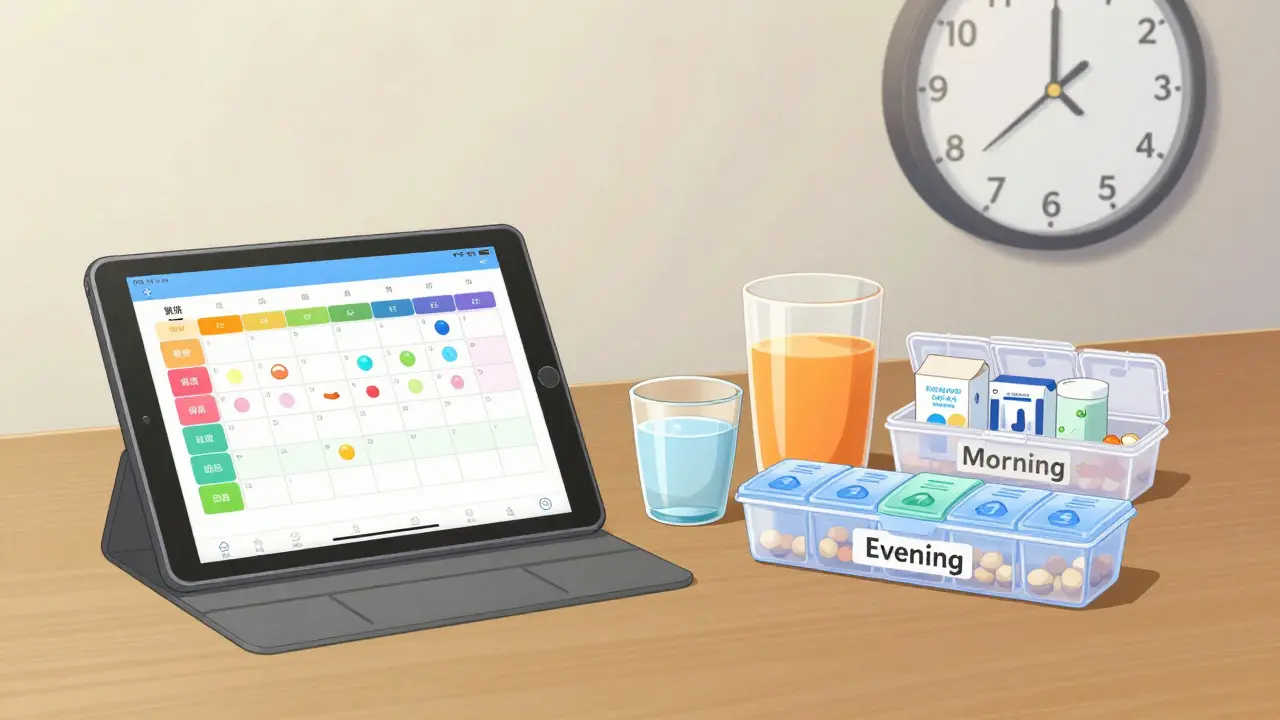
For parents managing children's health, this adds another layer of complexity. HealthyChildren.org notes that pediatric patients with anemia may need iron while simultaneously requiring tetracycline antibiotics for infections. The scheduling becomes a logistical puzzle. Using alarms or a dedicated medication app can help ensure that the 2-to-4-hour gaps are respected consistently throughout the day.
Hidden Minerals: Food vs. Supplements
A common misconception is that these interactions only happen with pills. They do not. If you take your antibiotic with a glass of milk, a yogurt parfait, or a calcium-fortified orange juice, you are introducing significant amounts of calcium into the mix. Dairy products contain roughly 300mg of calcium per cup. That is enough to interfere with drug absorption.
Similarly, spinach, kale, and other leafy greens are rich in calcium and oxalates. While whole foods generally have lower bioavailability of minerals compared to concentrated supplements, large meals heavy in these foods can still impact absorption rates, particularly for sensitive drugs like levothyroxine.
When reading labels, look for "hidden" sources:
- Antacids: Many over-the-counter heartburn remedies (like Tums or Rolaids) are primarily calcium carbonate. Taking these for occasional indigestion while on a long-term antibiotic course can repeatedly sabotage your treatment.
- Multivitamins: Almost all daily multivitamins contain calcium and iron. If you are on interacting medications, you may need to switch to a vitamin regimen that excludes these minerals or takes them at a completely different time of day.
- Fortified Foods: Plant milks, cereals, and juices are often fortified with calcium. Check the nutrition facts if you are strictly managing drug timing.
The U.S. Pharmacist journal emphasizes that pharmacists should actively question patients about their calcium intake because many people forget to mention that they take antacids or multivitamins regularly. Be proactive. Tell your doctor and pharmacist everything you put in your body, including diet sodas, herbal teas, and daily vitamins.
Pro Tips for Managing Complex Regimens
If you are on multiple medications and supplements, chaos is easy to fall into. Here is how to keep it manageable:
- Create a Morning/Evening Split. Take levothyroxine and any acid-dependent drugs (like some iron formulations) first thing in the morning on an empty stomach. Wait 4 hours before eating or taking other supplements. Save calcium and multivitamins for lunch or dinner.
- Use Visual Cues. Place your interacting meds in separate pill organizers or distinct locations. If your antibiotic is on the kitchen counter and your calcium is in the bathroom, you are less likely to grab them together.
- Leverage Technology. Apps like GoodRx now include interaction checkers that provide specific timing recommendations. Input all your prescriptions and OTC supplements to see if red flags appear.
- Ask for Formulation Alternatives. If timing is impossible due to your lifestyle, ask your doctor if there is an alternative medication that doesn't interact with minerals. For example, not all antibiotics have the same chelation risk.
Remember, the goal is therapeutic efficacy. You want the drug to work. Ignoring these interactions doesn't make the risk go away; it just makes the failure silent. Regular blood tests-for thyroid levels, hemoglobin, or infection markers-are your best feedback loop. If your numbers aren't improving, consider whether your supplement timing is sabotaging your progress.
Can I take my calcium supplement with my multivitamin?
Generally, yes, unless your multivitamin contains high doses of iron or zinc, which can compete with calcium for absorption. However, the bigger concern is whether either of these supplements interacts with your prescription medications. Always check your specific drug list for chelation risks.
Does food affect how well antibiotics work?
It depends on the antibiotic. Some, like doxycycline, should be taken with food to prevent nausea but must be kept away from dairy. Others, like amoxicillin, are less affected by food. However, if the food contains high levels of calcium or iron, it can still interfere with absorption regardless of the antibiotic type. Always read the label or ask your pharmacist.
Why does iron make me nauseous, and does that mean it's not absorbing?
Nausea is a common side effect of iron supplements, particularly ferrous sulfate, but it does not necessarily indicate poor absorption. In fact, iron is best absorbed on an empty stomach. To reduce nausea, you can take it with a small amount of food, but avoid dairy or calcium-rich foods. Vitamin C (like orange juice) can enhance absorption and may help mitigate some discomfort.
I forgot to space my calcium and thyroid medication. What should I do?
Do not panic. One missed or poorly timed dose will not ruin your treatment. Simply resume your normal schedule the next day. Consistency over time is what matters for thyroid management. If you frequently struggle with timing, talk to your doctor about switching to a liquid formulation or adjusting your dosage schedule.
Are natural food sources of calcium safer than supplements regarding drug interactions?
Natural sources are generally less concentrated, so the risk is lower, but it is not zero. A large glass of milk or a serving of cheese still contains enough calcium to potentially bind with antibiotics like tetracyclines. If you are on a critical short-course antibiotic, it is safest to avoid high-calcium foods within the recommended window, even if they come from whole foods.
Can I take magnesium with my medications?
Magnesium behaves similarly to calcium and iron in terms of chelation. It can also bind to tetracyclines and fluoroquinolones, reducing their effectiveness. Many antacids contain magnesium. Apply the same spacing rules: wait at least 2 to 4 hours between magnesium supplements and these antibiotics.