
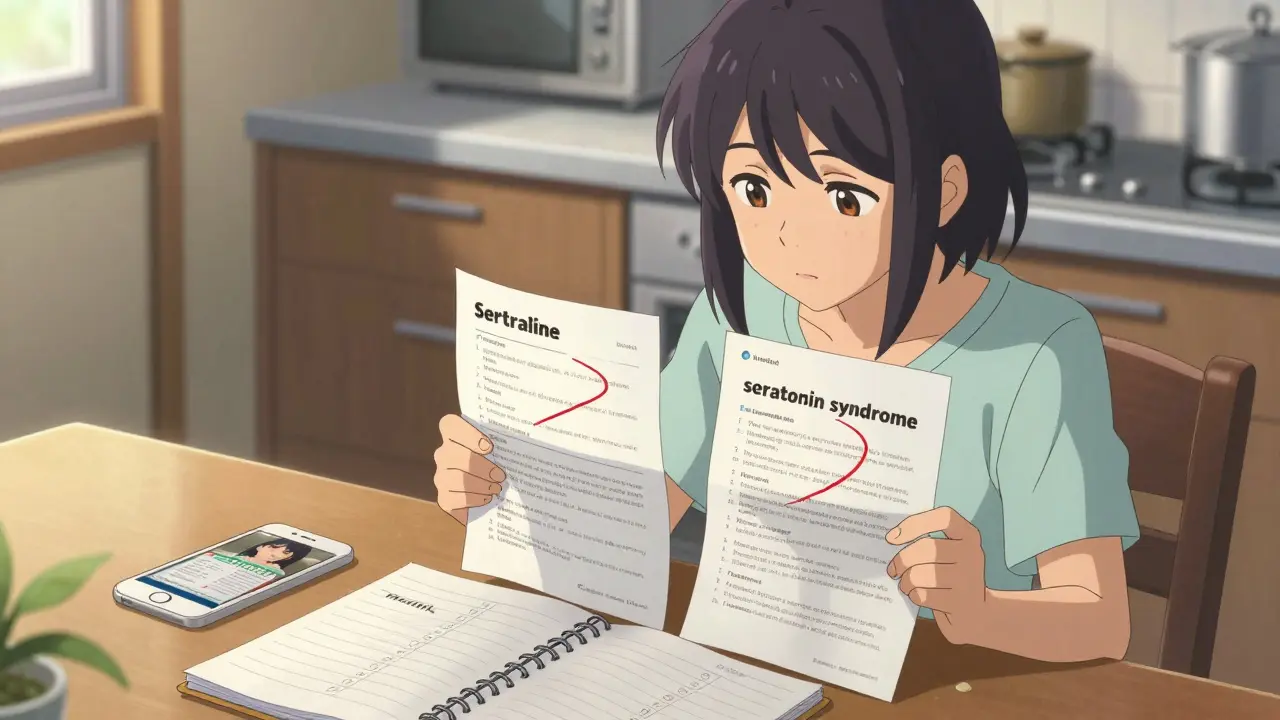
When you pick up a new prescription, the small booklet that comes with it - the medication guide - isn’t just paperwork. It’s your first line of defense against dangerous drug interactions. These warnings save lives. Every year, thousands of people end up in the hospital because they didn’t understand what their medication guide was trying to tell them. But once you learn how to read it, you’ll spot the red flags before they become emergencies.
Where to Find the Real Warnings
Most people skim the guide looking for side effects like dizziness or nausea. But the most critical info isn’t there. The real danger zones are in two specific sections: Drug Interactions and Warnings. These aren’t random notes - they’re legally required by the FDA and follow strict formatting rules.In prescription drugs, look for Section 7: Drug Interactions. This is where the science gets detailed. You’ll see things like: "Concomitant use with clarithromycin increases simvastatin exposure by 10-fold, raising the risk of rhabdomyolysis." That’s not a suggestion. It’s a warning backed by clinical data. For over-the-counter (OTC) meds like pain relievers or sleep aids, check the Warnings section on the Drug Facts label. That’s where you’ll find lines like: "Do not use if you are taking MAO inhibitors."
Don’t ignore the How Supplied section either. It sounds boring, but it tells you how the drug should be stored. Some medications break down if exposed to heat or moisture, and that can change how they interact with other drugs. A degraded pill might not work as expected - or worse, it could cause unexpected side effects when mixed with something else.
What the Words Actually Mean
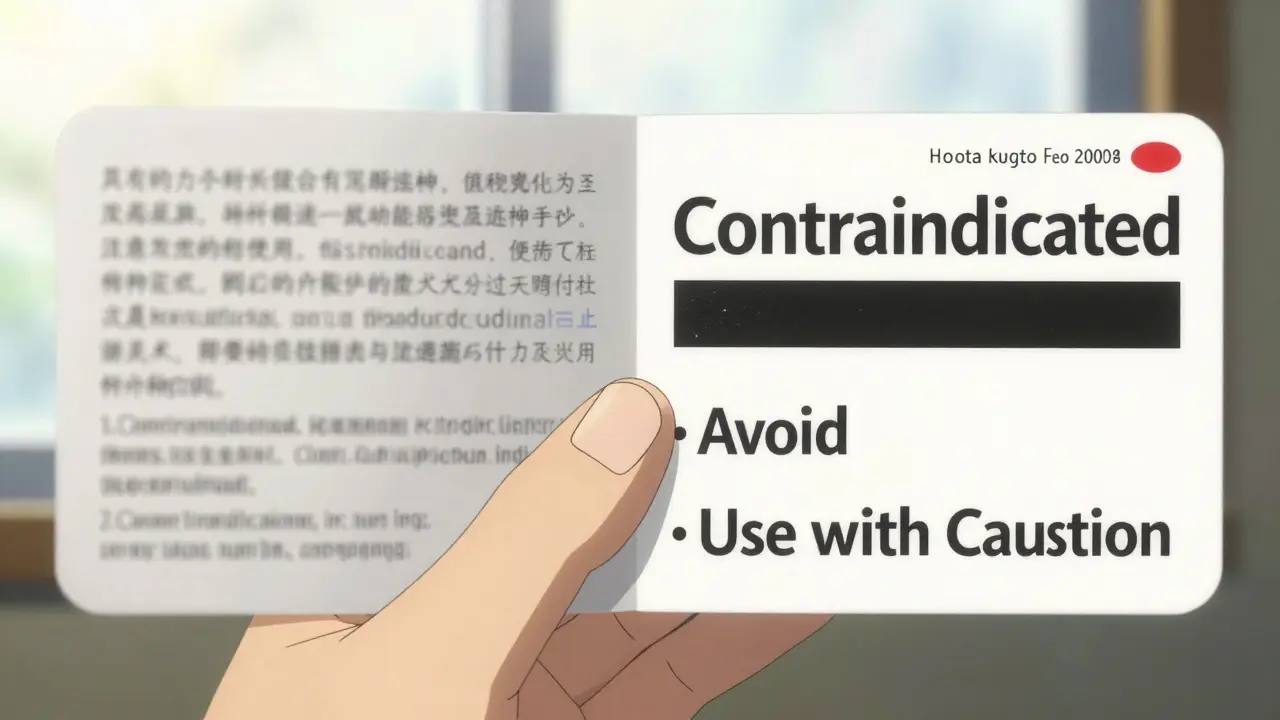
The language on these guides isn’t random. It’s coded. Here’s what each term really means:- Contraindicated - Don’t take this drug at all if you’re using the other one. This isn’t a "be careful" warning. This is a hard stop. For example, warfarin and NSAIDs like ibuprofen are contraindicated together because they can cause life-threatening bleeding.
- Avoid - This interaction can be serious. If you must take both, your doctor needs to monitor you closely. Think of this as "only if absolutely necessary." The FDA updated this language in 2025 to standardize it across all guides.
- Use with Caution - Monitor for symptoms. Your pharmacist might suggest spacing the doses out by a few hours. This is common with drugs that affect the same liver enzyme, like CYP3A4.
- Minor - No action needed. But even here, if you’re on five other medications, it’s worth double-checking.
Black box warnings are the most serious. They’re printed in bold, with a thick border around them. These appear on drugs like apixaban (Eliquis) and mean there’s a documented risk of death. If you see one, talk to your pharmacist before taking the first dose.
The Hidden Culprits: OTCs and Supplements
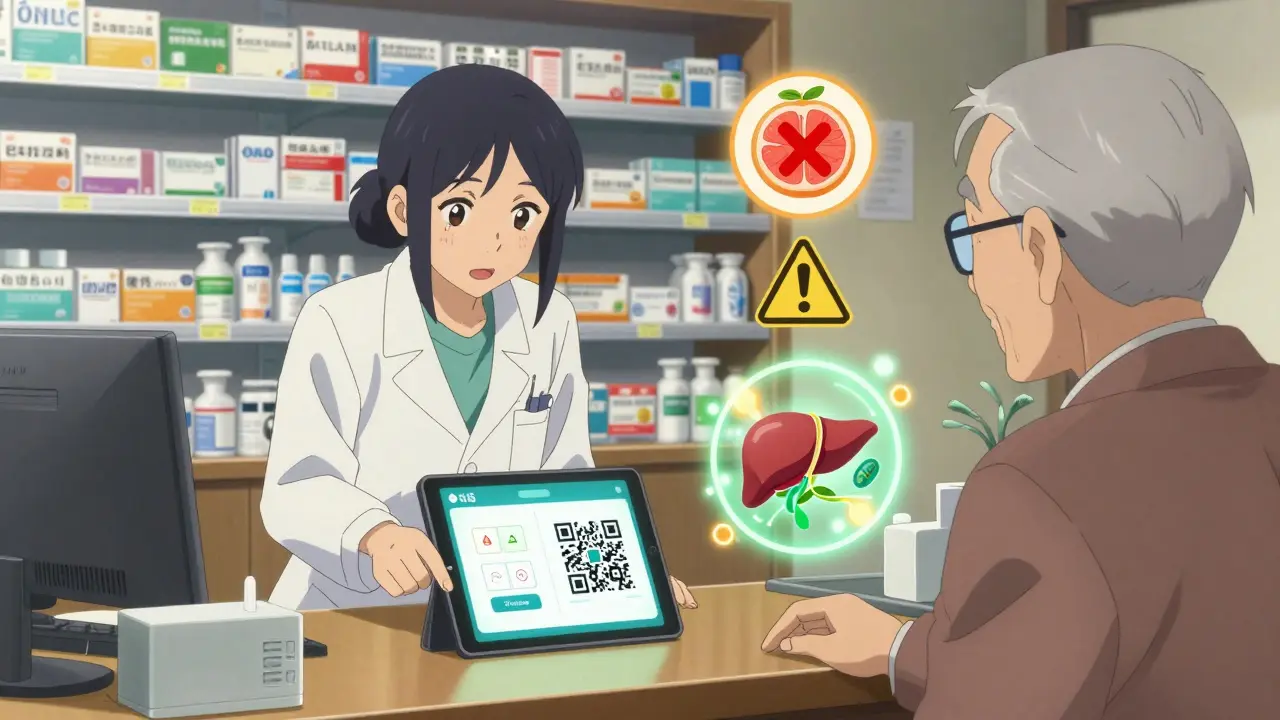
Most patients think drug interactions only happen between prescriptions. That’s the biggest mistake. According to the FDA’s adverse event database, 37% of serious interactions involve OTC drugs or supplements. You might not even realize you’re taking something risky.Take St. John’s Wort. It’s sold as a natural remedy for mood support. But it can knock out the effectiveness of birth control pills, blood thinners, and even some antidepressants. The medication guide for sertraline (Zoloft) warns about this. But if you don’t read both guides - yours and the supplement’s - you’ll never know.
Even common things like grapefruit juice can be dangerous. The guide for simvastatin says to avoid it. Why? One glass can spike your drug levels by 300%. That’s not a myth. A 2017 study in Clinical Pharmacology & Therapeutics showed that just one glass of grapefruit juice raised INR levels in people on warfarin by 1.5 to 2.0 within 24 hours. That’s enough to cause internal bleeding.
How to Actually Use This Info
Reading the guide isn’t enough. You need a system. Here’s how real people stay safe:- Make a list - Write down every pill, patch, capsule, and herbal supplement you take. Include dosages and times. Use a notebook or a note app. The average person takes 4.7 medications daily, according to AHRQ data. You won’t remember them all.
- Check every guide - Don’t just check your new prescription. Go back to every old one. A drug you’ve been taking for years might now have a new interaction warning. The FDA updates these guides quarterly.
- Use the pharmacist - Go to the pharmacy counter. Ask: "Do any of these interact?" Pharmacists have access to real-time interaction checkers that are updated more often than the printed guides. A 2021 study in the Annals of Pharmacotherapy showed that spacing doses by 2-4 hours cuts moderate interactions by 60%.
- Take photos - Snap a picture of each medication guide. Store them in a folder on your phone. That way, you can pull them up during a doctor’s visit or if you’re traveling.
One Reddit user, "MedTechSarah," avoided serotonin syndrome by spotting the warning on both her sertraline and tramadol guides. She didn’t know the names of the interactions - she just saw "serotonin syndrome" on both and called her pharmacist. That’s how you do it.
What’s Changing Now (2025)
The system is getting better. Starting in 2025, every new drug must include a QR code on its guide that links to an interactive digital version. These digital guides can:- Ask you questions: "Are you taking aspirin?"
- Read the text aloud for people with low vision.
- Update in real time if new interaction data comes out.
A Mayo Clinic pilot in 2022 showed that patients using these digital guides had 42% fewer interactions. The FDA also standardized the language across all guides by December 2025. No more "avoid," "caution," or "monitor" - now it’s just three clear terms: Contraindicated, Avoid, and Use with Caution.
And here’s the kicker: generic drugs still lag behind. Only 53% of generic medication guides meet current readability standards. If you’re on a generic, double-check the brand-name guide. The warnings are usually the same, but the formatting might be worse.
What to Do If You’re Confused
You don’t need to be a scientist to understand this. If you see a warning you don’t get - pause. Don’t guess. Don’t rely on Google. Call your pharmacy. Ask for the pharmacist. They’ve seen hundreds of these guides. They know how to translate the jargon.And if you’re ever unsure whether a new medication is safe with your current ones - don’t take it until you’ve checked. That’s not being paranoid. That’s being smart. Drug interactions don’t always show up right away. Sometimes they creep in over days or weeks. That’s why checking every time you get a new prescription matters.
Medication guides aren’t meant to scare you. They’re meant to empower you. Once you know how to read them, you’re no longer just a patient. You’re a partner in your own safety.
What should I do if I find a new interaction warning on my medication guide?
Don’t stop taking the medication unless the warning says "contraindicated" or "do not take." Instead, call your pharmacist or doctor. They’ll help you decide whether to adjust the dose, change the timing, or switch medications. Most interactions can be managed safely - you just need expert guidance.
Can I trust the interaction warnings on generic drugs?
The active ingredients in generic drugs are the same as brand-name versions, so the interaction risks are identical. But the written guide may be less clear. Always compare the generic guide to the brand-name one - especially if the language is vague. If in doubt, ask your pharmacist to pull up the FDA-approved version.
Why do some medication guides mention food interactions while others don’t?
Food interactions are only included if they’re clinically significant. For example, grapefruit affects CYP3A4, which metabolizes about half of all prescription drugs. So if your drug is processed by that enzyme, it’ll be listed. But if a food has no measurable effect - like cheese with most antibiotics - it won’t be mentioned. The FDA requires warnings only when the interaction changes drug levels by 20% or more.
Are herbal supplements always risky with medications?
Not all, but many are. Supplements aren’t tested the same way as prescription drugs, so their interactions are often unknown. But we know some are dangerous: St. John’s Wort, garlic supplements, and ginkgo biloba can all interfere with blood thinners, antidepressants, and blood pressure meds. Always list them on your medication log - even if you think they’re "natural" and harmless.
What if I miss a dose and take two drugs close together?
If you accidentally take two interacting drugs within a few hours, watch for symptoms: unusual bruising, dizziness, confusion, muscle pain, or rapid heartbeat. Call your pharmacist immediately. They can tell you whether this is an emergency or if monitoring is enough. Spacing doses by 2-4 hours usually prevents issues - so if you’re unsure, wait it out.


11 Comments
Read the guide. Know the sections. Don’t guess. That’s it.
Thank you for taking the time to clarify these critical safety points. This is precisely the kind of public health education we need more of. Medication safety is not optional-it is foundational to patient autonomy and dignity. Every individual deserves clear, standardized, and accessible information when managing their health.
OMG this is so important!! 🙌 I used to skip the little booklets until my mom had a scary reaction to mixing her blood thinner with a common OTC sleep aid. Now I print every guide, highlight the warnings in yellow, and keep them in a folder labeled ‘Don’t Die Today.’ Seriously-take 30 seconds to read it. Your future self will thank you.
Of course the FDA makes it complicated. They’d rather you die than admit they can’t keep up with pharma lobbying.
I’ve been on 6 meds for 8 years. Never realized the guide for my thyroid med had a new warning about calcium supplements. I called my pharmacist yesterday-she said it was added last quarter. So simple. So easy to miss. Thanks for the reminder.
Man, I read this and thought ‘cool’ then went back to my energy drink and ibuprofen combo. Guess I’m just lucky.
So let me get this straight-the FDA just standardized the language, but generic guides still suck? That’s not progress. That’s a loophole with a fancy logo. Who’s auditing this? Who’s holding them accountable? Because if I’m taking a $4 generic, I shouldn’t be getting a $400 warning system.
I’ve been a pharmacy tech for 12 years. I’ve seen people ignore warnings because they thought ‘it’s just one time’ or ‘I’ve taken it before.’ It’s never just one time. One interaction can snowball. I’ve held people’s hands through ER visits because they didn’t read the guide. Please don’t be one of them.
Take the 90 seconds. It’s not about being paranoid. It’s about being alive tomorrow.
QR codes on guides? Finally. My grandma can’t read small print. The voice-read feature will save her life. Also-yes, grapefruit juice. One glass. 300% spike. I’ve seen it. Not a myth. Not hype. Science.
Are you aware that the FDA’s 2025 standardization initiative is directly tied to the 2023 Drug Supply Chain Security Act? The QR code mandate is not for patient safety-it’s for supply chain traceability. The ‘improved readability’ is a side effect. The real goal is to track every pill from manufacturer to consumer. This is surveillance disguised as healthcare.
Also, St. John’s Wort isn’t the real danger. It’s the 500mg doses of synthetic serotonin analogs hidden in ‘natural mood boosters’ that aren’t even listed on the label. The FDA doesn’t regulate those. They’re sold as ‘dietary supplements’ because of a 1994 loophole. That’s why you’re being told to ‘check every guide’-because they can’t fix the system.
And the 37% OTC interaction stat? That’s from the FDA’s voluntary reporting system. Actual numbers are likely 3x higher. Most adverse events go unreported. You’re being fed sanitized data.
Don’t trust the guide. Trust nothing. Verify everything. Even this.
Biggest thing I learned? Always check the supplement guide too. I took ashwagandha with my antidepressant and didn’t think twice. Then I got a weird buzz and my heart raced. Looked up both guides-turns out they both say ‘use with caution’ with CYP3A4. I called my pharmacist, she said to space them 4 hours apart. Easy fix. Now I screenshot every label. My phone’s full of pill pics. Worth it.
Write a comment