
Finding lung cancer early can be the difference between a manageable treatment plan and a late-stage battle. For a long time, we relied on chest X-rays, but they often missed small tumors until it was too late. Today, Low-Dose CT is a specialized imaging test that uses a low dose of radiation to create detailed, 3D pictures of the lungs. Commonly called LDCT, this tool is designed to spot tiny nodules-some as small as 4 millimeters-long before you'd feel any symptoms. The goal is simple: catch cancer at Stage I when surgery is most likely to cure it.
Who should actually get screened?
You don't just walk into a clinic and ask for an LDCT; it's specifically for people at high risk. If you get it without meeting the criteria, you're exposed to radiation and potential anxiety for no real medical gain. Most doctors follow the U.S. Preventive Services Task Force an independent panel of national experts that makes evidence-based recommendations about clinical preventive services (USPSTF) guidelines.
Currently, you're generally eligible if you hit these three marks:
- Age: You are between 50 and 80 years old.
- Smoking History: You have a "20 pack-year" history. (For example, smoking one pack a day for 20 years, or two packs a day for 10 years).
- Current Status: You currently smoke or quit within the last 15 years.
It's worth noting that some organizations, like the National Comprehensive Cancer Network an alliance of physician-scientists that develops clinical practice guidelines for cancer care (NCCN), are even more flexible. They might suggest screening for people up to age 85 or those with other risk factors, like family history of lung cancer or exposure to asbestos at work, even if they quit smoking more than 15 years ago.
| Organization | Age Range | Smoking History | Quit-Time Limit |
|---|---|---|---|
| USPSTF | 50-80 | ≥20 pack-years | Within 15 years |
| CMS (Medicare) | 50-77 | ≥20 pack-years | Within 15 years |
| American Cancer Society | 50-80 | ≥20 pack-years | Flexible/None |
| NCCN | 50-85 | ≥20 pack-years | None (includes other risks) |
Does the screening actually save lives?
The short answer is yes. The data is pretty striking. The National Lung Screening Trial a landmark study that proved LDCT significantly reduces lung cancer mortality compared to chest X-rays (NLST) showed a 20% reduction in lung cancer deaths for high-risk people who got annual scans. Think about that: one out of five deaths that would have happened were prevented because the cancer was caught early.
The magic happens because LDCT is incredibly sensitive. It detects Stage I cancers three times more often than a standard X-ray. When a tumor is caught at Stage I, surgeons can often remove it entirely via Video-Assisted Thoracoscopic Surgery a minimally invasive surgical technique used to remove lung nodules through small incisions (VATS), which means shorter hospital stays and a much better chance of a full cure.
The "False Positive" Problem: What happens if the scan finds something?
Here is the part most people worry about: the scan finds a spot, but it's not cancer. This is called a false positive. It happens quite often-about 24% of the time during the first scan. In fact, about 96% of the nodules found in these screenings turn out to be benign (non-cancerous) cysts or old scars.
If your doctor finds a non-calcified nodule 4mm or larger, they won't immediately jump to surgery. Instead, they use a tiered follow-up approach:
- Watch and Wait: For small nodules (4-6mm), you'll likely get another CT scan in 3 to 6 months to see if the spot grows.
- Further Imaging: If it looks suspicious, they might order a PET-CT a hybrid imaging technique that combines a PET scan and CT scan to find metabolic activity in nodules to see if the spot is "lighting up," which suggests cancer.
- Biopsy: If the PET scan is positive, a needle biopsy or surgery is performed to get a definitive answer.
This process can be stressful. Many patients report high anxiety during the 6-to-8 week waiting period between a positive screen and the final result. It's a psychological trade-off: you trade a few weeks of worry for the chance to catch a deadly disease in time to fix it.
Radiation risks and modern technology
A common question is: "Am I getting too much radiation?" The "Low-Dose" part of LDCT is key. A standard diagnostic CT is like a high-powered floodlight, while an LDCT is more like a dim lamp. It uses about 1/10th the radiation. To put it in perspective, the NLST estimated that for every 1,000 people screened, the radiation might cause one cancer death, but the screening prevents about 15 deaths. The math heavily favors the scan.
Technology is also getting smarter. We're now seeing AI-assisted software that helps radiologists spot nodules faster and more accurately. Some clinics are even using dual-energy CT, which can tell the difference between a harmless calcium deposit and a dangerous tumor more effectively, potentially cutting down those stressful false positives by nearly 20%.
The process: From first visit to results
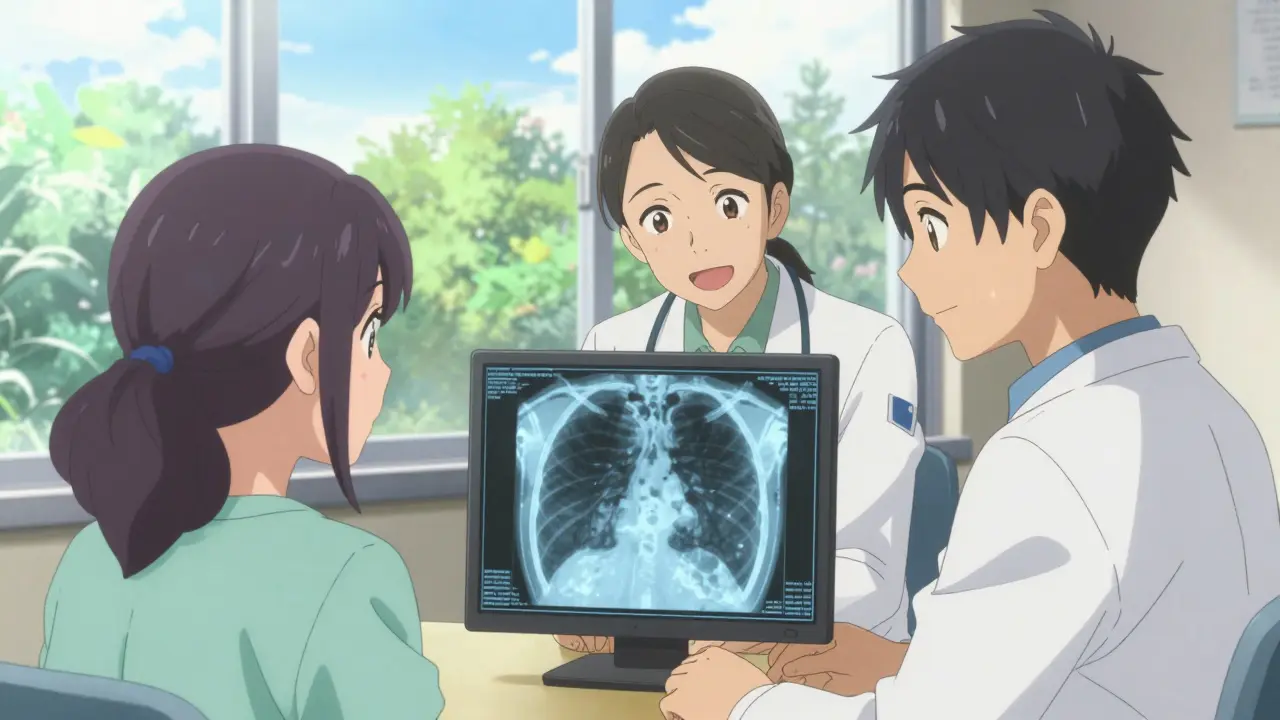
If you're eligible, the process doesn't start with the machine; it starts with a conversation. Medicare and most insurance providers require a "shared decision-making visit." You'll sit with your doctor for about 20 to 30 minutes to discuss the pros and cons. You'll talk about your smoking history, your health goals, and whether you're okay with the possibility of a false positive.
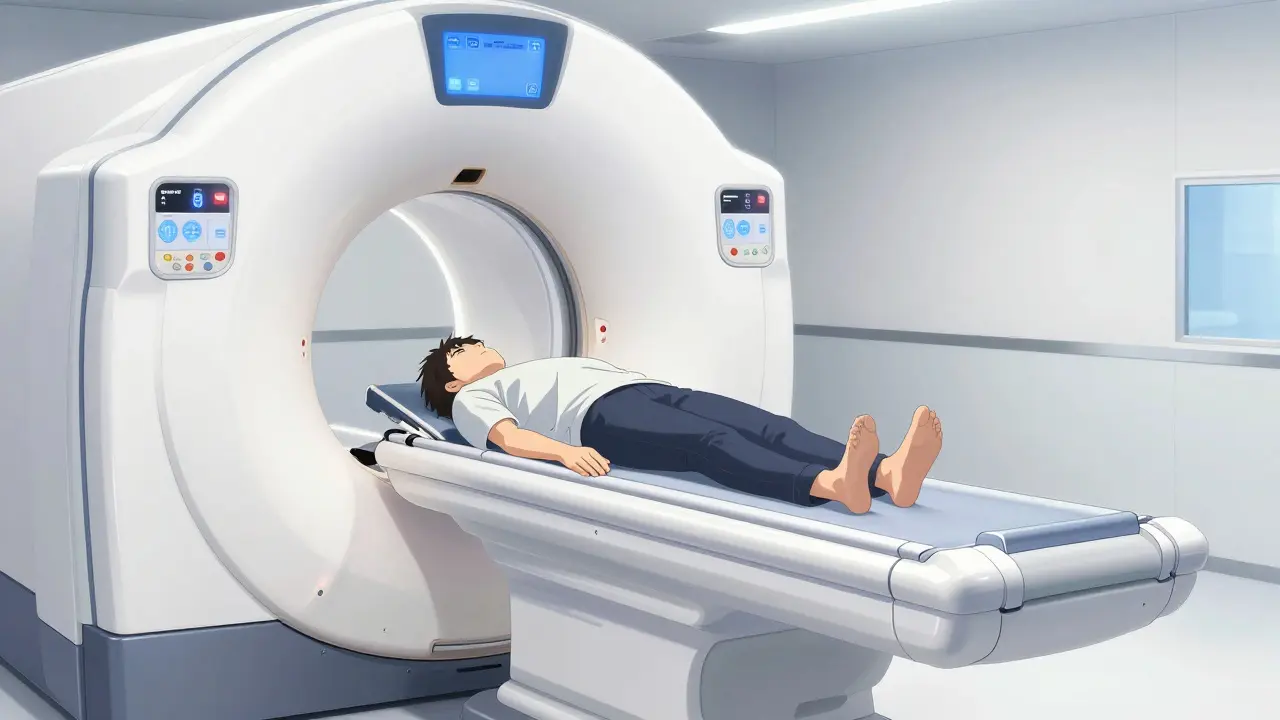
Once you agree to the scan, the actual procedure is incredibly fast. You lie on a table, slide through the ring, and you're done in a few minutes. There are no needles (unless you need contrast) and no prep. The real work happens afterward when the radiologist reviews the thin-slice images (usually 1.5mm thick) to look for anything out of place.
Is a Low-Dose CT the same as a regular CT scan?
No. A regular CT scan uses a higher dose of radiation and often requires a contrast dye to see internal organs clearly. An LDCT uses significantly less radiation and is specifically calibrated to look at the lung parenchyma for small nodules without the need for contrast.
How often should I get screened?
Most major guidelines, including the USPSTF and NCCN, recommend annual screening for as long as you meet the eligibility criteria. Some newer research from the NELSON trial suggests biennial (every two years) screening might work, but the current gold standard in the U.S. remains once every 12 months.
What if I quit smoking 20 years ago?
According to the USPSTF, if you quit more than 15 years ago, you are no longer eligible for routine screening. However, the American Cancer Society and NCCN suggest that doctors can make individualized decisions based on other risks, like family history or occupational exposure, because the risk of lung cancer stays elevated for a long time after quitting.
Will my insurance cover the cost?
Most insurance plans and Medicare cover LDCT if you meet the specific eligibility criteria (age and pack-years). However, follow-up diagnostic tests resulting from a positive screen-like a biopsy or a full-dose CT-may have different coverage rules and could result in out-of-pocket costs.
What does a "20 pack-year" history mean?
Pack-years are calculated by multiplying the number of cigarette packs smoked per day by the number of years smoked. For example, if you smoked one pack a day for 20 years, that's 20 pack-years. If you smoked two packs a day for 10 years, that's also 20 pack-years.
Next Steps and Troubleshooting
If you think you qualify, the first step is to schedule a wellness visit with your primary care provider. Don't just ask for the scan; ask for a "screening consultation." This ensures the visit is documented for insurance and that you have a clear path for follow-up care.
For those in rural areas: Access can be a challenge, as many small counties lack accredited facilities. If your local clinic can't perform an LDCT, ask for a referral to an ACR-accredited center. It may be a longer drive, but the accuracy of an accredited program is vital for avoiding missed nodules.
If you receive a positive result: Don't panic. Remember that the vast majority of these results are benign. Ask your doctor for a specific timeline for the next step-whether it's a 3-month follow-up scan or a PET-CT-so you aren't left wondering what happens next.