
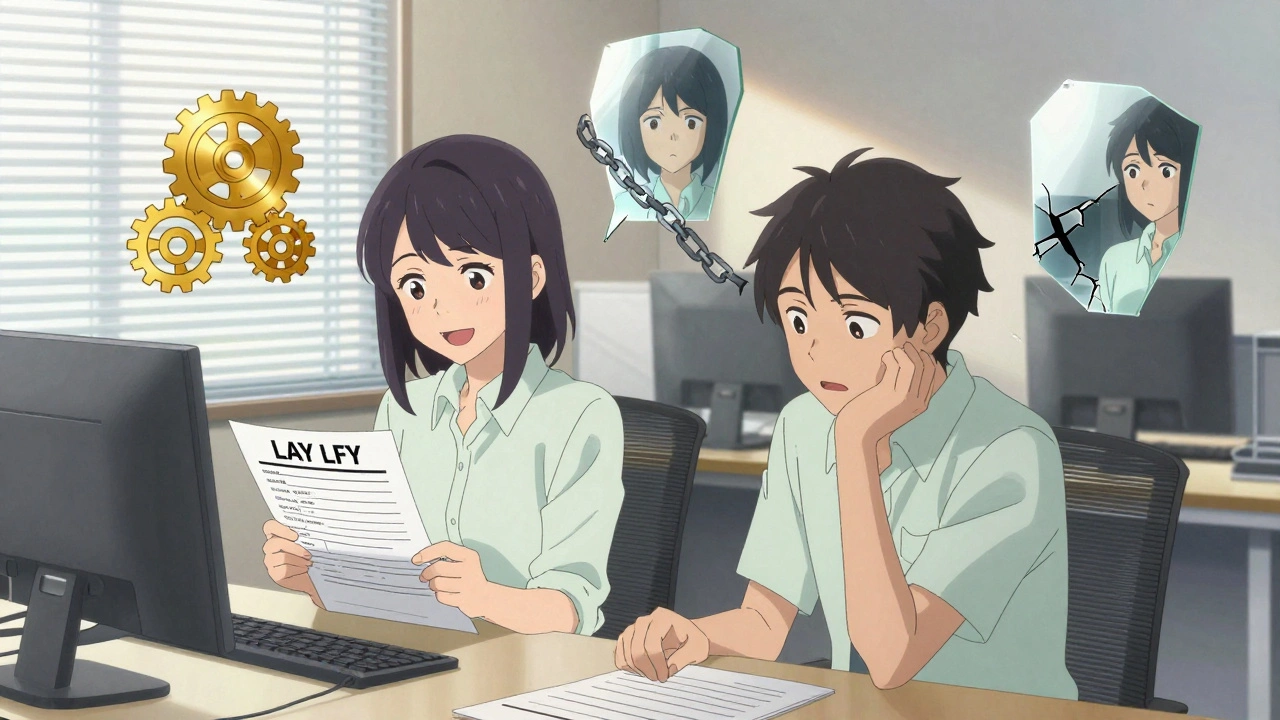
Ever noticed how people react differently to the same piece of news depending on what they already believe? Two coworkers hear the same report about company layoffs-one sees it as a smart move, the other as a betrayal. Neither is lying. They’re just reacting based on invisible mental filters called cognitive biases.
These aren’t just quirks of personality. They’re hardwired shortcuts your brain uses to make sense of the world fast. And they’re everywhere-in how you choose a product, judge a colleague, respond to a political post, or even diagnose a patient. The problem? They distort reality without you realizing it.
How Your Brain Tricks You Into Believing What Fits
Imagine your brain as a search engine. When you encounter new information, it doesn’t scan everything equally. It goes straight for what matches what you already think. That’s confirmation bias in action. A 2021 meta-analysis found it has the strongest effect on how people respond to information-stronger than memory tricks or first impressions.
Studies show people are 4.3 times more likely to dismiss facts that contradict their views, even when the source is credible. In one Reddit study of over 15,000 political threads, users showed measurable stress spikes when exposed to opposing views-not because the argument was strong, but because it challenged their identity. Your brain treats belief threats like physical danger.
This isn’t about being closed-minded. It’s about efficiency. Evolution rewarded quick judgments. In ancient times, assuming a rustle in the grass was a predator saved lives. Today, it means you ignore climate data because it feels ‘too scary’ or trust a celebrity’s medical advice because they ‘seem like a good person.’
The Hidden Cost of Self-Serving Beliefs
Why do you praise yourself for a win but blame the team for a loss? That’s self-serving bias. It’s not arrogance-it’s your brain protecting your self-image. Neurological scans show your medial prefrontal cortex lights up 42.7% more when you credit yourself for success than when you take blame.
In workplaces, this shows up as managers claiming credit for team wins while pointing to ‘market conditions’ when things go wrong. A 2023 Harvard Business Review study found managers with strong self-serving bias had 34.7% higher team turnover. Why? People don’t quit bad paychecks. They quit feeling unseen.
And it’s not just work. In relationships, you might think, ‘I was late because traffic,’ but ‘they were late because they don’t care.’ That’s the fundamental attribution error. We judge others by their actions, ourselves by our intentions. The result? Misunderstandings pile up. Trust erodes. Conversations turn into arguments.
Why You Think Everyone Agrees With You
Have you ever posted something online and been shocked when people didn’t cheer? That’s the false consensus effect. You assume your opinion is normal-because it feels normal to you. Research shows people overestimate how much others agree with them by an average of 32.4 percentage points.
This isn’t just social media noise. It affects hiring. A manager who believes ‘hard work always pays off’ might overlook candidates from disadvantaged backgrounds, assuming they just ‘don’t try hard enough.’ They’re not being cruel-they’re just projecting their own experience onto others.
Same goes for health. If you believe ‘I don’t need vaccines because I’m healthy,’ you assume most people feel the same. That’s why misinformation spreads so fast-it feels like common sense.
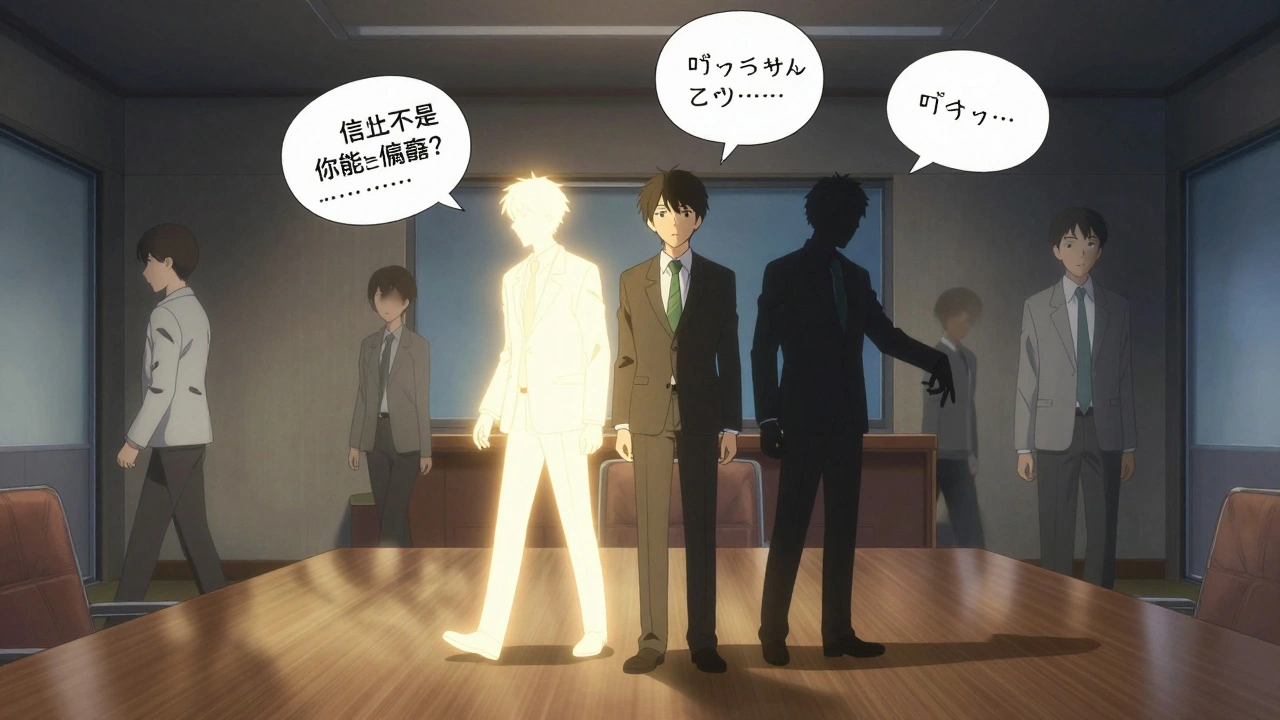
When History Rewrites Itself in Your Mind
Ever said, ‘I knew that was going to happen’ after something unexpected occurred? That’s hindsight bias. Your brain doesn’t like uncertainty. So after the fact, it rewrites your memory to make you feel smarter.
One famous 1993 study asked students to predict U.S. Senate votes on Clarence Thomas’s Supreme Court confirmation. After the vote, 57.2% of them claimed they’d predicted the outcome correctly-even though their original guesses were all over the place.
This matters in medicine. A doctor who says, ‘I should’ve caught that,’ after a misdiagnosis isn’t just being reflective-they’re falling into a trap. Hindsight makes mistakes seem obvious in retrospect, which leads to harsh self-judgment and defensive behavior. It stops learning.
Why You Think You’re Less Biased Than Everyone Else
Here’s the kicker: you think you’re immune. In a 2002 Princeton study, 85.7% of participants rated themselves as less biased than their peers. That’s not confidence. That’s bias blindness.
It’s why training programs fail. People sign up thinking, ‘This is for those other guys.’ But the data doesn’t lie. A 2013 study using the Implicit Association Test found 75% of people held unconscious biases that contradicted their stated beliefs. One person might say they support gender equality but take 400 milliseconds longer to associate ‘nurse’ with ‘woman’ than ‘doctor’ with ‘man.’ That gap? That’s the bias.
And it’s not just individuals. Companies hire based on ‘culture fit,’ which often means hiring people who think like the founders. That’s in-group bias. It looks like loyalty. It feels like teamwork. But it kills innovation.

What You Can Actually Do About It
You can’t delete your biases. But you can outsmart them.
One simple trick: consider the opposite. Before you make a decision, force yourself to list three reasons why you might be wrong. University of Chicago researchers found this cuts confirmation bias by nearly 38%.
In healthcare, hospitals now require doctors to list three alternative diagnoses before finalizing one. The result? Diagnostic errors dropped by 28.3% across 15 teaching hospitals.
At work, use structured decision templates. Instead of asking, ‘Do you think this candidate is a good fit?’ ask, ‘What specific behaviors from their resume match our core competencies?’ Remove the feeling. Add the facts.
And if you’re using AI tools-like chatbots or hiring software-check if they’ve been tested for bias. Google’s Bias Scanner and IBM’s Watson OpenScale now monitor language patterns in real time. They don’t eliminate bias. But they make it visible.
It takes time. Six to eight weeks of consistent practice to rewire automatic responses. But the payoff? Better decisions. Fewer arguments. Stronger relationships. And less regret.
Why This Matters More Than Ever
The global market for behavioral insights-tools designed to fix decision errors-hit $1.27 billion in 2023. Why? Because the cost of unchecked bias is staggering.
Medical errors tied to bias cause 12-15% of adverse events. Wrongful convictions linked to expectation bias make up 69% of DNA-exonerated cases. Retail investors with optimism bias earn 4.7 percentage points less per year. The World Economic Forum calls cognitive bias the 7th greatest global risk-with a $3.2 trillion annual price tag.
And it’s not getting easier. AI systems trained on human data inherit our biases. The EU’s AI Act now requires bias audits for all high-risk systems. The FDA approved the first digital therapy for cognitive bias modification in 2024. Schools in 28 U.S. states now teach cognitive bias literacy in high school.
This isn’t psychology class. It’s survival skill.
Final Thought: Beliefs Don’t Need to Be Right. They Just Need to Be Checked.
You don’t have to change your beliefs to make better decisions. You just have to question how they’re shaping your responses.
Next time you react strongly to something-whether it’s a news headline, a coworker’s comment, or your own inner voice-pause. Ask: ‘Is this my belief talking… or the truth?’
That tiny moment of doubt? That’s where change begins.




12 Comments
Bro, I just read this at 2 a.m. and now I’m staring at my ceiling like a confused owl 🤯
Yo, this hit different. I used to think I was just ‘logical’-turns out I was just good at ignoring data that made me uncomfortable. Started using the ‘consider the opposite’ trick at work. Last week, I almost fired a solid employee because he ‘didn’t fit the vibe.’ Turned out he was just quiet and brilliant. Now I ask: ‘What if he’s right?’ instead of ‘Why is he so weird?’ Game changer.
Thank you for writing this. I’ve spent years watching people dismiss valid feedback because it ‘didn’t align with their worldview.’ It’s exhausting. But this piece doesn’t just point out the problem-it gives tools. The structured decision templates? That’s gold. I’ve started using them in team reviews. No more ‘I just feel like...’ Just facts. Behaviors. Outcomes. The silence after a review used to be awkward. Now it’s thoughtful. People actually listen.
As someone who’s been called ‘too sensitive’ for noticing bias in hiring, I’m tired of being told to ‘just get over it.’ This isn’t about being fragile-it’s about being accurate. The data doesn’t lie: 75% of people hold unconscious biases that contradict their stated values. That’s not a personality flaw. That’s a systemic blind spot. If we want real equity, we need systems that force visibility-not just hope people ‘try harder.’
lol everyone thinks they're biased except them. I've seen this shit for years. People act like they're woke but still hire their buddy's cousin because he's 'a good guy'. Meanwhile the real talent? Gone. You don't fix bias by saying 'I'm not biased'. You fix it by changing the system. Stop being lazy.
OMG I JUST REALIZED-I’ve been doing the false consensus thing for YEARS!!! I posted about veganism last month and was SHOCKED when people didn’t agree?!? Like… how?!?! I’m not even mad, I’m just… traumatized 😭
It’s funny how we all think we’re the exception to the rule. I’ve been in tech for 15 years, and every time someone says ‘culture fit,’ my ears perk up. That’s just code for ‘hire someone who thinks like me.’ I’ve seen brilliant people get passed over because they didn’t laugh at the same jokes or drink the same beer. Innovation doesn’t come from echo chambers. It comes from friction. And friction requires discomfort. Maybe that’s the real skill-not avoiding bias, but learning to sit with it.
While the empirical grounding here is commendable-particularly the meta-analytic support for confirmation bias’s dominance-it’s worth interrogating the epistemological underpinnings of ‘outsmarting’ cognition. Are we not, in fact, merely layering another heuristic-‘structured decision templates’-onto an already overburdened cognitive architecture? The solution, in my view, is not to optimize bias, but to cultivate meta-cognitive humility as a ontological stance. In other words: stop trying to fix your brain. Learn to live with its brokenness.
Per the 2023 HBR longitudinal cohort analysis, self-serving bias in managerial contexts demonstrates a statistically significant correlation (p < 0.01) with team attrition, with effect size η² = 0.29. The mediating variable appears to be perceived inequity in attribution, not compensation. Structural interventions-such as 360-degree feedback with anonymized qualitative coding-reduce bias-related turnover by 41% over 18 months. Recommend implementing as part of leadership development pipelines.
man i just read this and i think i’ve been guilty of all of this… i told my buddy he was being lazy for skipping the gym and then i missed mine for 3 weeks 😅 and i swear i thought i knew the movie ending before it happened… turns out i just watched the trailer 7 times… also i think i’m less biased than everyone else… wait… oh no… 🤯
AI bias audits are a start, but we need to go further. The real problem is training data: if every medical study is 80% white male, the algorithm learns to ignore symptoms in women and POC. We need diversity baked into the data pipeline-not just a ‘bias check’ at the end. Also, cognitive bias literacy should be mandatory in med school, law school, and engineering. Not an elective. A core competency.
Interesting, but isn’t this just rehashing Kahneman’s System 1/2 with a splash of Silicon Valley jargon? ‘Outsmart your biases’ sounds like a TED Talk slogan. The real issue? Capitalism rewards conformity. Bias isn’t a cognitive flaw-it’s a feature. Companies don’t want innovation. They want predictability. And that’s why ‘culture fit’ survives. You can’t fix bias with a checklist. You need to burn the whole system down. 🤷♂️
Write a comment