

When your blood sugar drops too low, your body doesn’t just feel off-it can shut down. A person might suddenly sweat, shake, or stare blankly, not because they’re drunk or stressed, but because their brain is running on empty. This is hypoglycemia, and it’s not rare. For people managing diabetes, it’s a daily reality. But even if you don’t have diabetes, low blood sugar can sneak up on you. The good news? You can learn to spot it, treat it fast, and stop it before it happens again.
What Exactly Is Hypoglycemia?
Hypoglycemia means your blood glucose-the sugar your body uses for energy-has fallen below a safe level. For most people with diabetes, that threshold is 70 mg/dL (or 3.9 mmol/L). Below that, your body starts sending emergency signals. For someone without diabetes, the danger zone starts even lower, at 55 mg/dL (3.1 mmol/L). This isn’t just a number on a screen. It’s your brain telling you something’s wrong.
Think of your blood sugar like a car’s fuel gauge. If it drops too low, the engine sputters. In your body, that means your brain, which runs almost entirely on glucose, starts to malfunction. You might feel dizzy, confused, or even lose consciousness. Left untreated, severe hypoglycemia can lead to seizures, coma, or worse.
How Do You Know You’re Having a Low?
Symptoms come in two flavors: physical and mental. The physical ones-shaking, sweating, heart racing-are your body’s alarm system. These are caused by adrenaline being released to try to raise your blood sugar. You might feel your heart pounding, your hands trembling, or your skin suddenly damp. These usually hit first, around 65-70 mg/dL.
The mental symptoms are more dangerous. When glucose drops below 60 mg/dL, your brain starts to struggle. You might see blurry, feel disoriented, or have trouble speaking. Below 50 mg/dL, confusion turns into poor judgment. You might forget where you are, or think you’re fine when you’re not. At 45 mg/dL or lower, unconsciousness can happen. This is why some people with diabetes are found unresponsive in bed-what’s called “dead-in-bed” syndrome.
Here’s the twist: not everyone feels the same way. One person might get a headache. Another might feel hungry. A third might just feel irritable. And if you’ve had diabetes for years, you might stop feeling the warning signs altogether. That’s called hypoglycemia unawareness, and it affects about 1 in 4 long-term Type 1 patients. It’s scary because you can crash without knowing it’s coming.
What Causes Low Blood Sugar?
For people with diabetes, the most common cause is a mismatch between insulin and food. Take too much insulin? Skip a meal? Exercise harder than planned? All of those can drop your sugar fast. Studies show that 73% of episodes in insulin users come from too much insulin or not enough carbs. That’s why counting carbs isn’t just helpful-it’s lifesaving.
Another big one is exercise. Even a 30-minute walk can lower blood sugar by 30-50 mg/dL if you don’t adjust. If you’re on insulin, you might need to eat 15-30g of carbs before or after, or lower your basal dose by 20-50%. It’s not guesswork-it’s calculation.
For those without diabetes, hypoglycemia is rarer but still real. Reactive hypoglycemia happens 2-4 hours after eating, often after bariatric surgery. Your body releases too much insulin in response to carbs, then crashes. Fasting hypoglycemia is more serious. It can point to tumors like insulinoma, liver failure, or hormone disorders. If you’re not diabetic and keep having lows, see a doctor. Don’t assume it’s just “being hungry.”
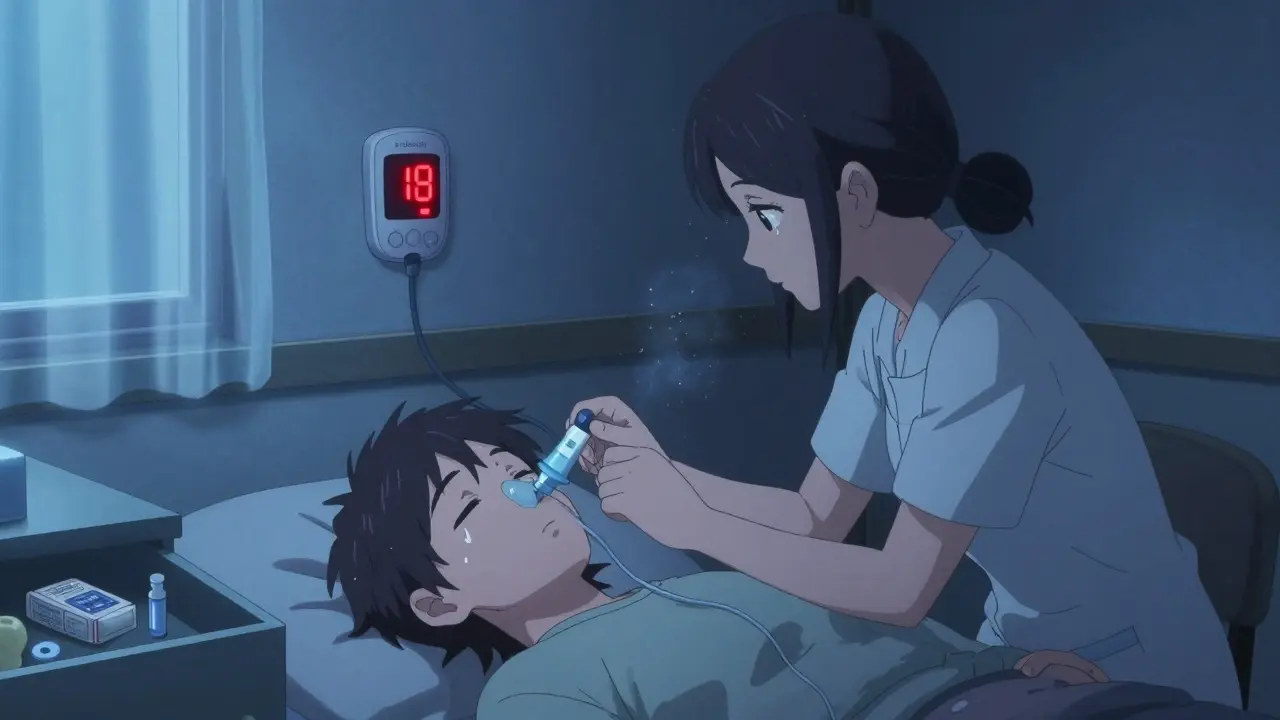
How to Treat a Low Blood Sugar Episode
If you feel a low coming on, don’t wait. Don’t eat a whole sandwich. Don’t wait 10 minutes to see if it gets better. Act fast.
The standard is the 15-15 rule: take 15 grams of fast-acting carbs, wait 15 minutes, then check your blood sugar again. Good options: 4 glucose tablets, 1/2 cup of fruit juice, 1 tablespoon of honey, or 6 Life Savers. Avoid candy bars-they have fat and protein, which slow down absorption.
After 15 minutes, if your sugar is still below 70 mg/dL, repeat. Once you’re back above 70, eat a snack with protein and carbs-like peanut butter on toast-to hold the rise. Don’t skip this step. A quick sugar spike followed by another crash is common.
But what if you’re too confused to eat? Or you’ve passed out? That’s when you need glucagon. Glucagon is a hormone that tells your liver to dump stored sugar into your blood. It comes as a nasal spray (Zegalogue) or an injection. Caregivers should be trained to use it. Studies show nasal glucagon works in 85% of cases within 15 minutes. Injectable versions are slightly faster. Keep it in your bag, your car, your workplace. If you live alone, consider a medical alert device that can call for help if your glucose drops too low.
And here’s a harsh truth: 22% of severe lows don’t respond to the 15-15 rule. That’s why knowing how to use glucagon isn’t optional-it’s essential.
How to Prevent Low Blood Sugar
Prevention is smarter than reaction. Here’s what actually works:
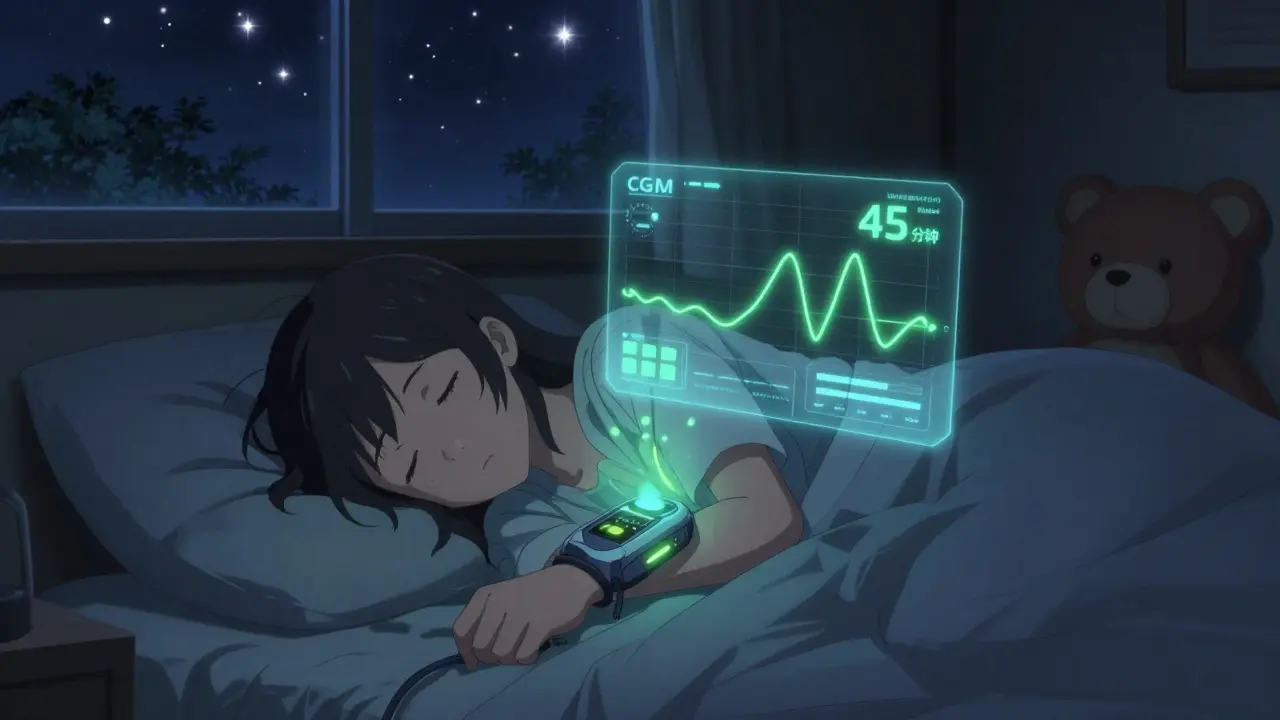
- Use a continuous glucose monitor (CGM). These devices track your sugar 24/7 and alert you before you crash. Studies show CGMs reduce low-blood-sugar time by 35%. Even better, newer models can pause insulin delivery automatically when your sugar starts dropping. One system, Guardian 4, cuts nighttime lows by 44%.
- Carb count accurately. For every unit of insulin, you need to match it with the right amount of carbs. A small error-say, eating 20g instead of 30g-can trigger a low. Use apps or a food scale. Precision matters.
- Adjust for activity. If you’re going for a long hike or playing soccer, reduce your insulin dose by 20-50% beforehand. Or eat extra carbs. Don’t just guess.
- Check overnight. Nighttime lows are common and dangerous. Set your CGM to alarm at 70 mg/dL. If you’re not using one, check your sugar before bed if you’ve been active or skipped dinner.
- Train your circle. Tell your family, coworkers, friends how to help. Show them where your glucagon is. Practice the steps. Many people mistake hypoglycemia for drunkenness. Don’t let that delay help.
What’s New in Hypoglycemia Care?
The tools are getting smarter. In 2023, the FDA approved Dasiglucagon, a nasal glucagon that works faster than older injectables. The European Union cleared the first fully automated artificial pancreas system, Tandem Control-IQ, which reduces time below 54 mg/dL by over 3 hours per week.
Researchers are now training AI to predict lows before they happen. The NIH is funding a project called HypoPred that uses your CGM data, activity levels, and meal logs to forecast a drop 45 minutes ahead. Early results show 85% accuracy. Imagine waking up because your phone buzzed-not because you felt shaky, but because your system knew you were about to.
Even insulin itself is evolving. New glucose-responsive insulin is in trials. It automatically slows down when your sugar drops below 70 mg/dL. Think of it like a thermostat for your blood sugar.
Why This Matters More Than You Think
Hypoglycemia isn’t just inconvenient. It’s costly. In the U.S., it leads to 100,000 emergency room visits every year. Each severe episode costs about $1,872. For older adults, each episode raises dementia risk by 4.7%. For young people with Type 1 diabetes, nocturnal lows contribute to 6% of unexpected deaths.
And yet, many people don’t get the training they need. The CDC says certified diabetes educators should provide 8 hours of hypoglycemia education. But in real life, most get 30 minutes. That’s not enough. If you or someone you care for has diabetes, ask for more. Demand it. Practice with glucagon. Wear a medical ID. Keep glucose tabs in your wallet.
Low blood sugar doesn’t have to be a surprise. It doesn’t have to be scary. With the right knowledge, the right tools, and the right support, you can live with diabetes-and stay safe.
Can you have low blood sugar without having diabetes?
Yes. Non-diabetic hypoglycemia is rare but possible. Reactive hypoglycemia happens after meals, often after weight-loss surgery. Fasting hypoglycemia may signal a tumor, liver disease, or hormone problem. If you’re not diabetic and keep getting lows, see a doctor. Don’t assume it’s just hunger.
What should I do if someone passes out from low blood sugar?
Do not put food or drink in their mouth-they could choke. If they have glucagon, give it immediately. Nasal glucagon is easy to use: spray one dose into one nostril. If you don’t have glucagon, call emergency services right away. Stay with them until help arrives.
Why do some people stop feeling low blood sugar symptoms?
Repeated low blood sugar episodes can dull your body’s warning signals. This is called hypoglycemia unawareness. It’s common in people with Type 1 diabetes after 10-15 years. The brain gets used to lower glucose levels and stops triggering adrenaline. Using a CGM and avoiding lows for several weeks can sometimes restore awareness.
Is the 15-15 rule always enough?
No. It works for mild to moderate lows, but fails in about 22% of severe cases, especially if the person is confused or unconscious. In those cases, glucagon is needed. Don’t rely on the 15-15 rule alone. Always have glucagon available if you’re on insulin.
Can continuous glucose monitors (CGMs) prevent hypoglycemia?
They don’t prevent it completely, but they drastically reduce it. CGMs cut time spent in low blood sugar by 35%. Newer models can automatically pause insulin delivery when glucose drops too fast. One system, Guardian 4, reduces nighttime lows by 44%. They’re not perfect-sensor lag can delay alerts-but they’re the best tool we have.



10 Comments
Anyone else notice how this article acts like hypoglycemia is some noble struggle? Like, yeah, it’s dangerous-but so is being lazy about your diet. I’ve seen people blame insulin for their own poor choices. Stop treating diabetics like fragile glass figurines. You don’t need a CGM to eat a damn snack. Just stop skipping meals and calling it ‘intermittent fasting.’
Oh honey, I’m so glad you mentioned glucagon. My cousin’s son had a seizure because his mom thought juice was enough. She didn’t even know glucagon existed. I mean, if you’re going to be on insulin, you need to treat it like a loaded gun. Not a suggestion. It’s not optional. And if you don’t have a medical alert bracelet? You’re just asking for trouble. No offense, but if you’re this careless, maybe you shouldn’t be in charge of your own body.
CGMs are a scam. They’re pushed by Big Med and Big Tech to keep you hooked. Sensors lag. False alarms. And guess who profits? The same companies that sell you insulin. Meanwhile, real medicine-like eating real food-gets ignored. Also, ‘artificial pancreas’? Sounds like a dystopian nightmare. We’re turning humans into machines. Wake up.
Per the ADA 2023 guidelines, the 15-15 rule is classified as Tier 2 intervention for moderate hypoglycemia. For patients with HbA1c <7.0% and recurrent episodes, we recommend immediate glucagon administration + CGM data telemetry integration. Also, avoid sucrose-based carbs-fructose metabolism exacerbates post-rebound hyperglycemia. Use dextrose monohydrate tablets exclusively.
Thank you for sharing this comprehensive and deeply informative article. I am truly moved by the clarity with which the physiological mechanisms of hypoglycemia have been explained. In my country, awareness remains alarmingly low, and many individuals continue to misinterpret symptoms as mere fatigue or stress. I hope this knowledge reaches every household, especially those with elderly members who may not have access to modern monitoring devices. May compassion and precision guide our collective care.
wait so if u dont have diabetes and get lows u need to see a doc? yeah right. my buddy jason eats a candy bar at 3pm every day and says he’s ‘low’-he’s just a lazy sugar junkie. stop making excuses. if ur body can’t handle carbs, maybe u shouldnt eat them. also, glucagon? sounds like a drug company lie. i bet they just want u to buy more stuff.
I’ve been there. Not the coma, not the seizures-but the fog. The way your thoughts slow down and you forget your own name. I didn’t know I had hypoglycemia unawareness until I passed out in a grocery store. No one noticed. I woke up on the floor with a stranger holding my hand. That’s when I got my CGM. It saved me. I don’t say this to scare anyone. I say it because you deserve to feel safe in your own body. And you’re not alone. I’m here if you need to talk.
just got my first CGM and holy cow it’s a game changer 😍 i used to panic every time i felt dizzy but now i see the trend before it happens. also, i eat a peanut butter cracker before bed now and i haven’t had a single night low since. you guys are doing great. keep going. 💪❤️
While the article provides a clinically sound overview, I would like to emphasize the importance of structured education in managing hypoglycemia. In clinical practice, we observe that patients who receive formal, multi-session training in carbohydrate counting, insulin-to-carb ratios, and glucagon administration demonstrate a 68% reduction in emergency events. I urge healthcare providers to prioritize this over fragmented, time-limited counseling. The stakes are too high for half-measures.
cool article. i had no idea non-diabetics could get lows too. my sister says she gets dizzy after lunch but she just eats salad. maybe she needs a snack. i’m gonna tell her about the 15-15 rule. thanks for sharing. 🙏
Write a comment