
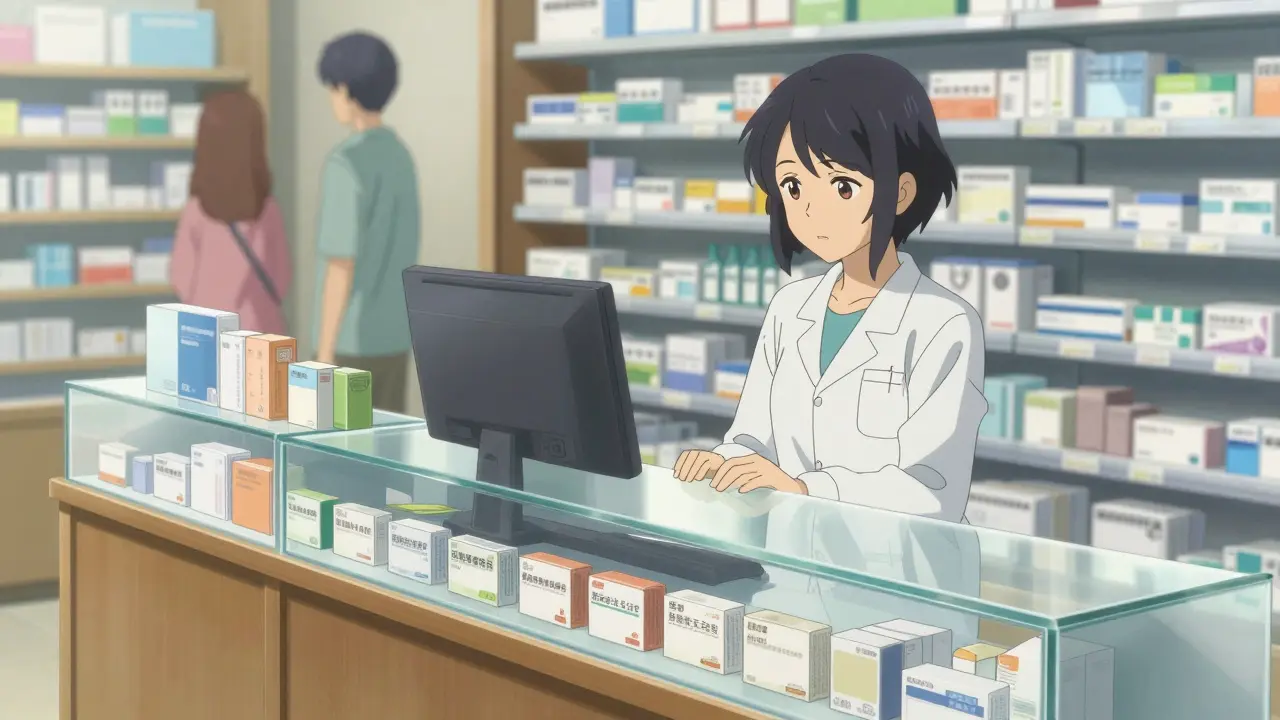
Most of us operate on a simple logic: more sellers mean better prices. If three different stores sell the same toaster, they have to compete hard to get your money. It makes sense that this should apply to medicine too. Yet, anyone paying attention to the pharmacy counter knows the story is messier. You might see five versions of a generic blood pressure pill listed, but the one prescribed often isn't the cheapest one.
This disconnect between theory and reality stems from how the pharmaceutical market actually functions. We aren't just talking about raw economics here; we are looking at complex interactions between regulators, manufacturers, and payers.
The Non-Linear Path to Cheaper Medication
The general assumption is linear: one generic enters, prices drop a bit. Two enter, they drop more. In reality, the curve is steep but jagged. Data from the FDAUnited States food and drug regulator responsible for safety oversight in late 2019 clarified this dynamic using real-world invoice data.
When the first generic version of a drug hits the shelf, wholesale prices typically fall by roughly 30% to 39% compared to the original brand name. That's a significant hit for the budget. However, the second competitor entering the race pushes prices down another substantial chunk, hitting a 54% reduction from the brand price.
The magic number seems to be six. Once you have six or more competitors manufacturing the same pill, average manufacturer prices plummet by about 95%. It sounds like a fairy tale ending, but getting to that point of maximum saturation is rarely guaranteed. Many drugs stall out with just one or two competitors, keeping prices well above the theoretical floor.
Why More Competitors Doesn't Always Mean Lower Prices
You would think once multiple factories are approved, prices would keep dropping until profit margins vanish. Sometimes, the opposite happens. A phenomenon known as "mutual forbearance" explains why. Research from Portugal showed a striking example involving statins (cholesterol medication).
In this scenario, despite having multiple generic rivals, prices remained stubbornly close to regulatory ceilings. The companies knew each other well across different markets. They essentially developed an unspoken truce: "We won't slash prices so you don't either." This coordination is illegal in standard markets, but in global pharmaceuticals, regulatory caps can inadvertently anchor these agreements. Instead of competing aggressively, firms settle for a stable, moderate margin.
This wasn't unique to Europe. In a 2023 study covering the Chinese market, researchers looked at 27 originator drugs eight quarters after generic entry. Surprisingly, 15 of those drugs still held over 70% market share even with generics present. The presence of a generic didn't automatically kill the brand demand. Patients often prefer the familiar brand, or doctors prescribe it habitually, allowing the original maker to keep selling at a premium despite the competition.
How Brands Fight Back with Price Hikes
Perhaps the most shocking twist is how the brand-name company reacts. When a generic erodes their sales volume, they don't always cut costs to survive. Some actually raise the price per unit. This is the paradox of generic competition.
If a brand loses 80% of its customers to generics, it is suddenly managing a much smaller, loyal customer base. To maintain revenue streams for R&D, the innovator company may hike the price for the remaining users who can't switch. In the 2023 China study, while most brand companies lowered prices slightly, 3 drugs saw average price increases of 0.62%. This strategy works in markets where the brand holds perceived quality advantages. Patients willing to pay more for peace of mind subsidize the company's losses elsewhere.
Then there is the role of Authorized Generics. These are generic versions made by the brand company itself, often released during the exclusivity period. Federal Trade Commission data showed these reduce wholesale prices by 8% to 12%, but interestingly, they don't statistically change what patients pay at the retail counter. Ownership matters. When an outside company owns the authorized generic, prices stay lower. When the brand owns it, they control the discount depth to protect their overall portfolio.
| Competitor Scenario | Typical Price Impact | Primary Risk Factor |
|---|---|---|
| Single Generic Entry | 30-39% drop from brand | Monopoly power of first entrant |
| Two Generic Competitors | 54% drop from brand | Potential for bilateral monopoly |
| Six+ Competitors | 95% drop from brand | Supply chain fragility |
| Complex Formulations | Moderate reduction | High barrier to entry (R&D costs) |

The Complexity Barrier
Not all generic drugs are created equal. A simple aspirin tablet is easy to replicate. But injectable medicines or controlled-release capsules are different beasts. Advanced delivery methods create massive barriers. To prove a complex generic is safe, manufacturers must demonstrate "sameness" across critical quality attributes-chemical composition, physical appearance, and performance in the body.
This requires costly bridging studies. Smaller generic makers often can't afford the upfront investment. Consequently, the market ends up dominated by large corporations with deep pockets. Even with multiple approvals theoretically possible, the actual number of players fighting over market share stays low due to these technical hurdles. The European Medicines Agency and FDA have tried harmonizing these requirements to encourage entry, but the cost remains a deterrent.
Who Really Controls the Price?
We can't discuss pricing without mentioning Pharmacy Benefit Managers (PBMs). By 2017, PBMs were handling 90% of all pharmaceutical purchasing in the US. They sit between the manufacturers and the patient/insurance payer.
Their rebates complicate the picture. A PBM might negotiate a high list price for a brand drug to secure a bigger rebate later. This distorts the incentive structure for generic competition. If a PBM gets paid off by the brand maker to put their expensive drug on the formulary, a cheaper generic doesn't necessarily win. This reduces the responsiveness of brand prices to generic threats because the real purchaser (the PBM) has conflicting financial motives.

New Rules: The Medicare Negotiation Era
As we move through 2026, the landscape is shifting again due to the Inflation Reduction Act passed in 2022. This legislation introduced the Medicare Drug Price Negotiation Program. Here is the catch: if the government negotiates a fixed "Maximum Fair Price" for a brand drug, it changes the math for generic entrants.
Lumanity's analysis in 2023 projected that this could dampen incentives for new generics. Why spend millions developing a generic if the ceiling for reimbursement is already pushed down by the government's negotiation? It threatens the resilience of the supply chain. Historically, robust markets have three or more manufacturers making the same drug. Fewer players means higher risk of shortages. Between 2018 and 2022, drugs with three-plus manufacturers had 67% fewer shortages than single-source options.
Furthermore, looking toward biologics (complex large-molecule drugs), the standard "85% price reduction" benchmark might not hold. Development costs are simply too high. This means the economic model of competition for small-molecule generics (like painkillers) will likely never fully apply to newer, biological treatments.
What Does This Mean for Supply Chains?
Finally, we need to talk about security. A market with one generic supplier is fragile. One factory fire shuts everything down. Markets with multiple competitors are resilient. However, if regulations drive too many players out via pricing caps or complexity barriers, we risk returning to a world where supply interruptions are the norm.
The goal isn't just the lowest price today; it's ensuring access tomorrow. While more competitors usually lead to lower costs, the optimal balance involves enough competition to drive innovation and price down, but enough stability to prevent stockouts when demand spikes.
Does more generic competition always lower prices?
No, the relationship is non-linear. While price drops are steep initially, they diminish as competitor numbers rise. Additionally, strategic behaviors like "mutual forbearance" can keep prices artificially high even with multiple rivals.
What is an authorized generic?
An authorized generic is a generic version of a brand drug made and marketed by the original brand-name manufacturer. These often serve to block competition or capture market share during exclusivity periods.
How does the Inflation Reduction Act affect generics?
The Act allows Medicare to negotiate prices, potentially capping revenues. This could disincentivize some generic manufacturers from entering the market if the negotiated price cap is too low to cover development costs.
Why do prices sometimes rise after generic entry?
Originator companies may raise prices on the remaining brand-share to compensate for lost volume. They also benefit from patients who remain brand-loyal or cannot switch to generics due to insurance or clinical preference.
Are complex generics priced differently?
Yes, complex formulations require expensive bridging studies to prove equivalence. High barriers to entry limit the number of competitors, meaning prices often remain higher compared to simple chemical molecules.


12 Comments
You're missing the supply chain nuance entirely because you aren't looking at the invoice data correctly and ignoring the market consolidation trends that actually dictate volume.
I never realized how complicated pharmacy prices actually get until my mom started needing multiple heart meds. She keeps getting billed differently even when the pills look exactly the same in the bottle. It makes you wonder who is actually making the profit here since we assume generic means cheaper. Reading about mutual forbearance kind of explains why sometimes costs stay high even with options. You would expect three companies to fight hard for the lowest price tag on the shelf. Instead they seem to have an unspoken agreement to keep things stable and predictable. Insurance companies play a huge role in deciding which version gets put on the formulary list. If the rebate from the manufacturer is bigger than the savings from the generic price, nobody switches. That sounds crazy but it seems to be exactly how the system operates behind closed doors. My dad used to work near a distribution center and he said inventory moves weirdly too. Sometimes stock piles up in warehouses before shortages suddenly happen everywhere else. It feels like there is a lot of friction built into the market intentionally rather than accidentally. We talk about free market economics but this sector feels heavily managed by hidden hands. It is exhausting trying to navigate the paperwork for every prescription refill. Maybe regulations like the new Medicare rules will finally force some actual transparency. I hope patients don't suffer more while the system tries to figure out a fair model.
The wholesale acquisition cost metrics do not capture the net price effectively when rebates are factored into the equation alongside patient copay structures. There is a significant divergence between list price and actual transaction price due to the complex reimbursement mechanisms utilized by PBM intermediaries.
It smells like the same conglomerate just spinning different labels to maintain monopoly control over essential life-saving compounds. They create artificial scarcity while pocketing the profits meant to stabilize public health budgets globally.
we think money is god but really its just paper floating on air and we chase it while the pills sit in boxes gathering dust until someone needs them then prices go up again so what is truth here. The concept of value is relative to the desperation felt by the consumer at the moment of purchase anyway.
Actually authorized generics are made by the brand sometimes which changes the dynamic significantly. These versions are sold during exclusivity to block smaller competitors from gaining a foothold in the marketplace easily.
It is simply unacceptable that greed dictates survival! Patients deserve better! We must act now! The lack of ethical consideration in these corporate strategies is truly appalling and demands immediate intervention from regulators everywhere!
Sure let's fix global economics with a hashtag and ignore the structural rot embedded in the healthcare financing models for decades.
The regulatory framework necessitates a comprehensive review of current mechanisms. Policy interventions must align with clinical outcomes to prevent adverse selection effects. Furthermore, longitudinal studies should track price elasticity over extended periods to inform future legislation.
The underlying tension between capital accumulation and public welfare creates a paradox where competition theory fails in practice. We must question whether profit maximization can ever truly coexist with equitable access to essential medicines. Perhaps the market itself is flawed when dealing with necessities of life.
Yeah it sounds harsh down under too mate. We got similar issues with PBMs dictating what hits our shelves locally.
Finding the right middle ground ensures nobody falls through the cracks later.
Write a comment