

Most people reach for an OTC nasal spray the moment they feel that stuffy, blocked-up feeling. It works fast-like magic, almost. Within minutes, you can breathe again. But here’s the truth no one tells you: if you use it for more than three days, you’re not fixing your congestion. You’re setting yourself up to feel worse than before.
Why Your Nose Gets Worse After Using Nasal Spray
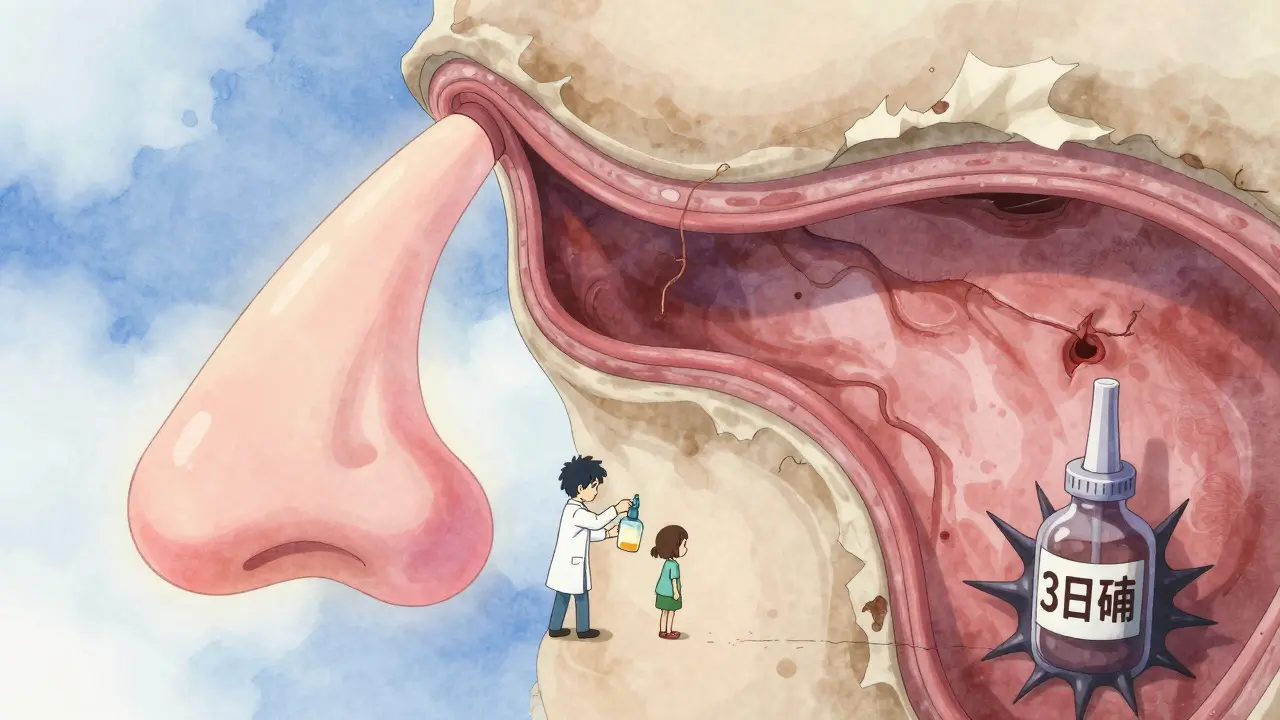
It sounds backwards, right? You use a spray to unblock your nose, and then your nose gets more blocked. That’s not a coincidence. It’s called rebound congestion, or rhinitis medicamentosa. And it’s real. It happens because the active ingredients in these sprays-oxymetazoline in Afrin, phenylephrine in Neo-Synephrine-shut down blood flow in your nasal passages. That’s how they reduce swelling and open your airways. But when the effect wears off, your body overcompensates. The blood vessels don’t just return to normal-they dilate even more than before. Your nose becomes more swollen, more congested, and now you feel like you need another spray just to breathe.
This isn’t rare. About 1-2% of people who use these sprays regularly end up with this problem. And it doesn’t take long. Studies show the cycle can start after just 72 hours of daily use. That’s three days. Many people don’t even realize they’re in the cycle until they’ve been using it for weeks, and now they’re spraying six or ten times a day just to get through the night.
What’s Actually in These Sprays?
Not all nasal sprays are the same. The OTC ones you find on the shelf all contain vasoconstrictors-drugs that shrink blood vessels. The most common are:
- Oxymetazoline (Afrin, Otrivin): Fast-acting, lasts 8-12 hours. Most popular, but also most linked to rebound.
- Phenylephrine (Neo-Synephrine): Slightly less potent, but still causes rebound if used too long.
- Xylometazoline (common outside the U.S.): Same mechanism, same risk.
These aren’t the same as saline sprays. Saline sprays are just salt water. They don’t shrink blood vessels-they just flush out mucus and irritants. No rebound. No dependency. And they’re safe to use every day, even for months.
But here’s why people keep choosing the chemical sprays: they work instantly. Steroid sprays like Flonase (fluticasone) are better for long-term use, but they take 3-7 days to start working. If you’re stuffed up tonight, you want relief now. That’s the trap. The fast relief makes you ignore the long-term cost.
The 3-Day Rule: Why It Exists
The FDA has required warning labels on these products since 2002: Do not use for more than 3 days. Yet, surveys show nearly 40% of users ignore it. Why? Because the relief is so good, and the warning doesn’t feel urgent until it’s too late.
Doctors and pharmacists agree: the 3-day limit isn’t arbitrary. After 72 hours, your nasal tissues start to change. The blood vessels become oversensitive. The lining gets inflamed. The natural cleaning system of your nose slows down. What started as a temporary fix turns into a chronic problem.
And once rebound kicks in, it doesn’t go away just because you stop spraying. You might feel worse for another 1-3 weeks. That’s not your cold coming back. That’s your nose healing from the damage the spray caused.

How to Break the Cycle
If you’re already stuck in the rebound cycle, here’s what actually works-not guesswork, not folk remedies, but science-backed steps:
- Stop the spray cold turkey. Yes, it’s rough. Your nose will feel blocked for days. But continuing to use it makes it worse. Tapering rarely works-most people just delay the pain.
- Start using a steroid nasal spray. Flonase, Nasacort, or their generics. These reduce inflammation over time. They won’t help today, but by day 3-5, you’ll notice a difference. Use them daily, even if your nose feels clear. This is what stops the rebound from coming back.
- Use saline irrigation daily. A NeilMed Sinus Rinse or similar device. Flush your nose 2-4 times a day. It clears mucus, soothes irritated tissue, and helps your nose heal. It’s not glamorous, but it’s effective.
- Consider oral decongestants short-term. Pseudoephedrine (Sudafed) can help during the worst days. But don’t use it if you have high blood pressure-it can raise your pressure by 5-7 mmHg. Check with your pharmacist first.
Most people feel better within 7-14 days if they follow this plan. If you’re still blocked after 3 weeks, see an ENT. You might need a stronger steroid or other treatment.
What to Use Instead
You don’t need to suffer without relief. Here are safer, sustainable options:
- Saline nasal sprays - Safe for daily use. Great for dry air, allergies, or mild congestion.
- OTC steroid sprays - Flonase, Nasacort, Rhinocort. Take a few days to work, but no rebound. Ideal for allergies or chronic congestion.
- Antihistamine sprays - Azelastine (Astelin) is prescription-only but very effective for allergy-related congestion.
- Ipratropium bromide - Used for runny nose (rhinorrhea), not stuffiness. No rebound risk.
For acute colds or sinus infections, use the decongestant spray only for 2-3 days, max. Then switch to saline and a steroid. That’s the smart approach.
Who’s at Higher Risk?
Some people are more likely to develop rebound congestion:
- People with high blood pressure - the vasoconstrictors can worsen it.
- Those with chronic allergies - they’re tempted to use sprays daily to stay clear.
- People who’ve had nasal surgery - healing tissue is more sensitive.
- Anyone using multiple OTC meds - mixing decongestants with cold pills can lead to accidental overuse.
And here’s something no one talks about: long-term misuse can lead to permanent damage. Repeated swelling and drying of the nasal lining can cause thinning, scarring, or even a hole in the nasal septum. It’s rare, but it happens. And once it’s there, it doesn’t heal on its own.
How to Prevent It Before It Starts
Don’t wait until you’re stuck. Here’s how to use OTC nasal sprays safely:
- Use them only for acute congestion-like a cold or flu-never for daily maintenance.
- Set a phone alarm for day 3. When it goes off, stop. No exceptions.
- Keep saline spray on hand. Use it instead of the decongestant if congestion returns.
- Buy Flonase or Nasacort at the same time as your decongestant. Use the steroid as your long-term plan.
- Never use more than 2 sprays per nostril per dose. More doesn’t mean faster relief.
Most people who follow this don’t end up in the rebound trap. It’s not about avoiding the spray entirely. It’s about using it like a tool, not a crutch.
Real Stories, Real Consequences
Reddit threads like r/Allergies are full of people describing "Afrin hell." One user wrote: "I thought my allergies were getting worse. Turns out, I was addicted to the spray. It took me 3 weeks to get my nose back. I cried every night." Another said: "I used it for 6 months. My nose was always dry, always burning. I had to see a specialist. They said my nasal lining was damaged. I still get nosebleeds."
These aren’t outliers. They’re the result of following the wrong advice-or no advice at all.
The market for these sprays is huge-over $1.2 billion in the U.S. in 2022. But behind every bottle is a person who thought they were helping themselves. The truth? The bottle helps you today. But it can hurt you tomorrow.
Can I use OTC nasal spray every day?
No. OTC decongestant nasal sprays like Afrin or Neo-Synephrine should never be used daily. Using them for more than 3 consecutive days can trigger rebound congestion, making your nose more blocked than before. Only saline sprays and steroid sprays like Flonase are safe for daily use.
How long does rebound congestion last?
Rebound congestion typically lasts 1 to 3 weeks after stopping the spray. For some people, especially those who used it for months, symptoms can linger for up to 6 weeks. The key to recovery is stopping the spray completely and using a steroid nasal spray and saline rinses to reduce inflammation and help your nasal lining heal.
Is Flonase better than Afrin?
Yes-for long-term use. Afrin gives fast relief but causes rebound if used beyond 3 days. Flonase (fluticasone) is a steroid spray that reduces inflammation over 3-7 days and has no rebound risk. It’s ideal for allergies, chronic congestion, or as a replacement after stopping a decongestant spray. Use Afrin only for short-term relief, then switch to Flonase.
Can nasal spray damage your nose permanently?
Yes, with long-term misuse. Chronic use of decongestant sprays can thin the nasal lining, cause scarring, or even lead to a perforation (hole) in the nasal septum. This is rare but serious. It often requires medical or surgical repair. The risk increases if you use the spray more than 10 times a day for months.
What’s the safest way to stop using nasal spray?
Stop using the decongestant spray completely. Don’t taper-it rarely works. Start using a steroid nasal spray like Flonase or Nasacort daily, and use saline rinses 2-4 times a day. This reduces inflammation and helps your nose recover. Oral decongestants like Sudafed can help during the first few days, but avoid them if you have high blood pressure. Most people feel better in 7-14 days with this plan.




10 Comments
Let me tell you something straight: if you’re using Afrin beyond three days, you’re not treating a cold-you’re playing Russian roulette with your nasal septum. I’ve seen it in clinic after clinic. Patients come in with crusted, bleeding mucosa, convinced it’s ‘just allergies.’ Nope. It’s pharmacological self-sabotage. Saline rinses? Steroid sprays? They’re not sexy, but they’re the only things that actually heal. Stop chasing quick fixes. Your nose isn’t a car engine you can hit with a can of starter fluid.
Ugh. I did this for 8 months. Thought I was being smart by using it ‘only when needed.’ Turns out ‘needed’ became every 2 hours. Cried myself to sleep for weeks after quitting. Flonase saved me. Still use it daily. No regrets. 🤍
So many people in India do this too-buy Afrin because it’s cheap and fast. No one tells them about rebound. My cousin ended up with a perforated septum. Now he’s got to see an ENT every 3 months. This isn’t just an American problem. It’s a global ignorance epidemic.
Look, I get it. You’re tired. Your sinuses are screaming. You want relief NOW. But here’s the truth: your body isn’t broken-it’s just overwhelmed. Decongestants don’t fix anything. They mask it. And when you stop, your nervous system freaks out because it’s been trained to rely on a chemical crutch. That’s not addiction in the drug-dealer sense-it’s neurophysiological adaptation. Your nasal blood vessels learned to panic without the spray. The solution isn’t willpower. It’s retraining. Saline flushes reset the environment. Steroid sprays reset the inflammation. Give it time. Your nose isn’t your enemy. The quick fix is.
Actually, the 3-day rule is arbitrary. It’s based on a 1980s study with a sample size of 47. The real threshold varies by individual physiology, genetic expression of alpha-adrenergic receptors, and baseline mucosal vascular density. You can’t reduce a complex physiological adaptation to a marketing slogan. Also, ‘rebound congestion’ is a misnomer-it’s pharmacodynamic tolerance with secondary vasodilatory rebound. And yes, I’ve published papers on this. Stop using fear-based language. Educate people on mechanisms, not dogma.
Wow. Just wow. You people are so obsessed with ‘natural’ solutions. I’ve been using Afrin for 15 years. I’m healthy. I exercise. I eat clean. My nose works fine. Why are you trying to guilt-trip everyone into using ‘Flonase’ like it’s some holy grail? Big Pharma pushes steroid sprays because they’re more profitable. The real villain here is the medical-industrial complex trying to control your choices. Use what works. End of story.
Let me break this down like a true patriot: America’s problem isn’t nasal congestion-it’s weak willpower. We’ve turned medicine into a comfort service. You want relief? Then endure the discomfort. That’s how our grandparents did it. No spray. No pills. Just a handkerchief and grit. You think your nose is special? It’s not. It’s just a tissue. Stop coddling it. If you can’t go three days without a chemical crutch, maybe you need to toughen up. This isn’t medicine. It’s emotional indulgence dressed in clinical jargon.
My nose felt like sandpaper for 17 days after quitting. I cried. I googled ‘is my nose dying?’ I thought I was broken. But I stuck with saline rinses and Flonase. Day 18? I breathed through my nose for the first time in months. No drama. No magic. Just patience. 🌿💧
I used Afrin for 6 months straight. 10 sprays a day. My ENT looked at me like I’d just confessed to a crime. Said my nasal lining looked like a dried-up riverbed. I had to use a humidifier 24/7. My wife made me sleep in the living room because I was snoring like a chainsaw. I’m 3 months clean now. Still use saline. Still use Flonase. Still terrified to touch that little blue bottle again. If you’re reading this and still using it… please stop. Before it stops you.
You people are so naive. You think this is about health? Nah. It’s about control. The FDA didn’t put the 3-day limit to protect you. They did it because they can’t regulate how much people buy. If you could use it forever, they’d lose the ability to say ‘it’s dangerous.’ It’s not the spray that’s the problem-it’s the system that profits from your dependence. Just say no to the fear-mongering. Use what you want. Your body, your rules.
Write a comment