
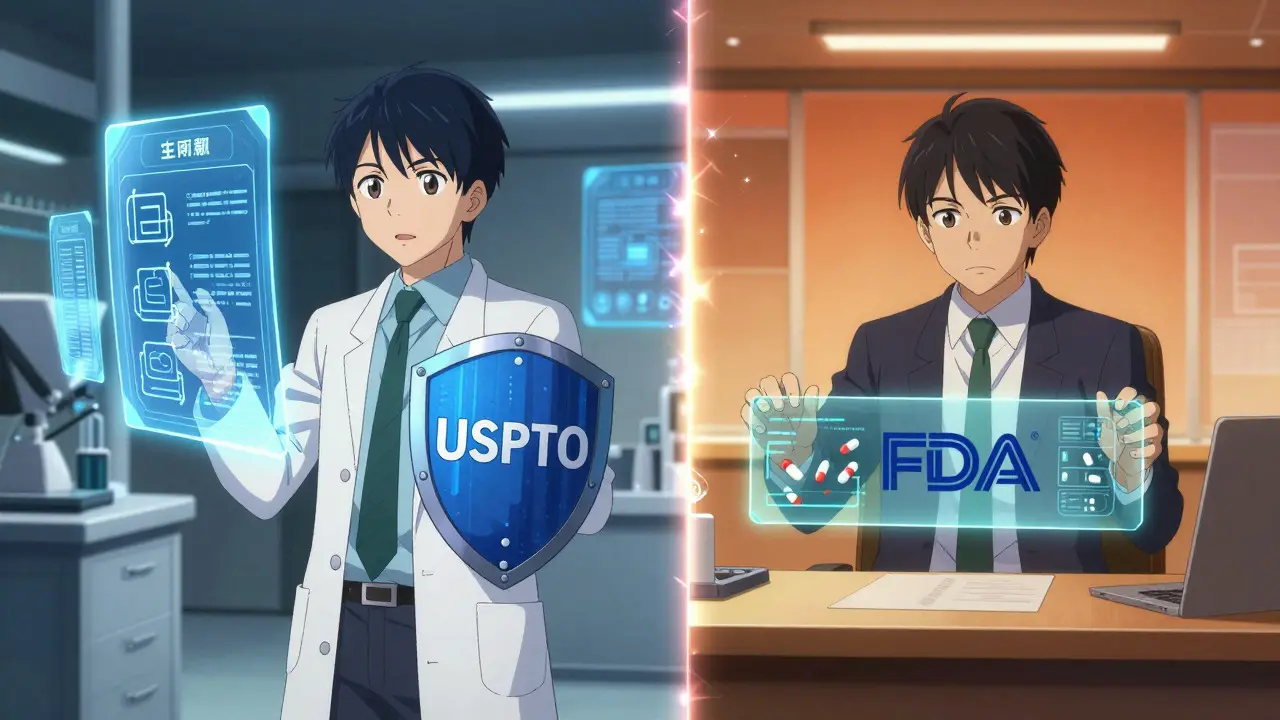
Imagine spending billions of dollars and over a decade developing a life-saving drug, only to have competitors copy it the moment you launch. That nightmare scenario is prevented by two distinct legal shields in the United States: patent exclusivity and market exclusivity. While they sound similar and often work together, they are fundamentally different tools governed by different agencies with different rules. Confusing them can cost pharmaceutical companies millions or delay generic competition that patients desperately need.
As we navigate the complex landscape of pharmaceutical law in 2026, understanding this distinction is no longer just for lawyers-it’s essential for investors, healthcare professionals, and policy makers. The core difference lies in who enforces the protection and what exactly is being protected. One protects an invention; the other protects data and approval status.
The Two Keys to the Pharmaceutical Kingdom
To understand why these protections matter, you first need to know who holds the keys. Patent exclusivity is administered by the United States Patent and Trademark Office (USPTO). It grants the inventor the right to exclude others from making, using, or selling their specific invention. This right is rooted in 35 U.S.C. § 154 and generally lasts for 20 years from the filing date. However, because drug development takes so long-often 10 to 15 years-the actual time a patent protects a drug on the market is usually much shorter, typically around 7 to 12 years after approval.
In contrast, market exclusivity is granted by the Food and Drug Administration (FDA). It doesn’t protect an invention per se; instead, it prevents the FDA from approving applications for competing products for a set period. This regulatory shield was established largely through the Hatch-Waxman Act of 1984, which balanced innovation incentives with generic competition. Unlike patents, which require the holder to sue infringers in court, market exclusivity is self-enforcing. The FDA simply will not approve a generic version while the exclusivity period is active, regardless of patent status.
| Feature | Patent Exclusivity | Market Exclusivity |
|---|---|---|
| Governing Agency | USPTO | FDA |
| What is Protected | Specific inventions (molecule, formulation, method) | Approved drug product and clinical data |
| Enforcement Mechanism | Court litigation (self-help) | FDA approval bar (automatic) |
| Duration Basis | 20 years from filing date | Fixed periods from approval date (e.g., 5, 7, 12 years) |
| Requirement for Novelty | Yes (must be new and non-obvious) | No (can apply to old drugs with new data) |
How Long Do These Protections Last?
The duration of protection is where the math gets tricky. A standard utility patent lasts 20 years from the day it is filed. But since most drugs spend more than half that time in research and clinical trials, the "effective" patent life is short. To mitigate this, the USPTO offers Patent Term Adjustment (PTA) for administrative delays and Patent Term Extension (PTE) under 35 U.S.C. § 156 to restore some time lost during FDA review. Even with extensions, the total post-approval patent life cannot exceed 14 years.
Market exclusivity periods, however, are fixed and start ticking only when the drug receives FDA approval. For a New Chemical Entity (NCE), the FDA grants 5 years of exclusivity. During this time, the agency cannot even accept abbreviated new drug applications (ANDAs) for generics. If the drug treats a rare disease, orphan drug exclusivity kicks in, offering 7 years of protection regardless of whether the drug is patented. Biologics enjoy an even longer shield: 12 years of exclusivity under the Biologics Price Competition and Innovation Act (BPCIA) of 2009.
There are also smaller but significant boosts. Completing requested pediatric studies can add 6 months to any existing exclusivity period. Since 1997, this pediatric exclusivity has generated roughly $15 billion in additional revenue for innovators, according to the Congressional Budget Office. These periods run concurrently with patents, creating layers of defense that can extend market monopoly well beyond the original patent term.
Why Non-Patented Drugs Can Still Stay Off-Generic
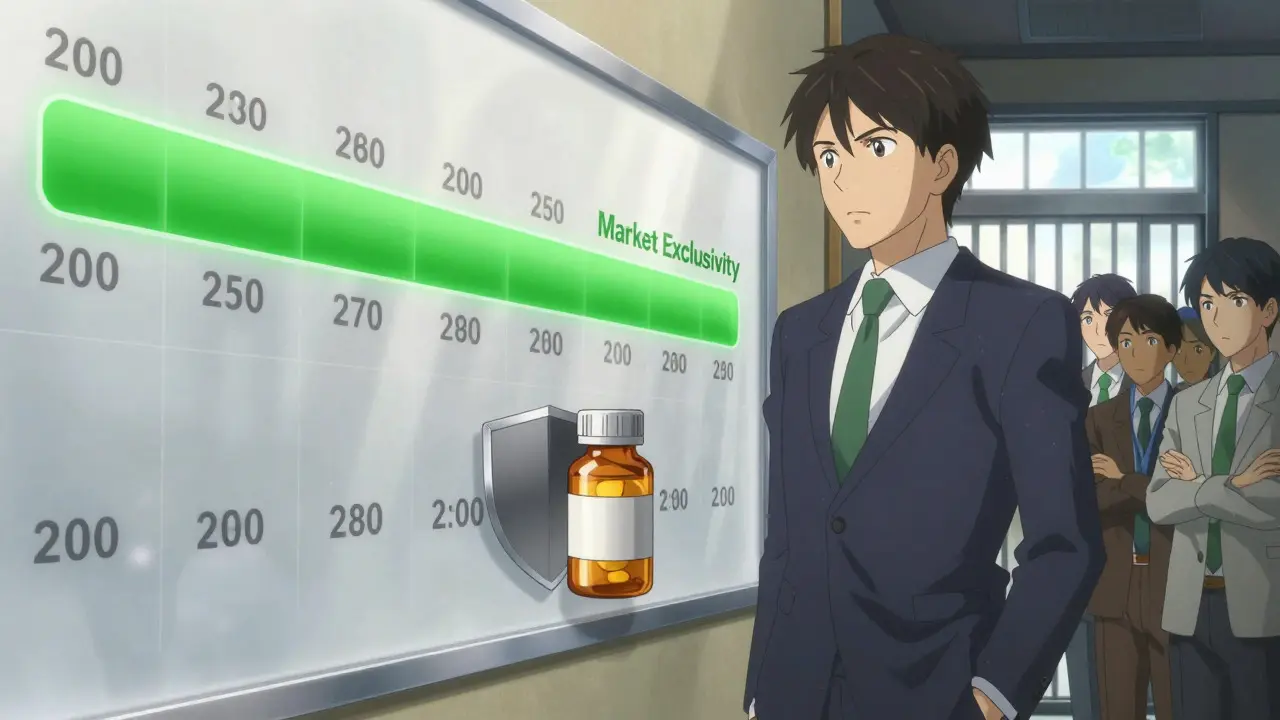
This is the most misunderstood part of the system. You might assume that if a patent expires, generics flood the market immediately. Not always. Regulatory exclusivity can block generics even when there are no valid patents.
Consider the case of colchicine, a drug used for centuries to treat gout. In 2010, Mutual Pharmaceutical Company received FDA approval for a new formulation. Because they submitted new clinical data required for approval, they were granted 3 years of regulatory exclusivity under Section 505(b)(2) of the FDCA. Even though the molecule itself was not novel and had no composition-of-matter patent, the FDA could not approve generic versions during those three years. This allowed the price to skyrocket from 10 cents to nearly $5 per tablet.
This phenomenon explains why 28.6% of branded drugs listed in the FDA’s Orange Book have neither patent nor exclusivity protection, while 5.2% have exclusivity but no patents. According to a 2021 analysis by the FDA, regulatory exclusivity alone is enough to prevent generic entry in many cases. Dr. Aaron Kesselheim of Harvard Medical School describes these as "two separate keys," noting that losing one doesn’t necessarily open the door if the other remains intact.
The Strategic Battle: Patents vs. Data
For pharmaceutical companies, the strategy involves layering both protections. They file patents on the active ingredient (composition of matter), the manufacturing process, the dosage form, and even the method of use. These secondary patents create a "patent thicket" that generics must navigate. Meanwhile, they ensure their New Drug Application (NDA) qualifies for NCE exclusivity or other regulatory perks.
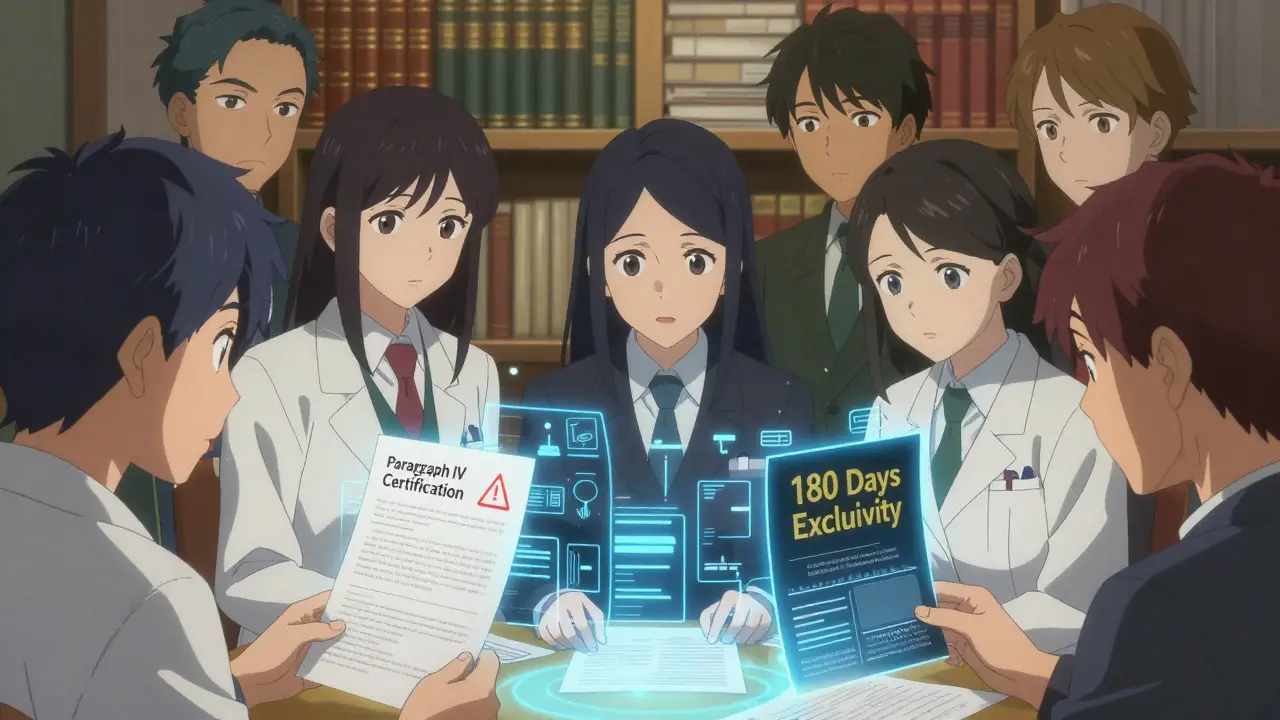
Generic manufacturers, on the other hand, look for weak points. They may file a Paragraph IV certification, challenging the validity of listed patents. If successful, they can receive 180 days of market exclusivity themselves-a reward valued at up to $500 million. This creates a high-stakes legal arena where the outcome determines who profits from the drug for years to come.
The complexity is real. A senior regulatory affairs manager noted that navigating these intersections costs medium-sized companies an average of $2.5 million annually. Small biotechs often struggle here too; a 2022 survey found that 43% incorrectly assumed patent protection equated to market exclusivity, leading to costly miscalculations in development timelines.
Recent Changes and Future Outlook
The landscape is shifting. In 2023, the FDA launched an Exclusivity Dashboard to increase transparency, allowing anyone to track regulatory periods in real-time. This move intensifies competition among generics, who now spot early entry opportunities faster. Additionally, proposed legislation like the PREVAIL Act aims to adjust biologics exclusivity, potentially reducing the 12-year period to 10 years while strengthening data protections.
Industry analysts predict that by 2027, regulatory exclusivity will account for 52% of total market protection time for new drugs, up from 41% in 2020. As patent challenges become more common and successful, the reliance on FDA-granted exclusivity grows. For stakeholders, this means looking beyond the patent expiry date and closely monitoring the FDA’s Orange Book for exclusivity codes.
Can a drug have market exclusivity without a patent?
Yes. Market exclusivity is granted by the FDA based on the submission of new clinical data or the approval of a new chemical entity, regardless of patent status. For example, a reformulated old drug can receive 3 years of exclusivity under Section 505(b)(2) even if the molecule itself is not patented.
What happens when both patent and market exclusivity expire?
When both protections lapse, generic manufacturers can submit ANDAs for approval. The FDA will then review and approve generic versions, typically leading to a sharp drop in price due to increased competition. There is no automatic barrier preventing generic entry once both shields are down.
How does orphan drug exclusivity differ from standard NCE exclusivity?
Orphan drug exclusivity provides 7 years of protection for drugs treating rare diseases (affecting fewer than 200,000 people in the U.S.), whereas standard NCE exclusivity provides 5 years. Orphan exclusivity applies regardless of whether the drug is novel or patented, incentivizing development for small patient populations.
Who enforces patent exclusivity versus market exclusivity?
Patent exclusivity is enforced by the patent holder through civil litigation in federal courts. Market exclusivity is enforced administratively by the FDA, which refuses to approve competing applications during the exclusivity period. This makes market exclusivity easier to maintain as it does not require expensive lawsuits.
What is the impact of the 180-day exclusivity for generic challengers?
The first generic company to successfully challenge a listed patent via Paragraph IV certification receives 180 days of sole generic marketing rights. This incentive encourages generics to take on risky patent litigation, potentially bringing lower-cost options to market sooner than waiting for all patents to expire naturally.

8 Comments
You really think the average person understands this? It's a rigged game designed to keep us paying through the nose while Big Pharma laughs all the way to the bank. The whole system is broken beyond repair and pretending otherwise is naive at best.
Let’s cut the crap about 'innovation incentives' because we both know it’s just greed masked as science. You’re sitting there explaining how they get away with murder legally, but you’re ignoring the human cost entirely. I’ve seen people die waiting for generics because some CEO wanted a bigger yacht. Stop defending the indefensible.
I appreciate the detailed breakdown of the regulatory frameworks here, specifically regarding the Hatch-Waxman Act implications. It is crucial for stakeholders in the biotech sector to understand the distinction between USPTO patent term adjustments and FDA market exclusivity periods. The concept of the 'patent thicket' is particularly relevant when analyzing competitive landscapes for new chemical entities. We should continue to monitor the FDA’s Exclusivity Dashboard for real-time data on approval bars. This information is vital for strategic planning in drug development pipelines.
oh my god another article making it sound like its complicated when its just evil corporations stealing from poor people lol. like seriously who reads this stuff? i mean sure patents are cool i guess but why do we need 12 years for biologics?? that is insane. nobody can afford insulin anyway so what is the point. also the grammar in the post was kinda boring tbh.
It makes me physically sick to read about these 'strategic battles.' These companies don't care about saving lives; they care about their quarterly earnings reports. They lock up life-saving treatments behind paywalls while families struggle to decide which bill to pay. It is morally bankrupt and we need to hold them accountable instead of applauding their legal maneuvering. The fact that a drug like colchicine went from pennies to dollars is a crime against humanity.
In India, we see the flip side of this coin daily where generic competition saves millions of lives. The philosophical implication of treating health as a commodity rather than a right is deeply troubling. While I respect the legal distinctions outlined, one must ask if the current balance favors profit over people. Perhaps a more holistic approach to global health equity is needed rather than just tweaking exclusivity periods. :)
This is an informative overview of the pharmaceutical regulatory landscape. The distinction between patent enforcement via litigation and market exclusivity via administrative bar is well articulated. It is important for industry professionals to note the impact of the PREVAIL Act proposals on biologics pricing strategies. Thank you for sharing this analysis.
the system is broken
Write a comment