

Neuropathy Symptom Checker & Risk Evaluator
Select your medication and symptoms, then click "Analyze" to see the assessment.
You might notice a slight prickle in your toes or a strange, fuzzy feeling in your fingertips that doesn't quite go away. At first, it's easy to brush off as a foot that "fell asleep" or a result of a stressful week. However, when these sensations happen while you're taking certain prescriptions, it could be a warning sign from your nervous system. This is often the first stage of drug-induced peripheral neuropathy is a condition where chemical substances cause damage to the peripheral nervous system, resulting in sensory symptoms like tingling and numbness. Identifying these mild signs early is the difference between a temporary side effect and permanent nerve damage.
| Medication Type | Common Examples | Estimated Incidence | Typical Pattern |
|---|---|---|---|
| Chemotherapy | Oxaliplatin, Paclitaxel | 60% - 95% | Glove and stocking |
| Antibiotics | Isoniazid, Metronidazole | 2% - 20% | Distal limbs |
| Antiretrovirals | Stavudine | 25% - 35% | Symmetrical sensory loss |
| Cardiovascular | Amiodarone | 5% - 10% | Gradual onset |
How Mild Neuropathy Actually Feels
When medication starts affecting your nerves, it rarely happens all at once. Instead, it follows a very specific path. Doctors call this a "glove and stocking" distribution. Think of it like this: the longest nerves in your body are the first to feel the strain. Since the nerves traveling to your toes and fingers are the longest, that's where the symptoms start.
You'll likely experience two different types of sensations. First are the "positive" symptoms-things your brain feels that aren't actually there, like tingling, buzzing, or a "pins and needles" sensation (paresthesia). Then come the "negative" symptoms, which are things you should feel but don't, such as a dulling of touch or a feeling that your skin is thickened, like you're wearing invisible gloves.
For many, this starts as a Grade 1 event on the clinical scale. This means the symptoms are mild enough that they don't stop you from doing your daily tasks, but they are definitely there. If you find yourself needing to look at your feet to make sure they're touching the floor, or if you struggle to feel the texture of a coin in your pocket, you've moved past the mildest stage.
Which Medications Trigger These Symptoms?
Not all drugs affect the nerves in the same way. Some attack the protective coating of the nerve, while others disrupt how the nerve "transports" nutrients and signals. Understanding the culprit helps in predicting how the symptoms will evolve.
Chemotherapy is a type of cancer treatment that uses powerful chemicals to kill fast-growing cells, but can inadvertently damage nerve axons. This is the most common cause of medication-induced neuropathy. For instance, Oxaliplatin is known to cause acute sensitivity to cold, where touching a cold soda can trigger intense tingling. Paclitaxel, on the other hand, often causes a slower, more steady progression of numbness.
Beyond cancer treatment, some long-term antibiotics like Isoniazid (used for tuberculosis) can trigger these symptoms by depleting Vitamin B6 in the body. In these cases, the tingling is often a sign of a nutritional deficiency caused by the drug rather than direct toxicity. Even cardiovascular drugs like Amiodarone is an antiarrhythmic medication used to treat serious heart rhythm problems can lead to neuropathy in a small percentage of long-term users by causing demyelination, which is essentially the wearing away of the nerve's insulation.

The Danger of the "Wait and See" Approach
The most common mistake people make is ignoring mild tingling because they don't want to stop a life-saving treatment. It's a tough spot to be in. However, nerve cells don't recover as quickly as skin or muscle. If a medication continues to poison the nerve (neurotoxicity), the damage can move from the tips of the fingers deeper into the limbs.
Consider the experience of patients on chemotherapy. A user on a support forum once shared how they ignored tingling in their toes during the second cycle of treatment. By the fourth cycle, the numbness had progressed so far that they could no longer button their own shirts. This is the "critical window" that experts like Dr. Mary Fran Flood emphasize-the time between the first tingle and the loss of function.
If you catch it early, many of these neuropathies are reversible. Once the offending agent is stopped or the dose is lowered, the nerves can often repair themselves. But if the drug is continued long after the symptoms become obvious, the damage can become permanent.
Practical Steps for Monitoring and Safety
If you are taking a high-risk medication, you shouldn't just wait for the tingling to start. You can be proactive about your nerve health. The first step is establishing a baseline. This means knowing exactly how your balance and sensation feel before you start the drug, so you have a point of comparison.
Once you're on the medication, implement a few simple safety checks:
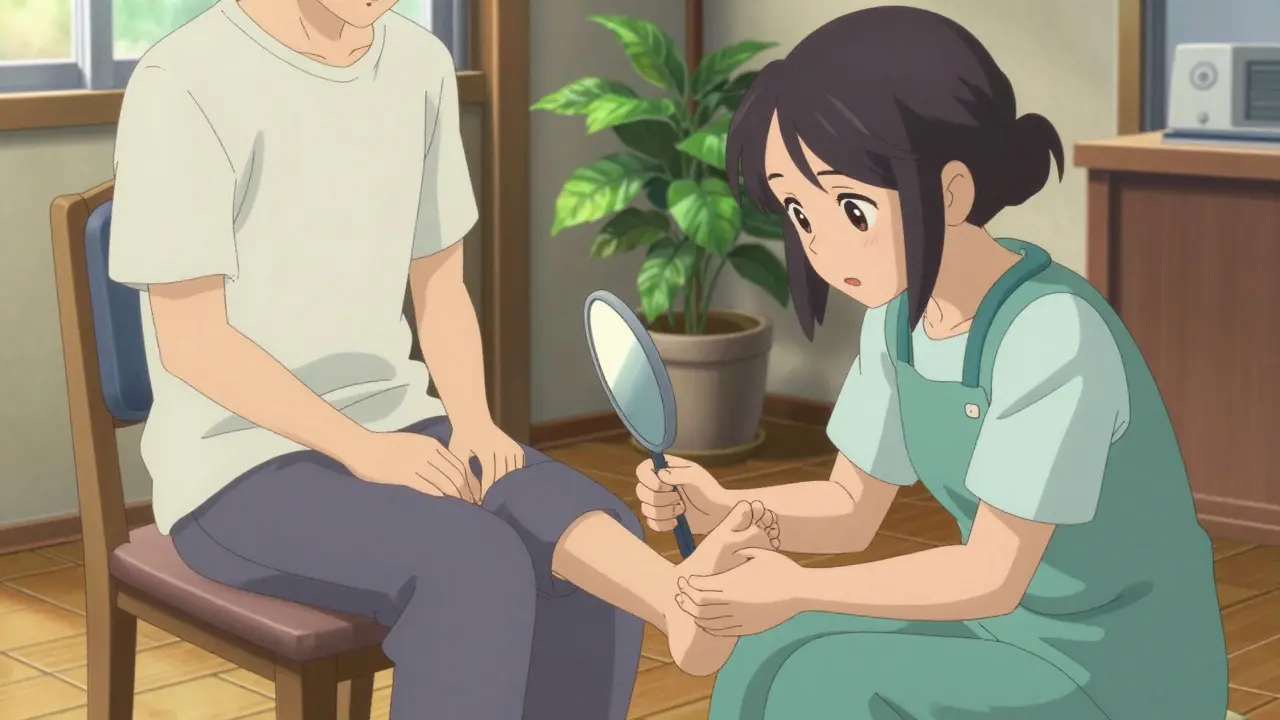
- Daily Foot Checks: When you have numbness, you can get a small cut or blister and not feel it. This can lead to serious infections. Check your feet every night with a mirror.
- Temperature Caution: Use a thermometer for bath water. If your hands or feet are numb, you could accidentally scald yourself without realizing the water is too hot.
- Texture Testing: Periodically test your sensation by touching different fabrics (silk vs. denim) to see if your ability to distinguish textures is fading.
If you do notice changes, don't just tell your doctor "I feel weird." Be specific. Tell them exactly where it started, whether it's worse at night, and if cold temperatures make it flare up. This helps them determine if they can simply adjust your dose or if a different medication is required.
Modern Diagnosis and the Future of Prevention
We are moving away from the days where a doctor just poked your foot with a needle to see if you felt it. Newer technology is making early detection much more objective. The SudoScan device, for example, can measure skin conductance to find "subclinical" neuropathy-damage that exists even before you feel the first tingle.
Looking ahead, the medical community is moving toward "personalized medicine." Instead of giving the same dose to everyone, doctors may soon use pharmacogenomic testing. This involves analyzing your DNA to see if you have a genetic predisposition to nerve damage before they even write the prescription. This could effectively eliminate the "trial and error" phase of high-risk medications.
Is the tingling from my medication permanent?
Not necessarily. Many drug-induced neuropathies are reversible if the medication is stopped or the dose is lowered early enough. However, the likelihood of full recovery depends on the specific drug and how long the nerves were exposed to the toxicity. Early intervention is the best way to ensure a full recovery.
Why does it feel like "pins and needles" specifically in my hands and feet?
This happens because of the "length-dependent" nature of nerve damage. The longest nerves in your body-those reaching your extremities-are the most vulnerable to chemical stress. They have the furthest distance for nutrients to travel and the most surface area exposed to the medication's effects.
Can vitamins help stop medication-induced numbness?
In some cases, yes. For example, medications like Isoniazid can cause a Vitamin B6 deficiency that leads to neuropathy. In those specific instances, B6 supplements can resolve the issue. However, for chemotherapy-induced neuropathy, vitamins generally aren't a cure and should only be taken under a doctor's supervision to avoid interfering with the primary treatment.
What is a "glove and stocking" pattern?
It is a medical description of how sensory loss spreads. It starts at the furthest points (toes and fingertips) and gradually moves up the limbs, mirroring where you would wear stockings and gloves. This pattern is a classic hallmark of systemic toxicity affecting the peripheral nerves.
Should I stop my medication immediately if I feel tingling?
No. Never stop a prescribed medication, especially life-saving treatments like chemotherapy or heart medication, without consulting your doctor. Instead, report the symptoms immediately. Often, a doctor can modify the dose or add a protective therapy that allows you to stay on the medication while preventing further nerve damage.
Next Steps for Patients and Caregivers
If you suspect you are experiencing mild neuropathy, start a "sensation log." Document exactly when the tingling occurs and what triggers it. This data is invaluable for your neurologist or oncologist.
For those already dealing with mild numbness, focus on environmental safety. Remove loose rugs from your home to prevent trips and switch to footwear with a wide toe box to avoid irritating numb areas of the foot. If you are a caregiver, help the patient with daily skin checks, as they may not feel a blister or cut that could lead to a serious ulcer.





9 Comments
interesting read ✨
It is truly so important to remember that you are not alone in this journey and that while these physical sensations can be incredibly frightening and isolating, there is a whole community of people who have walked this path before you and found a way to manage their symptoms. I always tell people that focusing on the small victories-like successfully buttoning a shirt or feeling the texture of a favorite blanket-can help keep your spirits high while you work with your medical team to find the best path forward, because a positive mindset really does complement the clinical treatment and gives you the strength to keep fighting through the tough days when the numbness feels overwhelming.
The mention of pharmacogenomic testing is quite pertinent. Analyzing specific polymorphisms in the CYP450 enzyme system could potentially predict the metabolic rate of these neurotoxic agents, thereby mitigating the risk of systemic accumulation and subsequent axonal degeneration.
Tingling in the toes is a la realy strange feeling. i appreciate the detailed explanation of the glove and stocking distribushion.
Checking your feet with a mirror is a very practical piece of advice.
That glove and stocking thing is some heavy duty stuff. totally a mind-bender how the longest nerves just give out first. kinda spooky but makes sense in a weird way lol
Typical govt meds messin up our nerves. This is why we need to take back control of our health and stop trustin these big pharma scams that just want to keep us sick and numb!
It's funny how some people just accept this as "part of the treatment" without looking for holistic alternatives. I've seen so many people ignore the signs until it's too late because they trust the system too much, but hey, that's a choice!
I tried the fabric test mentioned here and I can't tell the difference between my silk scarf and my cotton shirt anymore.
Write a comment