
Itching that won’t quit. Tiny bugs crawling under your skin. Red bumps that spread through your family. If you’ve ever dealt with scabies or lice, you know how quickly they turn everyday life into a nightmare. These aren’t just minor annoyances-they’re highly contagious parasitic infestations that demand quick, precise action. And the worst part? Most people get the treatment wrong.
What Exactly Is Scabies?
Scabies is caused by a microscopic mite called Sarcoptes scabiei var. hominis. These mites burrow into the top layer of your skin to lay eggs. The itching isn’t from the mites themselves-it’s your body’s allergic reaction to their waste and eggs. Symptoms usually show up 2-6 weeks after first exposure, but if you’ve had scabies before, they can appear in just a few days.
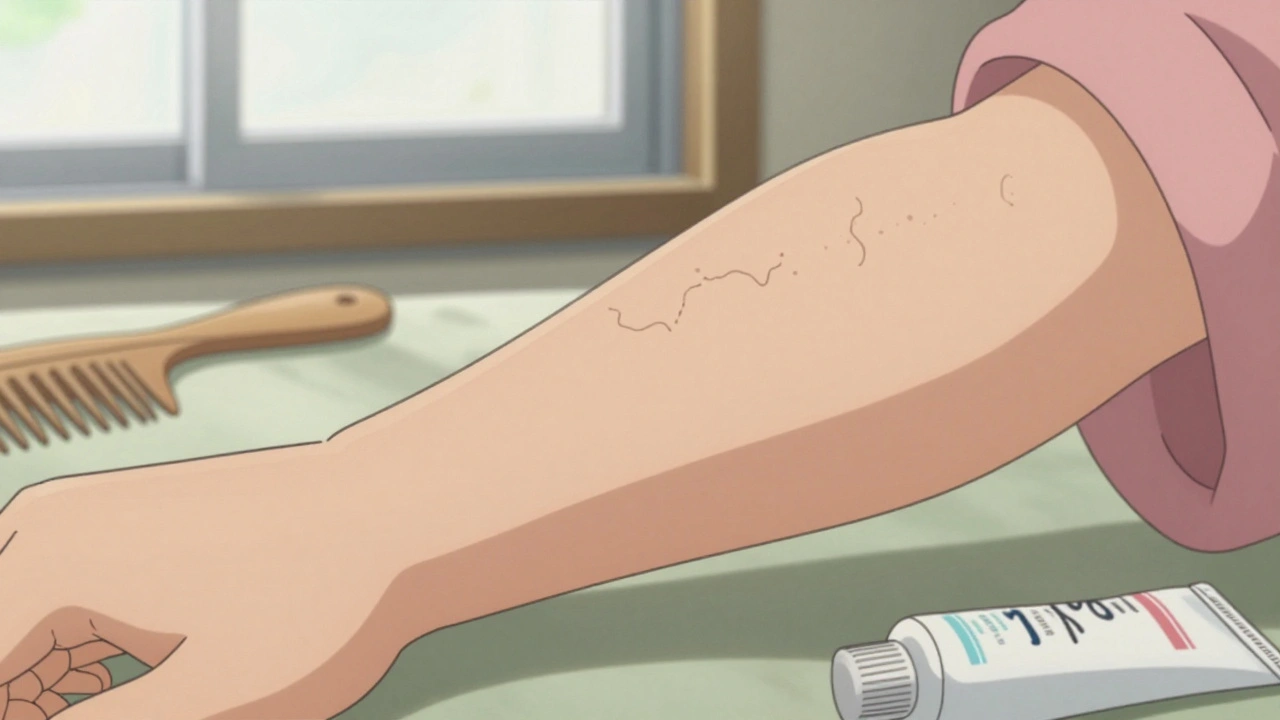
The telltale signs? Intense itching, especially at night, and thin, wavy lines on your skin-these are the mite burrows. Common spots include between fingers, around wrists, armpits, waistline, genitals, and buttocks. In babies and young children, you might see them on the palms, soles, or scalp.
Crusted (Norwegian) scabies is a rare but severe form. It happens mostly in people with weakened immune systems. Instead of a few dozen mites, there can be millions. The skin becomes thick, scaly, and crumbly. This version is extremely contagious and needs aggressive treatment.
Types of Lice and Where They Live
Lice are different from scabies-they don’t burrow. They cling to hair or clothing and feed on blood. There are three types:
- Head lice (Pediculus humanus capitis): Most common in kids 3-11. Found on the scalp, especially behind ears and at the nape of the neck.
- Body lice (Pediculus humanus corporis): Live in clothing and only move to skin to feed. Linked to poor hygiene and overcrowding. Can spread diseases like typhus.
- Pubic lice (Pthirus pubis): Also called “crabs.” Found in coarse body hair-pubic area, armpits, beard, or eyebrows. Usually spread through close physical contact.
Unlike scabies, lice cause itching right away. You might see nits (eggs) glued to hair shafts. They’re tiny, oval, and white or yellowish. Live lice are grayish and about the size of a sesame seed.
How You Get Infested
Scabies spreads through prolonged skin-to-skin contact-holding hands, sleeping together, sexual contact. It can also spread through shared bedding, towels, or clothing, but this is less common. Outbreaks happen in nursing homes, prisons, and crowded households.
Lice spread differently. Head lice jump from hair to hair during hugs, sharing hats, or lying on a pillow after someone else. Body lice crawl from dirty clothes onto skin. Pubic lice are almost always sexually transmitted.
Here’s the truth: It’s not about cleanliness. You can be rich, clean, and still get lice or scabies. These parasites don’t care about your hygiene-they care about warm skin and blood.
First-Line Treatments That Actually Work
For scabies, the gold standard is permethrin 5% cream. You apply it from your neck down to your toes, including between fingers, under nails, and genital areas. Leave it on for 8-14 hours, then wash it off. Repeat after 7 days. Why two doses? Because permethrin kills adult mites and nymphs-but not eggs. The eggs hatch in 3-5 days, so you need a second round to catch the new ones.
Oral ivermectin is another option. It’s not FDA-approved for scabies, but doctors use it off-label all the time. You take two doses, 7-14 days apart, each at 200 mcg per kg of body weight, with food. It’s especially useful for people who can’t apply cream-like the elderly, disabled, or those with crusted scabies. Studies show a single dose works about 86% of the time. Two doses? Nearly 100%.
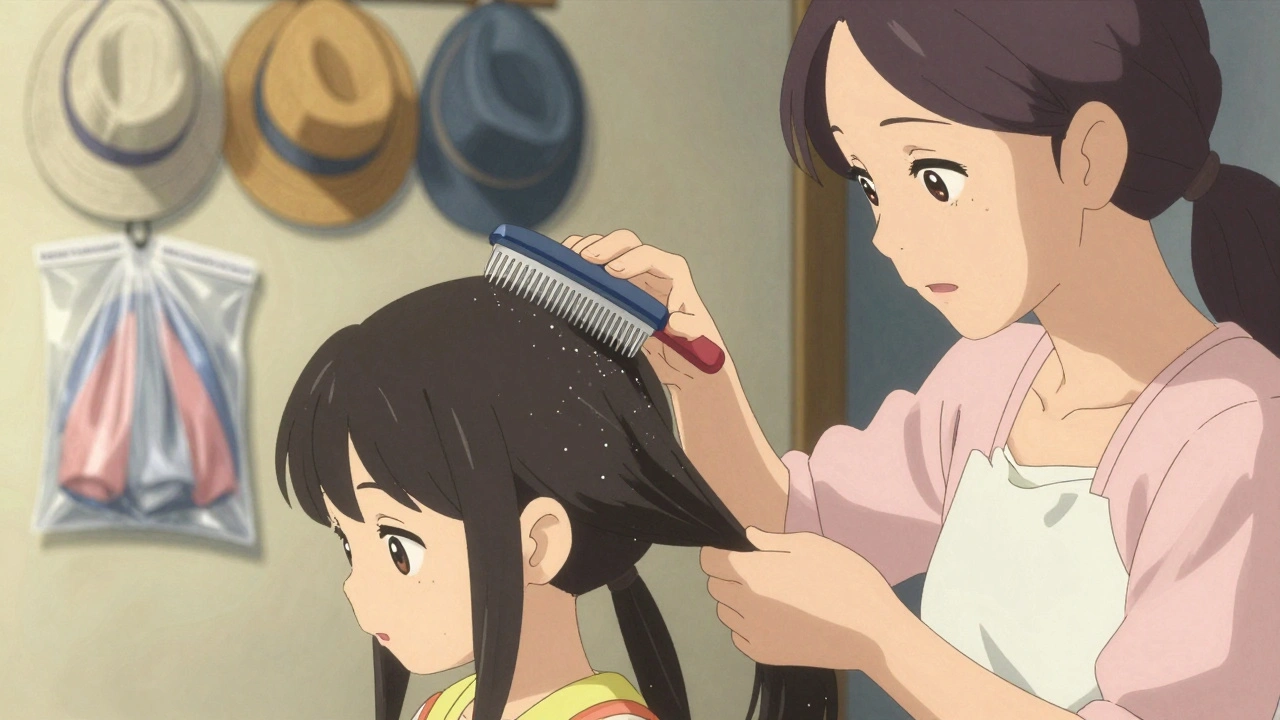
For lice, permethrin 1% lotion or shampoo is first choice. Apply to dry hair, leave on 10 minutes, rinse. Use a fine-tooth comb to remove nits afterward. But resistance is a problem. In some U.S. areas, up to 30% of head lice don’t respond to permethrin anymore.
That’s where alternatives come in:
- Spinosad 0.9% liquid: FDA-approved for kids 4+. Kills lice and eggs in one application. No combing needed.
- Ivermectin 0.5% lotion: Also kills eggs. One application, no repeat needed.
- Dimethicone: A silicone-based product that suffocates lice. Non-toxic and safe for sensitive skin.
Why Most Treatments Fail
It’s not the medicine. It’s the application.
A 2022 audit from a California dermatology clinic found that 12.3% of scabies treatment failures happened because people didn’t cover enough skin. They missed the webs between fingers, the backs of knees, or the genital area. Others washed off the cream too early-before the 8-hour mark.
With lice, parents often think they’re done after one treatment. But if even one egg survives, the cycle restarts. Nits are glued to hair with a sticky substance. You have to comb them out. And you have to do it every 2-3 days for two weeks.
Another big mistake? Not treating everyone at once. Scabies and lice spread fast. If one person in the house has it, everyone else needs treatment-even if they’re not itching yet. Waiting until symptoms show means you’re already behind.
When to Use Combination Therapy
For crusted scabies, you need both oral ivermectin and topical permethrin. One alone won’t cut it. The same goes for outbreaks in nursing homes or shelters. In the Solomon Islands, public health teams combined ivermectin and azithromycin to wipe out both scabies and trachoma in 26,000 people. Cure rates hit 95-100%.
For resistant lice, combining spinosad with a nit comb works better than either alone. Some doctors now recommend using ivermectin lotion and then combing with a metal nit comb for maximum kill rate.
And yes, you can use ivermectin for both scabies and lice. It’s a powerful, broad-spectrum tool. But it’s not safe for kids under 15 kg or pregnant women. Always check with your doctor.
Cleaning Your Environment
Scabies mites can survive up to 72 hours off the body. Lice can live 1-2 days without a host. So cleaning matters.
Wash all bedding, clothing, and towels used in the last 3 days in hot water (at least 50°C) and dry on high heat. Items you can’t wash? Seal them in a plastic bag for 72 hours. Vacuum carpets and furniture, but don’t waste money on bug bombs or sprays-they don’t work.
For head lice, you don’t need to spray pillows or car seats. Just isolate hats, combs, and hairbrushes for 48 hours. Lice can’t survive long without blood.

What Doesn’t Work (And Why)
Home remedies? Tea tree oil, mayonnaise, olive oil, vinegar-none of these reliably kill mites or lice. Some might soothe itching, but they won’t stop the infestation.
Lindane lotion? It’s FDA-approved but banned in many places because of neurotoxicity risks. It’s not safe for children, pregnant women, or people with seizures. Skip it.
And no, shaving your head won’t fix lice. You still need to kill the eggs. And no, lice can’t jump or fly. They crawl.
What to Expect After Treatment
Itching can last for weeks after the mites or lice are gone. That’s your immune system calming down. You don’t need another treatment unless you see new burrows or live bugs.
Use calamine lotion or antihistamines for itching. Avoid scratching-it can lead to skin infections. If redness, swelling, or pus appears, see a doctor. You might need antibiotics.
For lice, you’ll still see nits for weeks. But if they’re more than 1 cm from the scalp, they’re dead. Live nits are close to the scalp and look yellowish or brown.
Prevention Tips That Actually Help
- Don’t share combs, hats, or towels.
- Check kids’ heads weekly during school outbreaks.
- Teach kids not to share headphones or pillows at sleepovers.
- For scabies, avoid prolonged skin contact with someone who’s infected.
- If someone in your home gets scabies, treat everyone the same day.
There’s no vaccine. No magic spray. Prevention is about awareness and quick action.
When to See a Doctor
See a healthcare provider if:
- You’re not sure if it’s scabies or lice.
- Treatment didn’t work after two rounds.
- You have crusted scabies-thick, scaly skin with lots of scaling.
- You’re pregnant, breastfeeding, or treating a child under 2.
- Signs of infection appear: pus, fever, swollen lymph nodes.
Don’t wait. These infestations get worse fast. And the longer they go untreated, the harder they are to kill.
Can you get scabies from a toilet seat?
It’s extremely unlikely. Scabies mites need prolonged skin-to-skin contact to spread. They can’t survive long on hard surfaces like toilet seats. You’re far more likely to catch it from hugging someone or sharing a bed.
How long until lice are gone after treatment?
Live lice die within hours of treatment. But nits take longer to hatch. You need to check for live lice every 2-3 days for two weeks. If you see no new live bugs after 7-10 days, you’re clear. Dead nits can stay in hair for weeks but aren’t contagious.
Is ivermectin safe for children?
Oral ivermectin isn’t recommended for children under 15 kg (about 33 pounds) or pregnant women. Topical spinosad or permethrin are safer for young kids. Always check weight and age guidelines with your doctor before giving any medication.
Can head lice turn into body lice?
No. Head lice and body lice are different species. Head lice live on the scalp. Body lice live in clothing and only come to the skin to feed. They can’t transform into each other. But poor hygiene can increase your risk of both.
Do I need to throw away my pillows and mattress?
No. Scabies mites don’t live long off the body. Seal bedding and pillows in plastic bags for 72 hours, then wash them. Vacuum your mattress and furniture. There’s no need to replace anything unless it’s damaged or stained.
Why does itching last so long after treatment?
The mites and lice are gone, but your skin is still reacting to their waste and eggs. Itching can last up to 4 weeks. Use hydrocortisone cream or antihistamines. If itching gets worse or you see new burrows, you might still have live mites-see your doctor.
Scabies and lice are common, but they’re not shameful. They don’t reflect your cleanliness or your parenting. What matters is how quickly you act-and how accurately you treat them. Use the right medicine. Treat everyone. Clean smart. And don’t ignore the itching. It’s your body’s alarm system.





20 Comments
omg i thought i was going crazy with the itching 😭 then i found out it was scabies... my whole family got treated and we're finally sleeping again. permethrin is a lifesaver 🙏
The pharmacokinetic profile of permethrin 5% cream demonstrates high dermal bioavailability and sustained cutaneous retention, which correlates with its efficacy against Sarcoptes scabiei. However, compliance is frequently compromised due to inadequate application duration and incomplete body coverage, leading to subtherapeutic concentrations in critical anatomical zones such as interdigital clefts and the postauricular region.
i was so scared when my kid came home with lice but this post helped me so much! i did the spinosad + comb thing and it worked like magic 🌈
I appreciate the clinical precision here. What’s often overlooked is the immunological latency period-delayed hypersensitivity explains why symptoms manifest weeks after exposure. This isn't just an infestation; it's a dysregulated immune response.
they say it's just bugs but i think the gov is hiding something... why do they push ivermectin so hard? maybe it's part of the big pharma agenda to control us 🤔
why do people even care about this? you're dirty if you get lice. end of story. stop making it a thing.
you're not alone 💛 this happens to the best of us. i had scabies after a trip to my cousin's house and felt so ashamed-until i realized it's just biology. treat it, don't judge it. you got this!
Honestly, if you're relying on permethrin in 2024, you're behind the curve. The latest meta-analysis in The Lancet Infectious Diseases shows topical ivermectin 0.5% has a 98% eradication rate with single-dose application. Why are we still using 20th-century protocols?
You missed one critical point: everyone in the household must be treated simultaneously, even asymptomatic individuals. Failure to do so is the #1 reason treatment fails. This isn't optional. It's medical protocol. Do not delay.
i just wanted to say thank you for writing this. i was so embarrassed when i found out i had crusted scabies... reading this made me feel less alone. you're right-it's not about cleanliness. just a reminder to be kind to people going through this.
I JUST FOUND OUT MY KID HAS LICE AND I'M PANICKING!! I THOUGHT IT WAS DANDRUFF!! THANK YOU FOR THIS POST I'M GOING TO BUY SPINOSAD RIGHT NOW AND I'M NEVER LETTING THEM SHARE A PILLOW AGAIN 😭
i used olive oil and plastic wrap for 8 hours like on tiktok and it kinda worked?? idk maybe i got lucky??
they say it's just bugs but i saw a video on the dark web where they say the CDC is using scabies to track people's movements through skin contact data. you think that's a coincidence? why do they always push ivermectin? why not just quarantine? 🤨
In India, we use neem oil and combing with a metal nit comb. Works fine, cheap, and no side effects. People here don't rush to the pharmacy like you do. Sometimes the old ways are better.
Regarding the assertion that ivermectin is not FDA-approved for scabies-it is approved for onchocerciasis and strongyloidiasis, and its off-label use for scabies is supported by CDC guidelines and multiple RCTs. The resistance narrative in lice is overstated; it's primarily linked to misapplication and incomplete nit removal. The real issue is not drug efficacy-it's behavioral compliance and public health education.
Exactly. And if you're using home remedies, you're not just wasting time-you're prolonging transmission. This isn't a DIY project. It's a public health matter. If you're treating one person and not the whole household, you're doing more harm than good.
I just want to say thank you for saying that. I had a nurse tell me to just ‘wait it out’ when I had crusted scabies. I felt like I was being ignored. You’re right-it’s not just about the bugs. It’s about being heard.
i cried when i read this. i thought i was the only one who felt so alone with this. thank you for saying it out loud 💛
I’m so glad this thread turned into a safe space. If anyone needs someone to talk to about this, DM me. I’ve been there. You’re not broken. You’re just unlucky. And you’re not alone.
i used olive oil and plastic wrap for 8 hours like on tiktok and it kinda worked?? idk maybe i got lucky??
Write a comment