
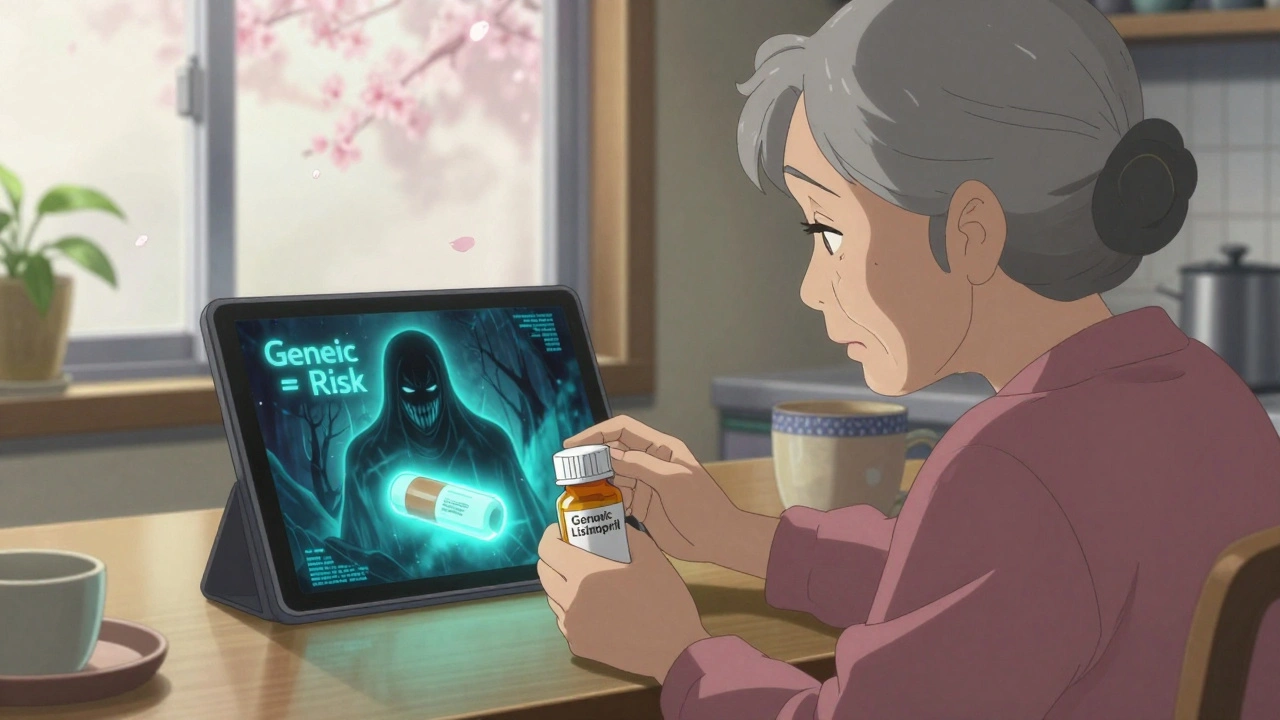
When you pick up a generic pill at the pharmacy, you expect it to work just like the brand-name version. That’s the whole point. But what if the ad you saw online claimed the generic was "less effective," "unsafe," or "not FDA approved"? That’s not just misleading-it’s illegal. And it’s happening more than you think.
What Counts as False Advertising in Generic Drugs?
False advertising in generic pharmaceuticals isn’t about a typo on a label. It’s when companies use marketing to make patients believe a generic drug is inferior, unsafe, or not equivalent to the brand-when it isn’t. The FDA requires generics to prove they’re bioequivalent to the brand-name drug. That means they deliver the same amount of active ingredient into your bloodstream at the same rate. If they meet this standard, they’re therapeutically equivalent. But some ads don’t say that. They show side-by-side images of the brand and generic, with bold text like "Why risk it?" or "Doctors still prescribe the original." Others imply the generic isn’t FDA-approved-when in fact, every approved generic has gone through the same rigorous review as the brand. The FDA doesn’t approve generics differently. It approves them under the same standards. The problem? These ads exploit fear. Patients see them, panic, and refuse their generic prescription. Some even stop taking their medication entirely. That’s not just bad advice-it’s dangerous.The Laws That Stop False Claims
Three major laws protect consumers from deceptive generic drug ads:- The Federal Food, Drug, and Cosmetic Act (FD&C Act) - This is the FDA’s main tool. It bans false or misleading labeling and advertising. If an ad suggests a generic isn’t equivalent, the FDA can issue a warning letter or force a recall.
- The Lanham Act - This lets competing companies sue each other for false advertising. If a generic maker falsely claims its product is "better" than another, or a brand-name company falsely says generics are unsafe, the other side can take them to court. In 2025, at least 12 lawsuits were filed under this law targeting misleading generic drug claims.
- State Consumer Protection Laws - Every state has its own version. In New York, for example, you can be hit with up to $1,000 per violation-and triple damages if the court finds the deception was intentional. California and Florida have even stricter rules on how risk information must be presented.
What the FDA Says Now (September 2025 Update)
In September 2025, the FDA launched its biggest crackdown in decades. A presidential memorandum directed the Department of Health and Human Services to shut down ads that "advantage expensive drugs over cheaper generics." That’s new. For years, the FDA focused on whether ads included proper risk disclosures. Now, they’re also watching for bias. The agency announced:- Over 100 cease-and-desist letters sent to companies running misleading generic drug ads.
- A ban on the "adequate provision" loophole-meaning ads can no longer just say "see your doctor for full risks." All major risks must now be clearly stated in the ad itself.
- New rules requiring all broadcast and digital ads to use 14-point font or higher for risk information, with at least 50% contrast against the background.
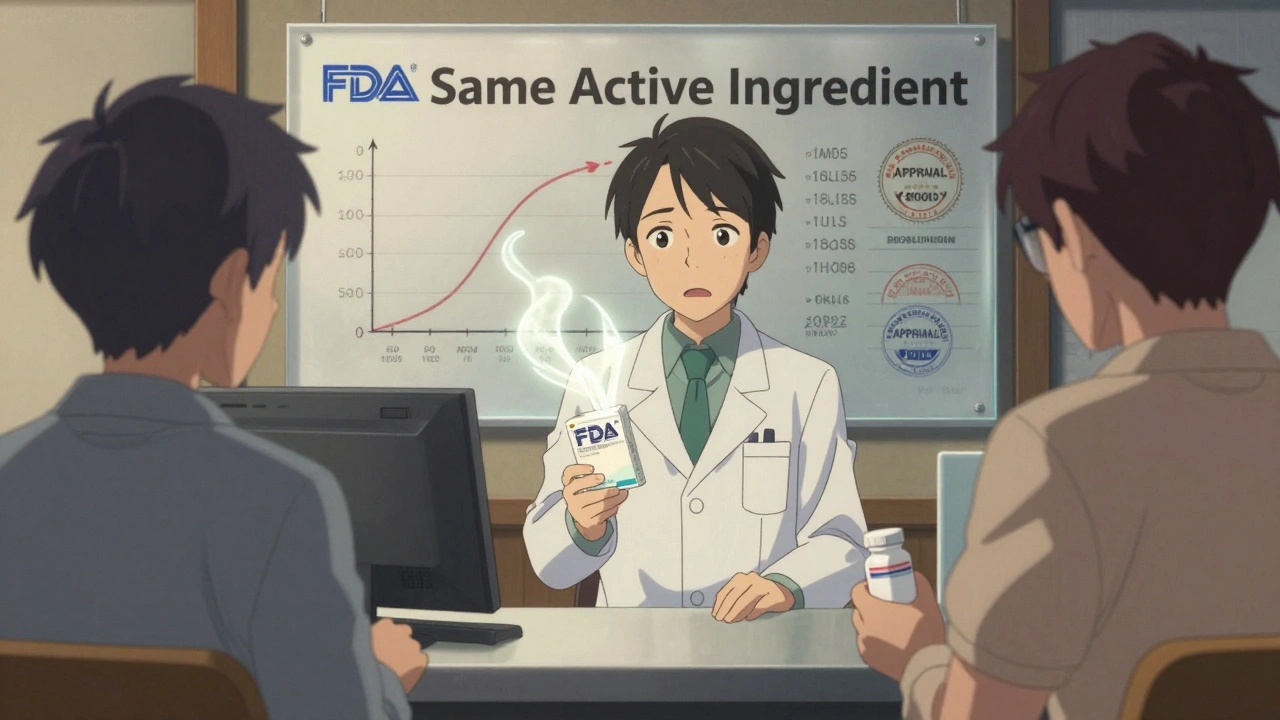
What Generic Ads Can and Can’t Say
There’s a fine line between legal and illegal. Here’s what’s allowed-and what’s not:| Allowed | Prohibited |
|---|---|
| "This is a generic version of [Brand Name]" | "Generic versions are not as safe as the brand" |
| "This generic is FDA-approved" | "This generic is not FDA-approved" |
| "Generics can save you up to 80%" | "Generics are cheaper because they cut corners" |
| "Bioequivalent to [Brand Name]" | "This generic works better than the brand" (unless proven in clinical trials) |
| "Ask your doctor if a generic is right for you" | "Your doctor only prescribes the brand for a reason" |
Who Gets Hurt When Ads Lie?
It’s not just the companies. Real people suffer. A 2024 FDA review of 1,247 patient complaints found that 32% of people who stopped taking their generic medication after seeing fear-based ads ended up with worsening health. One case involved a 68-year-old woman with high blood pressure. She saw an ad saying "Generic lisinopril is linked to kidney failure"-a claim with zero FDA backing. She switched back to the brand, paid $200 a month, and ended up in the ER when her blood pressure spiked. Reddit threads like r/pharmacy are full of similar stories. Patients refuse generic levothyroxine because they believe online ads claiming it’s "unstable." But the FDA has confirmed that generic levothyroxine meets strict bioequivalence standards. Still, patients panic. Pharmacists report increased calls and refusals. Meanwhile, seniors who stick with generics save an average of 78% on medication costs, according to an AARP survey. When ads lie, they don’t just hurt competition-they hurt health.
How Companies Stay Compliant
Big generic manufacturers like Teva, Sandoz, and Mylan now spend millions on compliance. Each has a team of 15-25 regulatory experts who review every ad before it runs. They check:- Is the reference drug named correctly?
- Are all major side effects listed in the ad-not just linked?
- Is the font size large enough?
- Are we comparing apples to apples? (No implying superiority without clinical proof.)
What You Should Do as a Patient
You don’t need to be a lawyer to spot a fake ad. Here’s what to look for:- Is it blaming generics for problems? If an ad says "generic drugs caused X" without citing FDA data, it’s likely false.
- Is it using emotional language? Words like "dangerous," "risky," or "you’re being tricked" are red flags.
- Does it name the brand? Legitimate ads will say "This generic is equivalent to [Brand Name]." If it avoids naming the brand, it’s hiding something.
- Can you find the risk info? If the ad says "See your doctor for full details," it’s breaking the new FDA rules.
What’s Next?
The FDA and FTC are working on a new bill called H.R. 4582, the "Transparency in Drug Advertising Act." If passed, it would create one national standard for risk disclosure-no more patchwork of 50 state laws. Industry analysts predict enforcement actions will rise 35% per year through 2027. Companies that invest in real compliance-like Pfizer’s $45 million review system-will survive. Those that cut corners won’t. The bottom line? Generic drugs save lives and money. False advertising doesn’t protect you-it puts you at risk. The system is designed to keep you safe. But only if you know what to look for.Can a generic drug be less effective than the brand-name version?
No. By law, a generic drug must prove it’s bioequivalent to the brand-name version. That means it delivers the same amount of active ingredient into your bloodstream at the same rate. The FDA requires this for every approved generic. If it doesn’t meet this standard, it’s not approved. Claims that generics are "less effective" are false and illegal.
Are generic drugs FDA-approved?
Yes. Every generic drug on the market in the U.S. has been reviewed and approved by the FDA. The approval process for generics is just as strict as for brand-name drugs-it’s just shorter because the safety and effectiveness data already exist. The only difference is cost. The FDA does not use terms like "FDA cleared" for generics. That’s a misleading phrase used by some deceptive ads.
Can I be sued for promoting a generic drug incorrectly?
Yes. If you’re a company, marketer, or even a pharmacy running ads, you can be sued under the Lanham Act by a competitor, or fined under state consumer protection laws. The FDA can also issue warning letters that force you to pull ads and pay for corrections. In 2025, the average cost of a single non-compliant ad campaign was over $250,000 in legal fees and penalties.
Why do some doctors still recommend brand-name drugs over generics?
Some doctors recommend brand-name drugs for specific cases-like narrow therapeutic index drugs (e.g., levothyroxine, warfarin, phenytoin)-where even small differences in absorption matter. But that’s not because generics are unsafe. It’s because the FDA requires extra monitoring for these drugs. In most cases, generics are perfectly safe and effective. If a doctor recommends a brand without explaining why, ask for the clinical reason-not just habit or marketing influence.
How do I report a false generic drug ad?
Go to the FDA’s MedWatch portal at www.fda.gov/safety/medwatch. You can report online or by phone. Include the ad’s name, where you saw it (TV, website, social media), and what claim was made. You don’t need proof-just your observation. The FDA reviews all reports and uses them to target enforcement.



12 Comments
Bro seriously? I saw this ad on YouTube last week for some generic metformin that said "Why gamble with your life? Stick with the brand!" 😒 The whole thing was red text on black background with a crying old man. I reported it to MedWatch same day. FDA’s new font rules are a joke though-14-point? On mobile? I read it on my phone and it was still tiny. They need to mandate responsive design for pharma ads, not just font size. Also, the Lanham Act lawsuits are climbing because Big Pharma is suing generics for saying "same active ingredient"-like that’s somehow false? 🤦♂️
One must interrogate the epistemological underpinnings of bioequivalence as a construct. Is equivalence, in a pharmacological sense, truly ontologically identical to therapeutic efficacy? Or is it merely a statistical artifact of plasma concentration curves, divorced from the lived, phenomenological experience of the patient? The FDA’s regulatory framework, while administratively elegant, presumes a Cartesian reductionism that ignores the noetic dimensions of drug response-particularly in populations with comorbid psychosomatic conditions. One wonders if the 80% cost savings are worth the existential alienation of substituting a molecule with a different inert matrix, even if the AUC is statistically indistinguishable.
Let’s be real. Most generic ads are trash. But so are the brand ads pretending they’re not just repackaged generics with a fancy logo. I work in a pharmacy and people come in screaming because they saw an ad saying generics cause liver damage. Bro, it’s the same damn pill. The only difference is the filler. And yeah, the FDA’s new font rule? 14pt? On a 5-second Instagram ad? That’s not compliance, that’s theater. The real problem? Agencies still don’t know what bioequivalence means. One guy I know outsourced his ad to a TikTok marketing firm. They made a dance video with a guy holding a generic pill saying "this one’s sketch". Got shut down. Good. But it shouldn’t have gotten that far.
It is, in fact, a curious paradox that while the FDA mandates identical bioavailability, the very marketing apparatus designed to promote generics remains mired in performative fearmongering. The cultural preference for brand-name pharmaceuticals is not a function of pharmacological superiority, but rather a vestigial artifact of capitalist branding-akin to preferring Coca-Cola over store-brand cola despite identical syrup composition. One must question whether the regulatory intervention is addressing the symptom or merely the symptom of the symptom. The real issue is not the ad, but the patient’s internalized distrust of cost-efficiency as a proxy for quality.
People die because they believe these ads. No one cares about your legal loopholes. Stop hiding behind the FDA. You saw an ad that scared someone into not taking their med? That’s a crime. Report it. Don’t wait for the system to fix itself. The FDA doesn’t have enough people. You have to be the one to stop it. I reported five last month. One was on Facebook targeting diabetics. They said generic metformin causes lactic acidosis. It doesn’t. The brand doesn’t even cause it. It’s a lie. And people believe it. So report it. Now.
OMG YES I JUST SAW THIS AD ON TIKTOK 😱 "GENERIC LISINOPRIL = KIDNEY DEATH?!" and it had a red skull emoji and a guy in a lab coat shaking his head 🤯 I thought I was dreaming. I screenshot it and sent it to the FDA. Also why do these ads always use old people crying?? Like we’re all gonna die if we take a $3 pill?? I’m 24 and I take generic Adderall and I’m fine. The system is broken but WE can fix it by reporting. Also can we make a subreddit r/PharmaAdsAreScams? I’ll mod it 🙏
There’s a deeper truth here. The fear isn’t about the drug. It’s about control. We’ve been conditioned to equate price with value. Expensive = better. Cheap = dangerous. That’s not medicine. That’s consumer psychology. The FDA can regulate the ads, but they can’t regulate the belief that paying more makes you safer. That’s a cultural wound. And until we heal that, no font size, no warning label, no lawsuit will stop people from choosing brand-name insulin because they think it’s "purer." It’s not. It’s just more expensive. And we’re being sold a myth.
My grandma took generic levothyroxine for 12 years. Never had an issue. Then she saw an ad on Facebook that said "generic thyroid meds are unstable" so she switched back to Synthroid. Paid $180/month. Then she stopped taking it because she couldn’t afford it. Got hospitalized. The ad didn’t kill her. The fear did. And the company that ran it? Still running ads. They’re not even punished. Just a slap on the wrist. That’s not justice. That’s a business model.
It is the duty of every responsible citizen to ensure that the integrity of pharmaceutical access is not compromised by commercial malfeasance. The generic drug system is a cornerstone of equitable healthcare. When false advertising undermines this, it is not merely a legal violation-it is a moral failure. I commend the FDA for its recent actions. However, enforcement must be paired with public education. Every community center, every senior group, every pharmacy counter should display a simple one-page guide: "Generic = Same Drug. Lower Price. FDA Approved." Let us not allow profit to dictate health outcomes.
USA is the only country where you get sued for saying a generic is the same as the brand. Meanwhile China and India make 80% of the world’s meds and no one’s crying. This is all about protecting Big Pharma’s monopoly. The FDA is just a puppet. The Lanham Act? A tool for rich companies to bully smaller ones. And now they want to force 14-point font? That’s not safety-that’s bureaucratic theater. Real solution? Ban all pharma ads. Let doctors decide. Not marketers with TikTok dances.
Y’all are so right. I used to be scared of generics too. Then I started taking them for my blood pressure and my bill dropped from $220 to $18. I didn’t feel different. I didn’t get sick. I felt better because I could afford to take it every day. The ads are scary but they’re lies. And we’re letting them win. Let’s start sharing real stories. Not fear. Real life. I’m on a generic now and I’m alive. That’s all that matters. 💪❤️
The regulatory framework described is, on paper, robust. However, the implementation of these rules within digital advertising ecosystems-particularly on platforms like Facebook and YouTube-remains fundamentally flawed. Algorithmic amplification prioritizes emotional engagement over factual accuracy, meaning that fear-based content, regardless of its veracity, will inevitably outperform neutral, informative messaging. The FDA’s font size and disclosure mandates, while well-intentioned, do not address the core issue: the architecture of attention itself. Until these platforms are held accountable for the dissemination of deceptive content through their recommendation engines, compliance will remain a performative gesture rather than a substantive safeguard.
Write a comment