

Did you know that the first twelve weeks of pregnancy are the most fragile window for your baby’s development? This period, known as embryogenesis, is when major organ systems form from scratch. A single exposure to certain substances during this time can alter the trajectory of a child's health forever. Yet, approximately 70% of pregnant women take at least one prescription medication, and half take four or more products, including over-the-counter remedies. The challenge isn't just about avoiding drugs; it's about navigating a landscape where only 10% of FDA-approved medications have sufficient safety data for pregnancy.
The stakes are high because the timing of exposure matters more than almost any other factor. Between days 17 and 56 post-conception, the embryo is hyper-vulnerable to teratogens, agents that can cause structural birth defects. Understanding these critical windows helps you make informed decisions rather than relying on fear or outdated advice. Let’s break down exactly what happens during these weeks, which medications pose real risks, and how to manage common symptoms safely.
The Window of Vulnerability: Organogenesis Explained
The first trimester is not a monolith of risk. It consists of distinct phases with varying levels of sensitivity. The highest vulnerability occurs between weeks 3 and 8 of gestation (or days 17-56 after conception). According to the American College of Obstetricians and Gynecologists (ACOG), 90% of birth defects originate during this embryonic period. Before week 3, the "all-or-nothing" principle often applies: an insult either causes miscarriage or has no effect. After week 8, the fetus enters a phase where functional maturation occurs, and while structural defects are less likely, growth and brain development remain sensitive.
Specific organs have precise timelines for formation. Neural tube defects, such as spina bifida, can result from exposures between days 18 and 26. Cardiac malformations are most susceptible between days 20 and 40. Limb defects typically arise from disruptions occurring between days 24 and 36. Knowing these dates allows clinicians to assess whether a specific medication taken on a specific day poses a realistic threat. For instance, taking a potentially risky drug at week 2 is vastly different from taking it at week 6.
Common Over-the-Counter Medications: What’s Safe?
Many pregnant individuals reach for over-the-counter (OTC) remedies without realizing their impact. The National Birth Defects Prevention Study identified acetaminophen as the most frequently used OTC medication, taken by 30.2% of women in the first trimester. Traditionally, acetaminophen has been considered the safest analgesic for pain and fever. The Family Health Care Services Division (FHCSD) recommends up to 4,000 mg daily. However, recent research introduces nuance. Some studies suggest a potential association between prolonged acetaminophen use and a 30% increased risk of ADHD and a 20% increased risk of autism spectrum disorder. While causality is not proven, the clinical consensus remains to use the lowest effective dose for the shortest duration.
In contrast, nonsteroidal anti-inflammatory drugs (NSAIDs) like ibuprofen and naproxen carry clearer warnings. Ibuprofen was used by 4.5% of women in the study mentioned above. A 2011 Canadian study involving 4,705 pregnancies linked first-trimester NSAID use to a 1.6-fold increased risk of miscarriage. Furthermore, the FDA warns that using NSAIDs from 20 weeks onward can cause fetal kidney problems leading to low amniotic fluid. For heartburn, bismuth subsalicylate should be avoided due to salicylate absorption risks, while loperamide shows possible cardiac associations in limited human studies. H2 blockers like famotidine lack robust first-trimester safety data despite favorable animal studies.
| Medication Class | Specific Drug | Risk Level / Recommendation | Key Concern |
|---|---|---|---|
| Pain Relievers | Acetaminophen | Generally Safe (Use Sparingly) | Potential neurodevelopmental links with prolonged use |
| Pain Relievers | Ibuprofen/Naproxen | Avoid | Increased miscarriage risk (1.6x); fetal kidney issues later |
| Allergy Relief | Loratadine/Cetirizine | Safe | No significant teratogenic signals |
| Cold Relief | Pseudoephedrine | Avoid in 1st Trimester | 1.2-1.3x risk of gastroschisis |
| Antibiotics | Amoxicillin | Safe | Widely used with good safety data |
| Antibiotics | Tetracyclines | Avoid | Fetal tooth discoloration (after 15 weeks) |
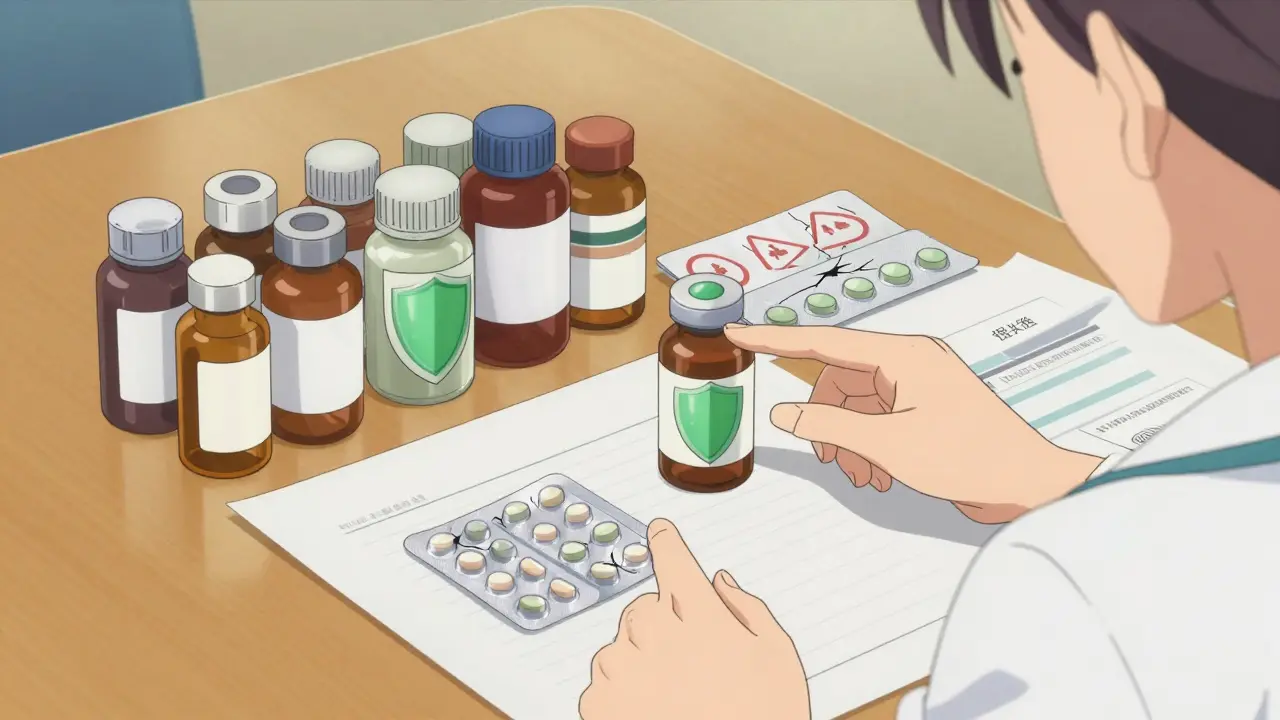
Prescription Medications: Navigating Complex Risks
Prescription drugs present a more complex picture. Many conditions require treatment that outweighs the theoretical risks of medication. For example, uncontrolled maternal diabetes increases the risk of major congenital anomalies from 2-3% to 10-15%. Similarly, stopping antiepileptic drugs can increase seizure-related fetal mortality by 400%. The Mayo Clinic emphasizes this risk-benefit analysis: treating the mother is often essential for protecting the fetus.
Antidepressants vary significantly in their safety profiles. Paroxetine carries a 1.5-2.0-fold increased risk of cardiac malformations, particularly ventricular septal defects, when exposed in the first trimester. In contrast, fluoxetine, sertraline, and citalopram show no consistent evidence of major teratogenic effects, though they may cause neonatal adaptation syndrome if continued into the third trimester. Among antibiotics, penicillins (like amoxicillin) and cephalosporins are generally considered safe. Tetracyclines must be avoided due to risks of fetal tooth discoloration and bone growth inhibition, especially after 15 weeks. Fluoroquinolones show cartilage damage in animal studies, though human evidence remains limited.
For autoimmune conditions, hydroxychloroquine shows no increased malformation risk at standard doses and may even be started in the first trimester. Conversely, corticosteroids carry a possible 1.3-1.6-fold increased risk of orofacial clefts with first-trimester exposure. Acne medications like isotretinoin are strictly contraindicated, carrying a 20-35% risk of major congenital defects and significant cognitive impairment risks, per FDA black box warnings.

The Data Gap: Why Information Is Scarce
One of the most frustrating realities for pregnant patients is the lack of data. The CDC’s Treating for Two initiative highlights that only 10% of FDA-approved medications have sufficient pregnancy safety data. The FDA reports that 98% of prescription labels lack comprehensive pregnancy risk information. This creates what Dr. Christina Chambers of UC San Diego calls "a prescription information desert."
This gap exists because pregnant women are historically excluded from clinical trials. Ethical concerns prevent pharmaceutical companies from testing new drugs directly on pregnant populations. As a result, much of our knowledge comes from observational studies, registries, and animal models, which have limitations. The NIH notes that 96% of commonly used medications lack sufficient human data to characterize fetal risk definitively. Initiatives like the FDA’s Pregnancy Exposure Registry and the NIH-funded PregSource project aim to fill these gaps by tracking outcomes in thousands of pregnancies, but progress is slow.
Practical Steps for Medication Safety
Navigating this uncertainty requires a structured approach. ACOG Committee Opinion No. 797 recommends five key steps:
- Confirm Timing: Determine your exact gestational age using last menstrual period and ultrasound dating. This identifies where you fall within the critical windows.
- Identify Developmental Stage: Understand which organs are forming at the time of exposure. This contextualizes the risk.
- Consult Expert Resources: Use services like MotherToBaby, operated by the Organization of Teratology Information Specialists, which fields over 15,000 inquiries annually. They provide evidence-based risk assessments.
- Consider Alternatives: Explore non-pharmacologic treatments first. For nausea, try ginger or vitamin B6 before moving to stronger meds. For allergies, nasal saline rinses can reduce the need for oral decongestants.
- Minimize Exposure: If medication is necessary, use the lowest effective dose for the shortest duration. Avoid polypharmacy (taking multiple drugs) unless absolutely required.
User experiences on MotherToBaby forums reveal that 68% of pregnant individuals worry about medication risks, yet 42% report discontinuing necessary medications due to fear. This highlights the importance of professional guidance. Do not stop chronic medications like thyroid replacements (levothyroxine often requires dose adjustments to maintain TSH <2.5 mIU/L) or antidepressants without consulting your provider. Uncontrolled conditions often pose greater risks than the medications themselves.
Is it safe to take vitamins during the first trimester?
Yes, prenatal vitamins are generally safe and recommended. Folic acid, in particular, is crucial for preventing neural tube defects. However, avoid high-dose Vitamin A supplements (retinol) as excessive amounts can be teratogenic. Beta-carotene, a precursor to Vitamin A found in plants, is a safer alternative for skin and immune support.
What should I do if I accidentally took a banned medication?
Do not panic. Single accidental exposures rarely cause harm. Contact your healthcare provider immediately to document the exposure, dosage, and timing. They can assess the specific risk based on the developmental stage of the embryo. Most birth defects result from genetic factors or multifactorial causes, not single drug incidents.
Are herbal remedies safe during pregnancy?
Herbal remedies are not regulated as strictly as pharmaceuticals, meaning their purity and potency vary widely. Many herbs, such as black cohosh and dong quai, can stimulate uterine contractions and should be avoided. Always consult your doctor before using any herbal supplement, as "natural" does not automatically mean "safe" for fetal development.
How does the FDA label pregnancy risks now?
The FDA replaced the old letter categories (A, B, C, D, X) with the Pregnancy and Lactation Labeling Rule (PLLR) in 2015. Labels now include narrative summaries of risk based on human and animal data, providing more nuanced information rather than simple grades. However, many older drugs still lack updated labeling, contributing to the data gap.
Can stress affect my baby’s development in the first trimester?
While extreme, chronic stress may have some associations with preterm birth or low birth weight, everyday stress does not cause birth defects. The physical risks from untreated medical conditions or severe anxiety often outweigh the theoretical risks of stress itself. Prioritize mental health support and treat underlying conditions safely.


8 Comments
Great info here. Keep it up.
omg this is so scary like why do doctors not tell us any of this?? i took ibuprofen for a headache last week and now im freaking out lol
seriously though who writes these labels its like they want you to fail at being pregnant or something
Hey folks, just to add some context from my end in pharmacology. The 'all-or-nothing' period mentioned is crucial because people often panic about exposures before they even know they are pregnant. Most women take meds during the first two weeks post-conception without realizing it. If the embryo survives that initial shock, it usually repairs itself completely. Don't stress over a one-off dose of Tylenol way back when you were late on your period.
Also, regarding the NSAID warning: the miscarriage risk is statistically elevated but still low in absolute terms. However, avoiding them after 20 weeks is non-negotiable due to the kidney/amniotic fluid issue. Stick to acetaminophen if you must, but keep the dose minimal as suggested.
you really think the average person reads all this? 🙄
its funny how we expect laypeople to understand teratology while the medical system fails to provide basic data. typical western medicine negligence. anyway glad you posted this maybe someone will actually read it 👏👏
I appreciate the detailed breakdown provided by the original poster; it is quite thorough. I would like to add that cultural perspectives on medication safety vary significantly across different regions. In many Asian cultures, herbal remedies are often preferred over pharmaceuticals during pregnancy, which introduces its own set of unregulated risks. It is important to remember that "natural" does not automatically equate to "safe." Always consult with a healthcare provider regardless of the source of the treatment.
listen up peeps! dont let fear control u. life goes on. sure the stats are scary but ur body is tough. stop stressing and start living. the best thing u can do is eat good food and stay positive. meds are tools use them wisely but dont be afraid to live yer life. go get em tiger!
Oh, look at all these experts telling us what to do. How novel. I suppose none of you have ever had morning sickness so bad you couldn't keep water down, let alone ginger tea?
It's hilarious how everyone acts like there's a perfect solution. There isn't. You either suffer through the nausea or you take the med and hope for the best. Thanks for the info, I guess. Maybe I'll print this out and stare at it while I'm throwing up again. Real helpful.
i am currently 12 weeks pregnant and i was taking cetirizine for allergies. reading this made me feel better but also more confused. why is there no clear answer for anything? it feels like we are experiments. i wish doctors would just give straight answers instead of saying "it might be risky". thanks for sharing tho
Write a comment