
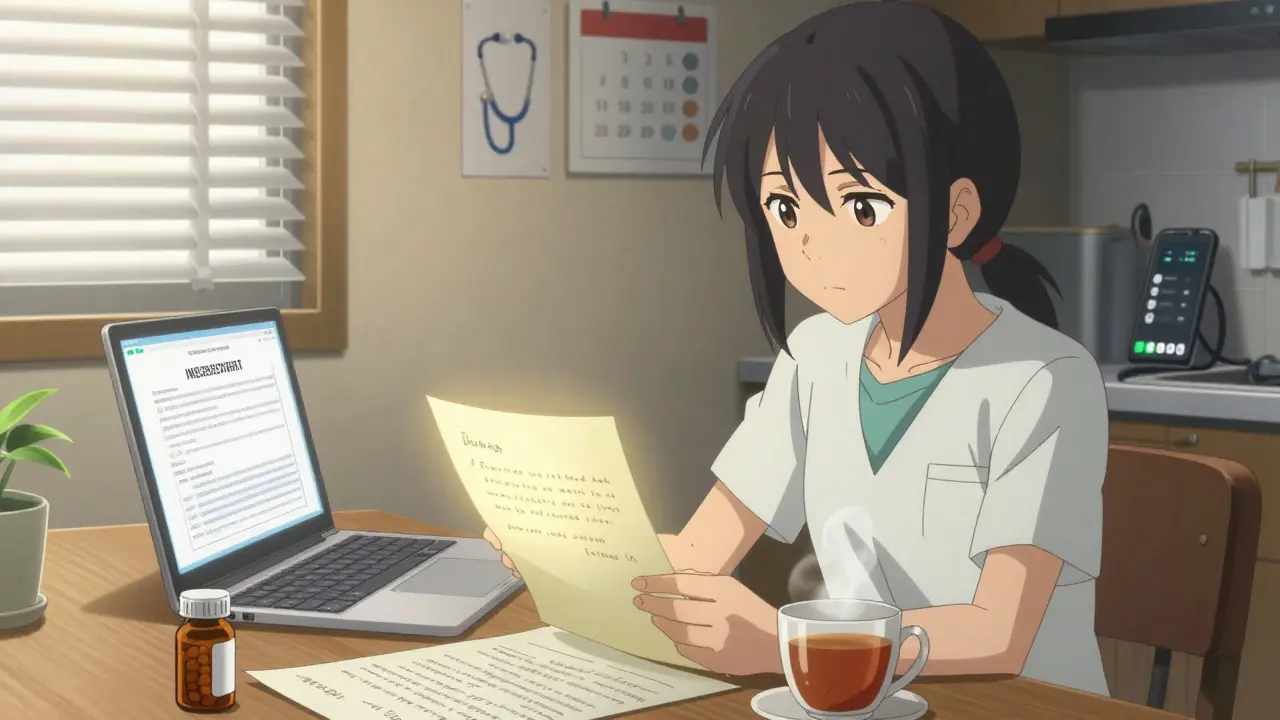
When your doctor prescribes a brand-name medication but your insurance says you must switch to a generic - and you know it won’t work for you - you’re not alone. Every year, millions of people face this exact situation. Insurance companies use formularies to control costs, and step therapy protocols are common: try the cheaper option first, even if your doctor says it’s risky. But you have rights. You can appeal. And if done right, you have a very good chance of winning.
Why Generic Substitutions Sometimes Don’t Work
Generic medications contain the same active ingredient as brand-name drugs. That’s the law. But they don’t always behave the same way in your body. Differences in inactive ingredients, absorption rates, or manufacturing processes can trigger side effects or reduce effectiveness. For someone with Crohn’s disease, a small change in how their medication is absorbed could mean a flare-up. For a person with severe allergies, even trace differences in fillers might cause a reaction. In epilepsy, inconsistent blood levels from a generic switch can lead to seizures. These aren’t rare cases. According to the American Medical Association, 18.7% of all prior authorization requests are denied - and over 72% of those denials get overturned on appeal.How the Appeal Process Works - Step by Step
Step 1: Understand the denial Your insurance company sends an Explanation of Benefits (EOB). It’s not just a bill. It’s your first clue. Look for phrases like “prior authorization denied,” “step therapy required,” or “generic substitution not covered.” The EOB must legally include the reason for denial and instructions on how to appeal. If it doesn’t, call your insurer. Write down the representative’s name and ID number. You need this paper trail. Step 2: Get your doctor on board This is where most appeals fail - or succeed. Your doctor must write a letter of medical necessity. It’s not a formality. It’s your strongest weapon. The letter must include three things:- Why the brand-name drug is medically necessary (e.g., “Patient experienced severe hypoglycemia on alternative GLP-1 agonist”)
- Proof that other alternatives failed (e.g., “Two prior trials with generic metformin resulted in uncontrolled HbA1c >10%”)
- Clinical guidelines supporting the choice (e.g., “Per American Diabetes Association 2023 Standards of Care, individualized therapy is recommended when prior agents are ineffective”)
What Happens If You Get Denied Again?
If your internal appeal is denied, you can request an external review. This is where an independent third party - not your insurer - looks at your case. This step is mandatory under the Affordable Care Act. For Medicare Part D plans, this is the second level of appeal. For commercial insurance, it’s usually the third. The external reviewer doesn’t work for the insurance company. They’re bound by federal rules and often overturn denials at higher rates than internal reviews. CMS data shows 63.2% of Medicare appeals get approved at this stage.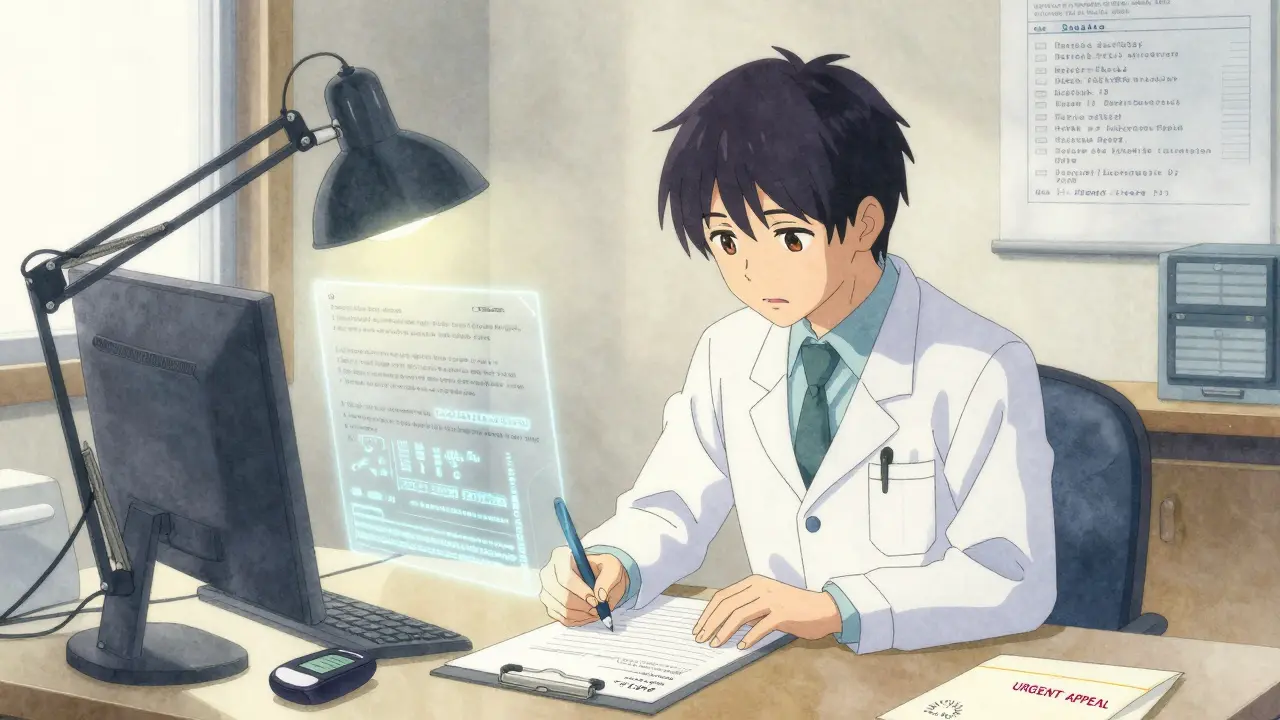
Success Rates and Real Examples
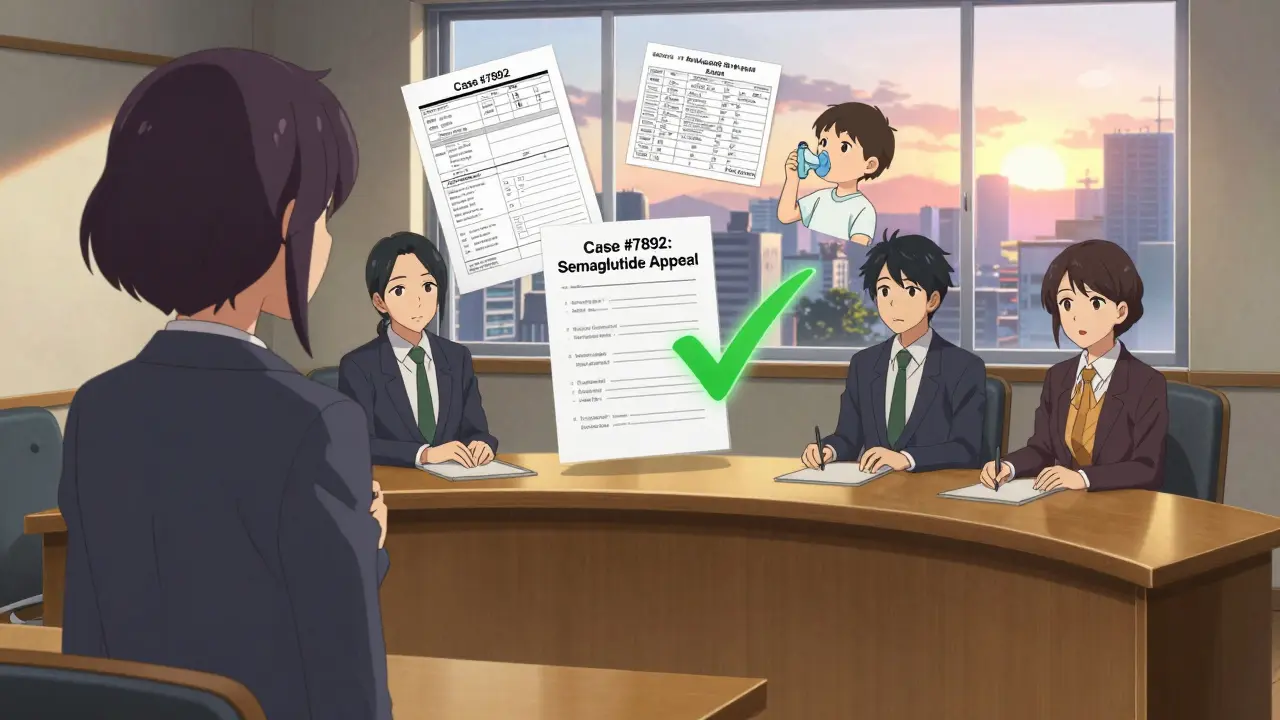
The data doesn’t lie. If you do this right, you’re likely to win. A 2022 study in the Journal of Managed Care & Specialty Pharmacy found that properly documented appeals had a 56-78% success rate. Oncology drugs had an 82% overturn rate. Psychiatric meds? Only 47%. Why? Because oncology treatments are more clearly defined in clinical guidelines. Your case matters less if your doctor doesn’t tie it to evidence. One patient in Arizona successfully appealed denial of semaglutide after documenting three prior attempts with other GLP-1 agonists that caused vomiting and dizziness. The insurer approved coverage after the doctor submitted a letter citing the ADA guidelines and lab results showing worsening A1c levels. Another case from Texas involved a child with asthma who had a severe reaction to a generic albuterol inhaler. The parent included a hospital report from the ER visit. The appeal was approved in 11 days.Pitfalls to Avoid
- Waiting too long. You have 180 days from the denial date to file an appeal for commercial insurance. Medicare gives you only 120 days. Miss the deadline, and you lose.
- Using vague language. Saying “it doesn’t work” isn’t enough. Say “Patient developed angioedema after switching to generic lisinopril, confirmed by allergist on 03/15/2025.”
- Not following up. One Johns Hopkins study found that 41% of failed urgent appeals were due to paperwork errors - like missing dates or wrong form numbers.
- Assuming your pharmacy will help. Pharmacists can’t override insurance decisions. They can help you fill out forms, but they can’t write the medical letter.
Support Resources
You don’t have to do this alone. Every state has an insurance commissioner’s office. In California, it’s the Department of Insurance. In New York, it’s the Department of Financial Services. These offices are free, public, and legally required to help you. Their average response time is 7.2 business days. The Crohn’s & Colitis Foundation offers downloadable appeal templates. GoodRx has a step-by-step guide with form samples. The Patient Advocate Foundation trains patients on how to write compelling letters - and their data shows those who use templates have a 65% success rate versus 32% for those who write from scratch.What’s Changing in 2026
The Biden administration is pushing to shorten Medicare Part D appeal timelines - urgent cases should now be reviewed in 3 business days instead of 7. California’s AB 347 now requires insurers to consider physician documentation of prior adverse reactions within 48 hours. More insurers are moving to digital platforms. A 2023 AMA survey found that providers using electronic prior authorization systems saw a 20% increase in approval rates. But the core truth hasn’t changed: documentation wins.Final Thought
This isn’t about fighting insurance. It’s about getting the right treatment. The system is designed to make you jump through hoops - but the hoops are there for a reason: to protect patients from inappropriate substitutions. If your doctor says the generic won’t work, and you’ve tried alternatives, you have a strong case. Don’t give up. Write the letter. Call the insurer. Ask for the peer review. Keep records. You’ve got this.How long do I have to file an insurance appeal for a generic medication?
For commercial insurance, you have 180 calendar days from the date of denial to file an internal appeal. For Medicare Part D, you have 120 days. Medicaid timelines vary by state, but most allow between 60 and 180 days. Always check your Explanation of Benefits - it must list the deadline. Missing this window means you lose your right to appeal unless you qualify for a late-filing exception due to extenuating circumstances.
Can my pharmacist help me with the appeal?
Your pharmacist can help you fill out forms, explain your insurance plan’s policy, and sometimes even submit paperwork on your behalf. But they cannot write the medical letter of necessity or override an insurance decision. Only your prescribing physician can provide the clinical justification needed for a successful appeal. Think of your pharmacist as a helper, not a decision-maker.
What if my doctor refuses to write the appeal letter?
If your doctor won’t help, ask why. Some may not realize how critical the letter is. Others may be overwhelmed by paperwork. You can request a referral to another provider or ask if the clinic has a care coordinator who handles prior authorizations. If your doctor still refuses, contact your state’s insurance commissioner - they can often intervene and may even contact the provider on your behalf. In rare cases, patient advocacy groups like the Patient Advocate Foundation can step in.
Do I need to pay anything during the appeal process?
No. You should not pay for the medication while your appeal is pending unless you choose to. If your insurer denies coverage, you’re not required to pay out-of-pocket. Some insurers offer temporary coverage while your appeal is reviewed. If you’re asked to pay, ask for written confirmation that the payment won’t be refunded if your appeal is approved. Never pay without understanding your rights.
How often do insurance appeals for generic medications succeed?
Success rates vary by medication type and documentation quality. Overall, 56% to 78% of appeals with strong clinical documentation are approved. Oncology drugs have the highest success rate - up to 82% - because guidelines are clear and risks are well-documented. Psychiatric medications have lower success rates, around 47%, often because insurers consider alternatives more interchangeable. The key isn’t the drug - it’s the evidence. A detailed letter from your doctor increases your odds dramatically.
What’s the difference between an internal and external appeal?
An internal appeal is reviewed by your insurance company itself - usually by a claims team or medical director. An external appeal is reviewed by an independent third party, like a state-appointed review board or an independent review organization (IRO). External reviews are required by law after an internal denial. They’re more objective, and the overturn rate is higher: 63.2% for Medicare Part D appeals, according to CMS. You typically must go through internal first before you can request an external review.

14 Comments
I don't get why people make such a big deal about generics. My cousin takes the generic version of his blood pressure med and he's fine. Stop being dramatic.
Let me be perfectly clear: this isn't about "cost control." It's about corporate greed masquerading as policy. The pharmaceutical-industrial complex has weaponized formularies to funnel profits into the pockets of CEOs while patients suffer. I've seen patients on biologics for Crohn's be forced onto generics - and yes, they flare. It's not anecdotal. It's systemic. And if your doctor isn't screaming about this, they're complicit.
I work in HMO admin, and honestly? The system is broken but not because of patients. Docs often submit half-assed letters - "patient prefers brand" - and then wonder why it gets denied. The real win? When the letter cites ADA 2023 guidelines, includes HbA1c trends, and references the exact inactive ingredient that triggered the reaction. That’s the kind of documentation that makes the utilization review nurse pause. Peer-to-peer calls? Game changer. I’ve seen 80% of those get approved on the spot.
Just wanted to say thank you for this. 🙏 My mom got her semaglutide approved last month after 3 denials. The letter from her endocrinologist included lab results, timeline, and a quote from the ADA standards. We called every 3 days. She got approved on day 11. You’re right - documentation wins. I’m sharing this with everyone I know.
Oh. My. GOD. I just got denied AGAIN for my epilepsy med - the generic gave me THREE seizures last year - and now they’re telling me to "try again"?!!?!?!?!? This is why I hate insurance! They don’t care if you die - they care if the spreadsheet says "cost savings." My neurologist wrote a 7-page letter with EEGs, ER reports, and a signed affidavit from my pharmacist. They STILL denied it. I’m filing an external review. And I’m calling the state senator. And I’m posting this on every Facebook group. This is abuse. This is cruelty. This is not healthcare - it’s a lottery where the house always wins.
I tried to appeal for my asthma inhaler. The generic made me shake so bad I couldn’t hold a coffee cup. My doctor wrote a note. Insurance said "nope." I gave up. It’s too much work. I just pay out of pocket now. $200 a month. Worth it.
This is so helpful 😊 I’ve been meaning to appeal for my dad’s diabetes med. I’ll save this and use it next week. Thanks for breaking it down!
The core truth remains: the system is designed to test your resolve. Not your illness. Not your doctor’s expertise. Your persistence. And if you have the bandwidth - the time, the energy, the access to medical records - you win. But that’s the problem. The burden falls on the most vulnerable. This guide is a lifeline. Use it. Share it. It’s not enough. But it’s a start.
You got this. Seriously. One call at a time.
YES! CALL THEM! CALL THEM EVERY DAY! DON’T LET THEM SIT ON IT! I DID THIS LAST YEAR AND IT TOOK 17 DAYS BUT I WON! THEY HAVE TO RESPOND! THEY HAVE TO!
People who appeal are just being entitled. If you can’t afford the brand-name, maybe you shouldn’t be on it. The system works. You just need to get a job that offers better insurance.
The procedural integrity of the prior authorization framework, when executed with fidelity to clinical guidelines and regulatory mandates, constitutes a legitimate mechanism for ensuring therapeutic efficacy while maintaining fiscal responsibility. It is imperative that stakeholders adhere to standardized documentation protocols to facilitate adjudication efficiency.
I find it deeply concerning that this article implies the system is rigged against patients. In reality, insurers are simply enforcing evidence-based formulary policies to prevent unnecessary expenditures. The fact that some patients have adverse reactions does not invalidate the broader utility of generics. This is emotional manipulation dressed as advocacy.
This is all a lie. The government, Big Pharma, and insurance companies are in cahoots to control the population through medication. The "inactive ingredients" they put in generics? They’re nano-chips. They track you. The seizures? They’re designed to trigger panic so you’ll beg for the brand-name - which is actually a vaccine delivery system. I’ve seen the documents. The FDA knows. Your doctor knows. They just won’t tell you. Don’t trust any of this. Call the CIA. They’ll help.
Write a comment