
Medication Reaction Emergency Calculator
Is This a Medical Emergency?
This tool helps you determine if your medication reaction requires 911 or if it's safe to contact your doctor within 24 hours.
Results will appear here...
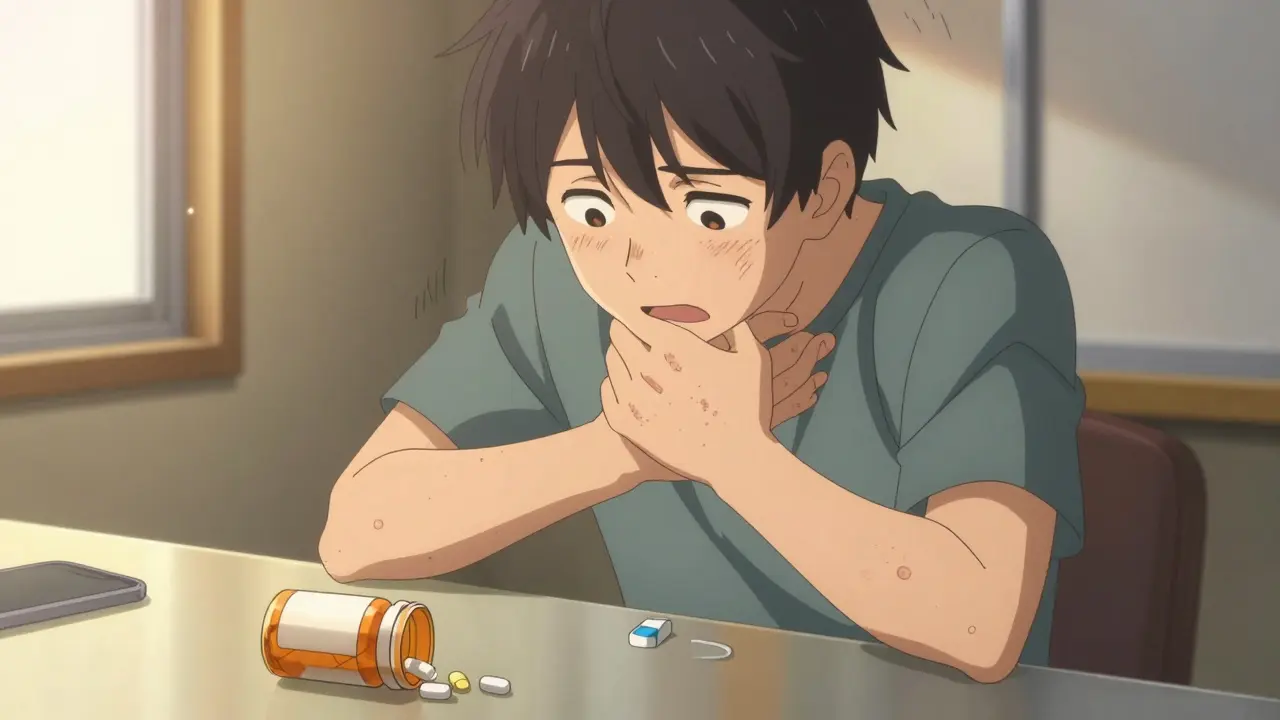
You take a new pill, and within an hour, your skin starts to itch. Or maybe you feel dizzy, your throat feels tight, or you throw up. Suddenly, you’re stuck wondering: Is this normal? Or do I need to call 911 right now?
The answer isn’t always obvious. Some reactions are annoying but harmless. Others can kill you in minutes. Knowing the difference isn’t just helpful-it can save your life.
What Counts as a Serious Medication Reaction?
Not every side effect is an emergency. A little nausea? Common. A rash that itches but doesn’t spread? Often harmless. But when multiple body systems start acting up at once, that’s your body screaming for help.
According to the Mayo Clinic, serious drug reactions usually happen within an hour of taking the medicine-though some, like certain rashes, can show up days later. The key isn’t just the symptom. It’s the combination. A rash alone? Maybe call your doctor tomorrow. A rash and vomiting? That’s an emergency.
Doctors call this multi-system involvement. It means your immune system isn’t just reacting to the drug-it’s going into full alarm mode. That’s when you’re at risk for anaphylaxis, a sudden, life-threatening allergic reaction.
Call 911 If You Have Any of These Symptoms
If you’re experiencing even one of these, don’t wait. Don’t text your doctor. Don’t Google it. Call 911 now.
- Difficulty breathing, wheezing, or a high-pitched sound when you breathe (called stridor)
- Swelling of your tongue, lips, or throat
- Feeling like you can’t get enough air-your chest feels tight
- A weak, fast, or pounding heartbeat
- Dizziness, fainting, or feeling like you’re about to pass out
- Vomiting or diarrhea along with hives or a rash
- Loss of consciousness
These aren’t just uncomfortable-they’re signs your airway is closing or your blood pressure is crashing. The American College of Allergy, Asthma, and Immunology says this is the clearest red flag: skin symptoms plus gastrointestinal or breathing problems. That combo means it’s likely an allergy, not just a side effect.
One real example: Someone takes an antibiotic and gets hives. They think, “I’ll call my doctor in the morning.” But then they start vomiting. By the time they get to the urgent care, they’re struggling to breathe. That’s too late. If you have hives and nausea or trouble breathing, you need an ambulance-right now.
When You Can Wait to Call Your Doctor
Not every weird feeling after a pill means disaster. If you only have one of these, it’s usually safe to wait until your doctor’s office opens:
- A mild rash that doesn’t spread or blister
- Itching without swelling or breathing issues
- Headache or mild drowsiness
- Upset stomach with no vomiting or diarrhea
- Changes in taste or mild nausea that doesn’t get worse
Dr. Mathai at Regional Hospital says: “If you have a simple rash and you’re itching, you can probably go to urgent care.” That’s the sweet spot-something bothersome, but not life-threatening.
Still, don’t ignore it. Even mild reactions can get worse. Take a photo of the rash. Note the time you took the medicine. Write down how you’re feeling. Call your doctor within 24 hours. They might want you to stop the drug or switch to something else.
Epinephrine Is Your Lifeline-Use It, Then Call 911
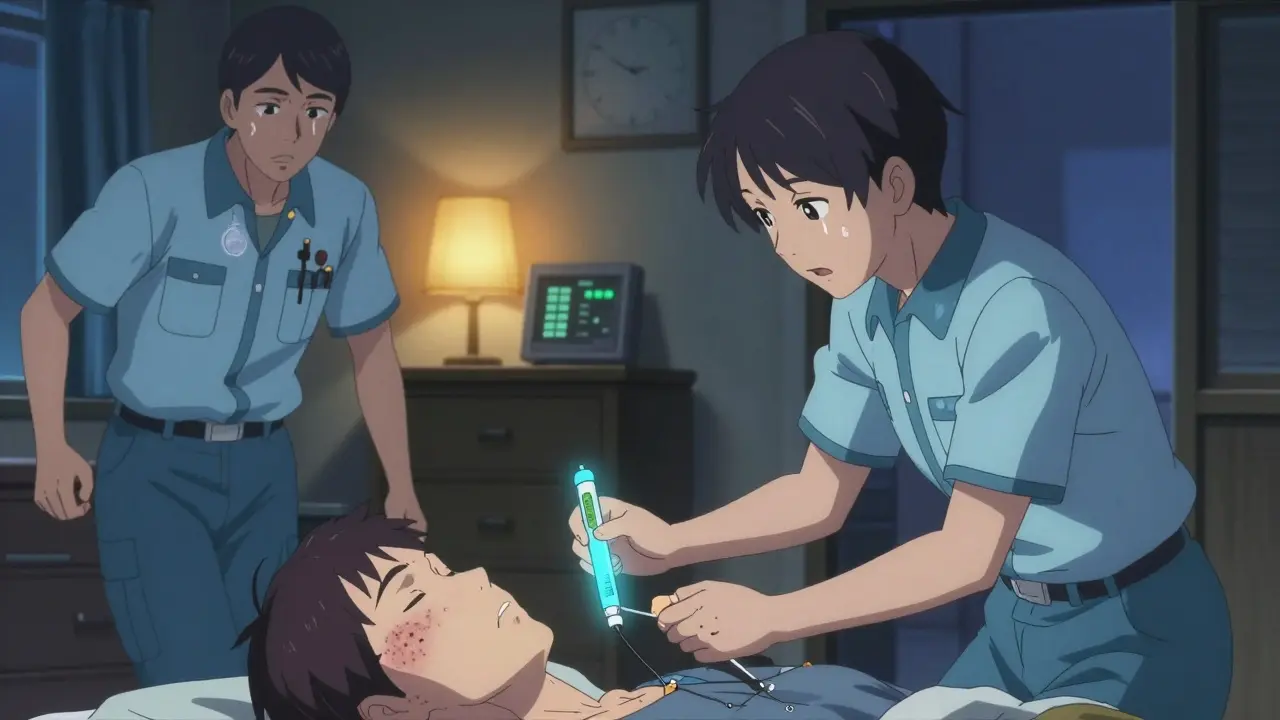
If you’ve been prescribed an epinephrine auto-injector (like an EpiPen), use it at the first sign of a severe reaction. Don’t wait for symptoms to get worse. Don’t think, “Maybe I’ll just wait and see.”
Epinephrine works fast. It opens your airways, raises your blood pressure, and stops the allergic cascade. But here’s the catch: one dose isn’t always enough.
The Mayo Clinic and Food Allergy Research & Education both warn: You still need to call 911 after using epinephrine. Why? Because symptoms can come back-sometimes hours later. That’s called a biphasic reaction. And if you don’t get to the hospital, you could collapse without warning.
When you call 911, tell them: “I used epinephrine for a suspected allergic reaction.” That tells them to bring extra doses and prepare for a critical case. Don’t assume the ambulance will know why you’re in trouble. Say it out loud.
Why Waiting Is Dangerous
People delay calling 911 for all kinds of reasons. They think it’s “not that bad.” They’re embarrassed. They don’t want to waste emergency services. Or they hope it’ll just go away.
Here’s what happens when you wait:
- Swelling in the throat can block your airway completely in under 10 minutes.
- Blood pressure can drop so low your organs start shutting down.
- Delayed epinephrine use is linked to half of all fatal anaphylaxis cases, according to Food Allergy Research & Education.
CPR Seattle puts it bluntly: “If you aren’t sure if symptoms are severe enough to warrant a 911 call, then you should err on the side of caution and assume that they will be worsening quickly.”
It’s better to have a false alarm than a funeral.
What to Do After the Emergency
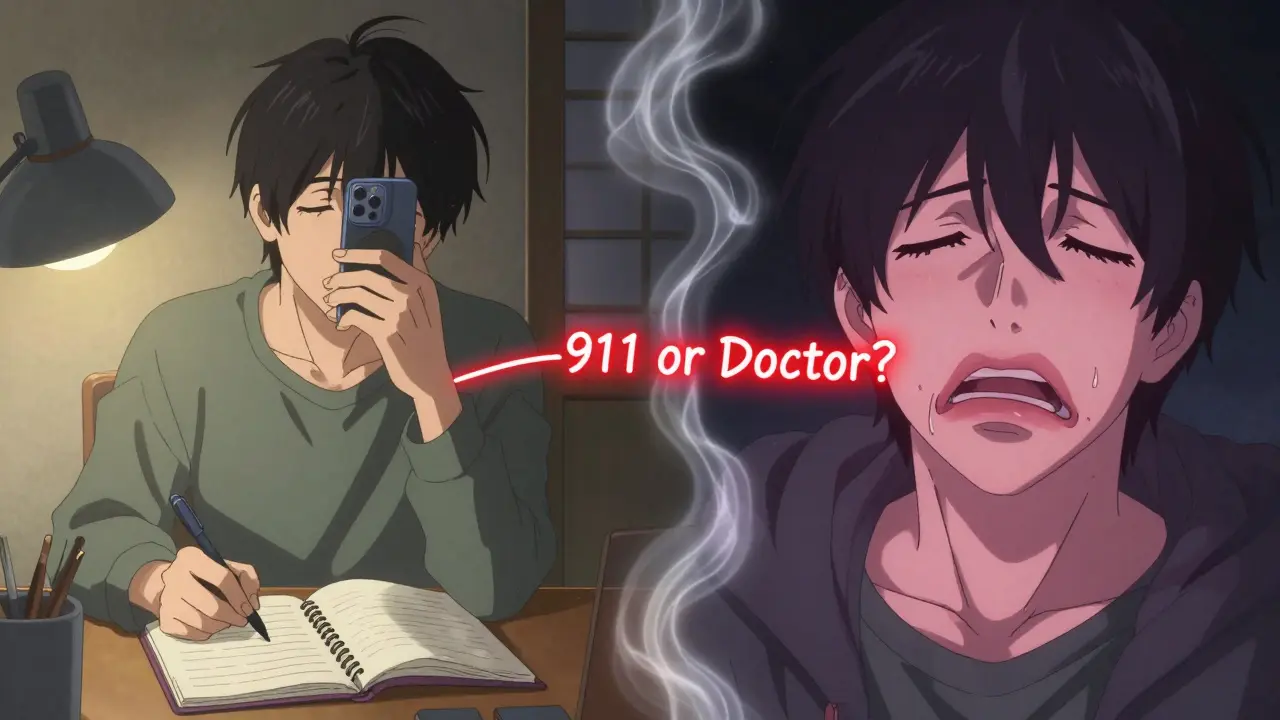
Even if you feel fine after the ambulance leaves, you’re not done. You need to follow up.
- See an allergist within a week. They can test to find out exactly what triggered the reaction.
- Get a medical alert bracelet. If you’re unconscious next time, it could save your life.
- Update your medication list with your doctor. Never take that drug again.
- Keep your epinephrine auto-injector with you at all times-even if you think you’re “over it.”
Medication reactions are more common than you think. The FDA logged over 1.8 million reports in 2022. Experts say the real number is much higher because so many go unreported. Antibiotics alone cause about 15% of all drug allergies.
You’re not alone. But you are responsible for knowing the signs.
Quick Decision Guide
Still unsure? Use this simple flow:
- Did you take a new medication in the last hour? (Yes/No)
- Are you having trouble breathing or swallowing? (Yes/No)
- Is your throat or tongue swelling? (Yes/No)
- Are you dizzy, fainting, or have a racing pulse? (Yes/No)
- Do you have a rash and vomiting/diarrhea? (Yes/No)
If you answered YES to any of these, call 911 now.
If you answered NO to all, but have a rash, itching, or mild nausea-call your doctor within 24 hours.
What to Keep in Your Medicine Cabinet
Be prepared. Here’s what every household on medication should have:
- An epinephrine auto-injector (if prescribed)
- A list of all current medications and allergies (printed and on your phone)
- A medical alert bracelet or necklace
- A phone number for your pharmacy and primary doctor saved in speed dial
Don’t wait for a crisis to organize this stuff. Do it today.
Can a medication reaction happen days after taking the pill?
Yes. While most serious reactions happen within an hour, some rashes, fever, or joint pain can appear days or even weeks later. Conditions like DRESS syndrome or serum sickness are delayed reactions that need medical attention-but they usually don’t require 911 unless breathing or blood pressure problems develop.
Is it safe to use epinephrine if I have heart problems?
Yes. Even if you have heart disease or are elderly, epinephrine is still the safest choice during anaphylaxis. The risk of dying from an allergic reaction far outweighs the risk of a temporary increase in heart rate. Don’t withhold it-use it, then get to the hospital.
Can I just go to urgent care instead of calling 911?
Only if your symptoms are mild and isolated-like a simple rash or itching. If you have any breathing trouble, swelling, dizziness, vomiting with a rash, or a fast heartbeat, urgent care isn’t fast enough. Ambulances have epinephrine, oxygen, and trained staff who can treat you en route. Urgent care can’t.
Do I need to go to the ER even if I feel better after using epinephrine?
Absolutely. Symptoms can return hours later, even if they seem gone. This is called a biphasic reaction. The ER will monitor you for 4-6 hours to make sure you’re safe. Skipping this step has led to preventable deaths.
What if I’m not sure whether it’s an allergy or just a side effect?
When in doubt, treat it like an allergy. Side effects usually affect one system-like nausea or drowsiness. Allergies affect multiple systems at once-like a rash plus vomiting or trouble breathing. If you’re unsure, call 911. It’s better to be safe than sorry.



15 Comments
I once got a rash from amoxicillin and thought it was just dry skin. Called my doctor the next day-turns out it was the start of a full-blown allergic reaction. I didn’t know about the multi-system thing until I read this. Thanks for laying it out so clearly.
Now I keep my EpiPen in my purse at all times. Even to the grocery store.
Don’t wait. Even if it feels ‘mild.’
bro this post is LITERALLY life or death. i had a friend die from this exact thing. he took a pill, got a little itchy, said ‘nah i’ll sleep it off’ and woke up with his tongue in his throat. no joke. 911 should be the first thing you dial. no exceptions. no ‘maybe.’
they dont tell you this but big pharma knows most reactions are delayed. thats why they push ‘call your doc’ instead of ‘call 911’. they dont want you filing lawsuits. i saw a whistleblower doc say 70% of ‘side effects’ are actually immune responses they bury. epipens are overpriced because they’re the only thing that stops the real killer-the body’s own reaction.
and why do they never mention dexamethasone? they just want you to use epinephrine so you go to the ER and get billed $20k.
they dont care if you live. they care if you pay.
Oh honey, I’m so glad someone finally wrote this without sounding like a textbook. I used to be the person who Googled ‘itchy after pill’ and ended up convinced I had a rare autoimmune disease. Turns out? Just a harmless rash. But now? If I get even one extra symptom? I’m calling 911. No drama. No ‘I’ll wait.’
And yes, I have my EpiPen in my car, my purse, and my damn yoga mat. You’re not ‘overreacting’-you’re being smart.
It’s funny how we’re taught to be stoic about pain-‘it’ll pass,’ ‘everyone gets side effects’-but when it comes to our bodies screaming, we hesitate. Maybe it’s because we don’t want to be a burden. Or maybe we think we’re not ‘sick enough’ to warrant an ambulance.
But here’s the truth: your body doesn’t negotiate. It doesn’t care if you’re embarrassed or if you think it’s ‘just a rash.’ It just reacts. And when it does, the kindest thing you can do is listen.
This post isn’t just advice. It’s a permission slip to save your own life. Thank you for giving it to us.
lol so now we gotta carry epipens like they’re vape pens? next thing you know they’ll make us wear those medical bracelets while walking the dog. i took ibuprofen once and got a tiny red dot. called 911. paramedics showed up, asked if i was allergic to aspirin, i said ‘no’ and they gave me a hug and a sticker. i felt like a hero.
the real problem? doctors prescribe 1000 drugs a day and never check if you’ve had reactions before. they’re just bots with stethoscopes.
I’ve been on a bunch of meds over the years, and I’ve learned to watch for the ‘weird combo.’ One symptom? Probably fine. Two? Pay attention. Three? You’re not waiting.
My cousin had a reaction to a new blood pressure med-just a little nausea and a rash. Thought it was nothing. Two hours later, her blood pressure dropped so low she couldn’t stand. Ambulance came, she’s fine now.
Don’t be the person who says ‘I thought it was just a side effect.’ You’re not alone in thinking that. But you’re the only one who can stop it.
It is an affront to public health that so many Americans treat life-threatening medical emergencies as if they are inconveniences to be politely deferred. The notion that one might ‘wait until morning’ to address anaphylaxis is not merely negligent-it is a failure of civic responsibility. Emergency services are not a luxury. They are the last line of defense against biological collapse. To delay is to gamble with mortality. The data is unequivocal. The science is settled. The only acceptable response is immediate, unhesitating action. There is no ‘maybe.’ There is only survival or surrender.
Perhaps if citizens exercised more personal accountability, we would not require this level of public education.
I used to be the guy who’d say ‘I’ll just wait.’ Then my sister had a reaction to penicillin-rash, vomiting, started turning blue. I panicked. Called 911. They got there in 8 minutes. She’s okay now. But I still wake up thinking about how close we were.
Don’t wait. Even if you’re scared. Even if you think you’re overreacting. You’re not. You’re saving a life.
And if you’re reading this and you don’t have an EpiPen but you’re on meds? Talk to your doctor. Do it today.
STOP BEING SO NICE TO YOUR BODY. It’s not your friend. It’s a biological machine that will shut down if you give it half a chance. If your throat feels tight? You don’t ‘wait and see.’ You don’t ‘text your doctor.’ You grab your EpiPen, yell ‘I’m having an allergic reaction,’ and dial 911. No excuses. No ‘I’ll call tomorrow.’
I’ve seen people die because they were ‘too polite’ to call for help. Don’t be that person. Be the one who saves themselves.
Let’s be clear: this post is correct. But it’s also a symptom of a broken system. Why are patients expected to be medical diagnosticians? Why aren’t pharmacists required to flag multi-system risk profiles at point of sale? Why is the burden of survival placed on the individual instead of the institution?
Epinephrine is expensive. The training is lacking. The warnings are buried in 12-point font. This isn’t education-it’s triage by internet.
From a systems biology perspective, the phenomenon of multi-system involvement in drug reactions is a manifestation of cytokine storm dynamics, wherein the immune system’s regulatory feedback loops are overwhelmed by antigenic stimulation. The clinical presentation aligns with Type I hypersensitivity pathways, mediated primarily by IgE and mast cell degranulation.
While the practical advice herein is sound, it is imperative that public health messaging evolve beyond anecdotal heuristics and integrate mechanistic understanding into primary care curricula. Delayed reactions, such as DRESS syndrome, involve T-cell activation and require distinct diagnostic protocols, not merely triage heuristics.
Knowledge must be paired with structural reform.
They’re lying to you. The ‘one-hour rule’? A marketing ploy. Real reactions take days to build. That’s why the FDA lets drugs through with ‘rare’ side effects-they don’t want to delay profits. And epinephrine? It’s not a cure. It’s a Band-Aid on a hemorrhage. The real problem? The drugs are designed to trigger immune responses. It’s not a mistake. It’s intentional.
You think you’re saving yourself by calling 911? You’re just feeding the machine. The real solution? Stop taking all pills. Ever.
Oh, how quaint. We’re now expected to be our own emergency responders. How progressive. How empowering. Meanwhile, the same institutions that told us ‘it’s just a side effect’ for decades are now handing us pamphlets and calling it ‘awareness.’
Do you know what’s more dangerous than a medication reaction? Trusting the system that created it.
And for the love of all that is holy, if you’re going to carry an EpiPen, at least make sure it hasn’t expired. I saw a woman use a 2019 one last year. It didn’t work. She didn’t survive. And no one apologized.
Wait. So if I get a rash AND a headache, I call 911? But if I get a rash and a headache and I’m also hungry, do I call 911 or order pizza first? Because I’m kinda hungry right now.
Also, I’ve taken 47 different meds. Never had a reaction. So I’m just gonna ignore this whole post. You’re all overreacting.
Write a comment