
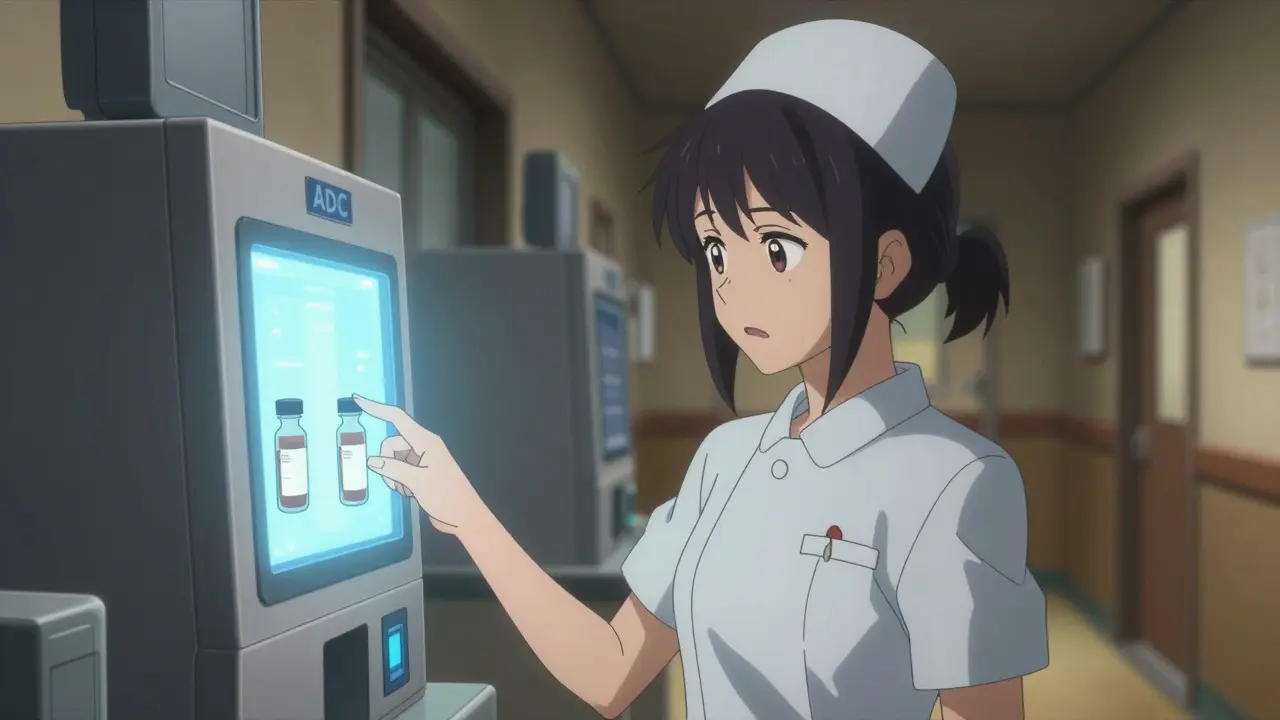
Imagine you are a nurse in a busy emergency room. The clock is ticking, the monitor is beeping, and you need to grab a sedative for a patient. You reach for lorazepam. But your hand hovers over a vial labeled alprazolam. They sound almost identical. They look nearly the same on the screen. One mistake here could mean a patient gets the wrong dose of a potent benzodiazepine, leading to severe respiratory depression or inadequate treatment.
This isn't just a hypothetical nightmare. It happens. In fact, studies suggest that about one in every 1,000 medication orders results in an error due to name confusion alone. That is why healthcare systems worldwide have adopted a simple but powerful typographic trick: tall-man lettering. It’s not magic, and it won’t fix every system flaw, but it is one of the most effective low-cost tools we have to stop these dangerous mix-ups before they happen.
What Is Tall-Man Lettering?
Tall-man lettering is a visual strategy used to distinguish between medications that look alike or sound alike (often called LASA drugs). Instead of writing a drug name in all lowercase or standard title case, you capitalize specific letters within the word to highlight the difference between two similar names.
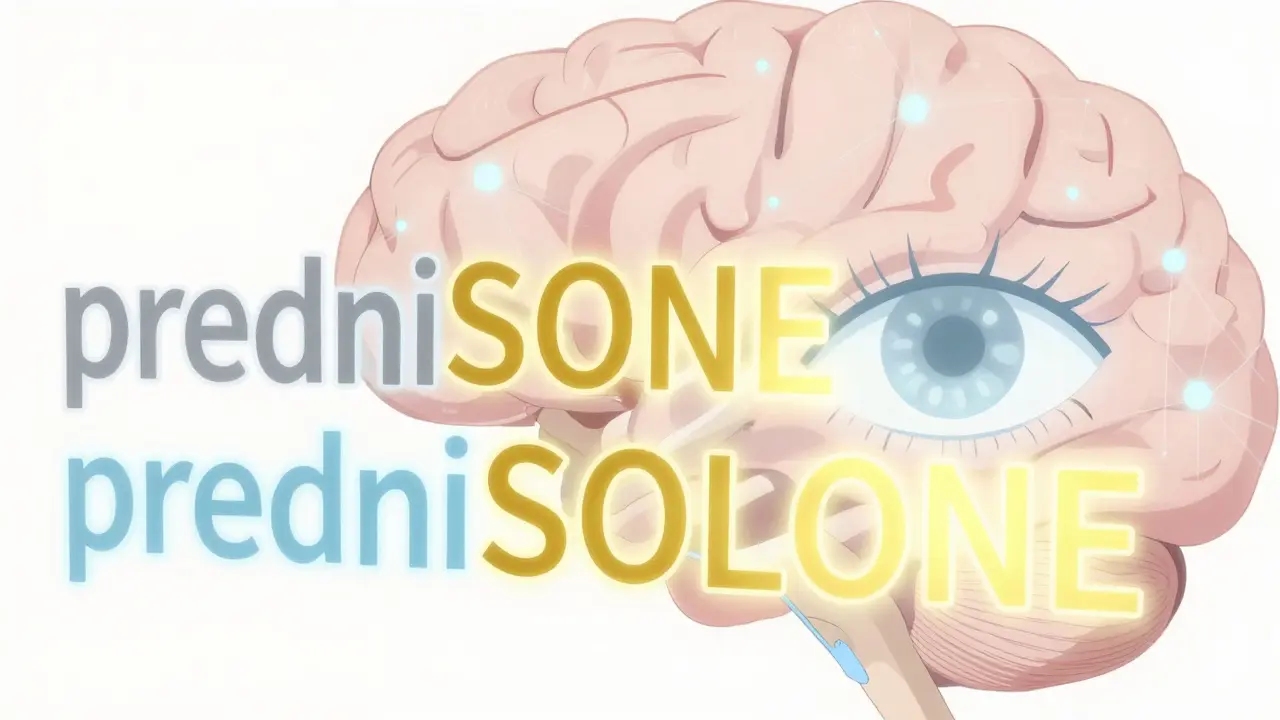
For example, instead of writing 'prednisone' and 'prednisolone', which only differ by three letters deep in the word, tall-man lettering writes them as predniSONE and predniSOLONE. Your eyes are drawn immediately to the capitalized 'SONE' versus 'SOLONE'. This creates a distinct visual pattern that breaks the brain's tendency to auto-complete familiar words.
The concept was coined by the Institute for Safe Medication Practices (ISMP) back in 1999. Since then, it has become a global standard. The U.S. Food and Drug Administration (FDA) launched its Name Differentiation Project in 2001 to formally evaluate and recommend these capitalization patterns. Today, you will see this technique everywhere in modern healthcare: on electronic health record screens, automated dispensing cabinets like Pyxis or Omnicell, prescription labels, and even printed hospital order sets.
Why Do We Need It? The Problem with LASA Drugs
Our brains are wired for efficiency. When we read a list of drugs, we don't read every single letter. We skim. We recognize patterns. If you see 'methyldopa' and 'metoprolol' listed next to each other, your brain might gloss over the middle syllables because the start and end sounds are similar. This is known as inattentional blindness, and it is deadly in medicine.
Look-alike, sound-alike (LASA) medications exploit this cognitive shortcut. Common culprits include:
- vinBLAStine vs. vinCRIStine (chemotherapy agents)
- CISplatin vs. CARBOplatin (oncology drugs)
- HYDROmorphone vs. morphINE (opioids)
- ALPRAZolam vs. LORazepam (benzodiazepines)
Without tall-man lettering, these names blend together. With it, the differences jump off the page. A 2004 eye-tracking study by ISMP showed that when providers were presented with tall-man lettered names, selection errors dropped by 35% compared to standard lowercase text. That is a significant margin of safety in high-stakes environments.
Who Decides Which Letters Get Capitalized?
You might wonder if any pharmacist can just decide to capitalize whatever they want. The answer is no. Consistency is key. If one hospital uses predniSONE and another uses PredniSONE, it defeats the purpose. Several major organizations maintain official lists of recommended tall-man lettering pairs.
| Organization | List Size (Approx.) | Update Frequency | Key Focus |
|---|---|---|---|
| FDA (USA) | 72 drug pairs | Quarterly | Post-market safety reports |
| ISMP (Global) | 252 drug pairs | Quarterly | Broad clinical practice & errors |
| ACSQHC (Australia) | 192 drug pairs | Bi-annual | National incident data |
The FDA generally recommends capitalizing dissimilar letters starting from the left side of the drug name where possible. For instance, they prefer CISplatin over cisPLATIN because the eye scans left-to-right. However, there are occasional discrepancies between agencies. The FDA might recommend one pattern while ISMP suggests another based on different error data. This is why hospitals must choose a primary authority and stick to it across all their systems.
Implementing Tall-Man Lettering in Your System
If you are responsible for implementing this in a clinic or hospital, you cannot just change the font settings on a computer. It requires a systematic approach. Here is how successful organizations do it:
- Form a Safety Team: Bring together pharmacists, IT specialists, and clinicians. You need people who understand the drugs and people who understand the software.
- Audit Your Systems: Identify every place drug names appear. This includes the Electronic Health Record (EHR), the Pharmacy Management System, automated dispensing cabinets (ADCs), and printed labels. Missing one system creates a gap in safety.
- Select Your Authority: Decide whether you will follow the FDA list, the ISMP list, or a hybrid. Most U.S. hospitals align with FDA recommendations for consistency with national standards.
- Test Readability: Ensure the font size and style support the capitalization. Small fonts on mobile devices can make tall-man lettering hard to read. Test it on actual screens nurses use at the bedside.
- Train Staff: Educate everyone on why the changes are happening. Explain that 'predniSONE' is not a typo. Provide quick-reference guides during the transition period.
A 2022 study published in Pharmacology Research & Perspectives detailed a five-phase implementation process that took an average of 16 weeks for a large hospital. The biggest hurdle was usually IT integration, especially with legacy systems that didn't easily support mixed-case formatting. However, the cost is relatively low-averaging around AU$1,200 per hospital system in Australia-making it a high-value investment.
Does It Actually Work? The Evidence
Critics sometimes argue that tall-man lettering is a band-aid solution. Dr. Robert Wachter, a prominent hospitalist, has noted that it can create a false sense of security if not paired with stronger system safeguards like barcode scanning. And he has a point. Tall-man lettering is a visual aid, not a forcing function. It doesn't stop a user from clicking the wrong button; it just makes the right button easier to spot.
However, the data supports its value as part of a "defense-in-depth" strategy. While a 2016 study in Pediatrics found no statistically significant reduction in errors after implementation, that study faced criticism for not verifying if hospitals actually applied the lettering correctly. More recent real-world feedback is more positive. Pharmacists report seeing up to a 42% reduction in overridden alerts for LASA drugs after proper implementation in EHRs like Epic or Cerner.
The Cochrane Collaboration rates the evidence for tall-man lettering as having "moderate certainty" for reducing look-alike drug selection errors. It may not prevent every harm, but it significantly reduces the frequency of initial selection mistakes.
Common Pitfalls to Avoid
Even well-intentioned implementations can fail if done poorly. Here are the most common mistakes:
- Inconsistency Across Systems: If your EHR shows PARoxetine but your dispensing machine shows Fluoxetine with different capitalization patterns, staff get confused. Standardize everything.
- Over-Capitalization: Don't capitalize too many letters. If you write METOPROLOL, it looks like shouting and loses the visual cue. Stick to the recommended patterns.
- Ignoring Brand Names: Many errors occur between generic and brand names. Ensure your tall-man lettering applies to both generic and proprietary names where applicable.
- Lack of Maintenance: New drugs are approved every year. Your list needs regular updates. Subscribe to ISMP or FDA newsletters to stay current.
The Future of Medication Name Safety
As technology advances, tall-man lettering will likely evolve. The FDA and ISMP announced a joint initiative in 2023 to harmonize their lists, aiming to reduce confusion caused by conflicting recommendations. Additionally, AI-enhanced systems are being piloted. For example, Epic Systems is testing dynamic tall-man lettering that adjusts capitalization based on real-time error data from individual hospitals. Early results show a 29% greater reduction in errors compared to static lists.
While voice recognition and barcode scanning will continue to improve, tall-man lettering remains a critical visual safeguard. As long as humans are reading screens and making decisions, our eyes need help distinguishing between 'hydrocodone' and 'hydromorphone'. It is a small change in typography that saves lives.
What is the difference between tall-man lettering and standard capitalization?
Standard capitalization typically uses Title Case (e.g., Prednisone) or all lowercase (prednisone). Tall-man lettering selectively capitalizes specific internal letters to highlight differences between similar drug names (e.g., predniSONE vs. predniSOLONE). This draws the eye to the distinguishing features of the name.
Which organization maintains the official list of tall-man lettering recommendations?
There are multiple authorities. The U.S. FDA maintains a list of 72 drug pairs, updated quarterly. The Institute for Safe Medication Practices (ISMP) maintains a larger list of 252 pairs. Hospitals should choose one primary source to ensure consistency across their systems.
Does tall-man lettering work for all types of medication errors?
No. It is specifically designed to prevent errors involving Look-Alike, Sound-Alike (LASA) drugs. It does not prevent dosing errors, route errors, or patient identification errors. It is one layer of a broader medication safety strategy.
How much does it cost to implement tall-man lettering in a hospital?
Implementation costs vary but are generally low. Reports from Australia indicate an average cost of around AU$1,200 per hospital system. In the U.S., costs are primarily driven by IT labor for updating EHRs and dispensing systems, averaging several weeks of project time rather than significant financial outlay.
Can I create my own tall-man lettering patterns for drugs not on the FDA list?
It is strongly discouraged. Creating custom patterns leads to inconsistency and confusion. Always refer to the FDA, ISMP, or your national health body's established lists. If a drug pair is not listed, consider using other safety measures like separate storage or independent double-checks.
Is tall-man lettering required by law?
It is not a federal law, but it is often a requirement for accreditation. The Joint Commission's National Patient Safety Goals require organizations to differentiate look-alike drug names, and tall-man lettering is the accepted method for meeting this goal.



8 Comments
I work in a small clinic and we actually just started using this last month. It’s wild how much your brain skips over letters when you’re tired. Seeing predniSONE vs predniSOLONE really does make you pause for a split second, which is all it takes to catch a mistake. Thanks for explaining the history behind it! :)
Oh, please!! This is hardly a revolutionary concept!! It’s been around since 1999!! Why are we acting like this is new?? And don’t get me started on the cost!! AU$1,200?? That’s pocket change for hospitals that waste millions on fancy EHRs that crash every other day!! They should be focusing on hiring more staff instead of playing with fonts!! Typical bureaucratic band-aid solution!!
You know what? I love seeing posts that focus on practical safety improvements! Let’s keep pushing for these small but vital changes! Every life saved counts! Great read!
What absolute nonsense! You think changing capitalization stops human error?! Humans are flawed creatures! We will always make mistakes no matter how many CAPITAL LETTERS you throw at us! The system is broken beyond repair! It’s tragic that people believe this trivial typographic tweak can save lives when the entire healthcare infrastructure is crumbling under its own weight! Pathetic!
It’s fascinating how a simple visual cue can hack our cognitive processing. The brain is a pattern-recognition machine, and tall-man lettering essentially creates a new pattern that forces a re-evaluation. It’s not about stopping errors entirely, but about creating friction where there was none. Friction saves lives. It’s a beautiful example of design thinking applied to high-stakes environments. The fact that it’s low-cost makes it even more elegant. We often overlook the power of simplicity in complex systems.
lol yeah right. another way for big pharma to shift blame onto nurses. if u cant read basic latin names maybe u shudnt be holding a syringe. also the font sizes in most hospitals are tiny af so this looks like gibberish on any screen smaller than a billboard. typical tech bro solution to a staffing problem. smh.
Listen up. This works because it is consistent. If you follow the FDA or ISMP list strictly, it reduces errors. Do not make up your own rules. Stick to the standard. It is simple and effective. Train your team well. Check your screens. Keep patients safe.
The article is decent, but let’s be clear: tall-man lettering is merely a superficial fix for a systemic failure in clinical training and attention management. Relying on typography to compensate for fatigue-induced negligence is insulting to the profession. Real safety comes from rigorous double-check protocols and adequate staffing ratios, not from capitalizing random syllables. The Joint Commission accepts this as compliance, which says more about their lack of standards than the efficacy of the method. Until we address the root causes of burnout and understaffing, these visual aids remain nothing more than placebo measures for administrators who want to feel safe without investing in actual care infrastructure.
Write a comment