
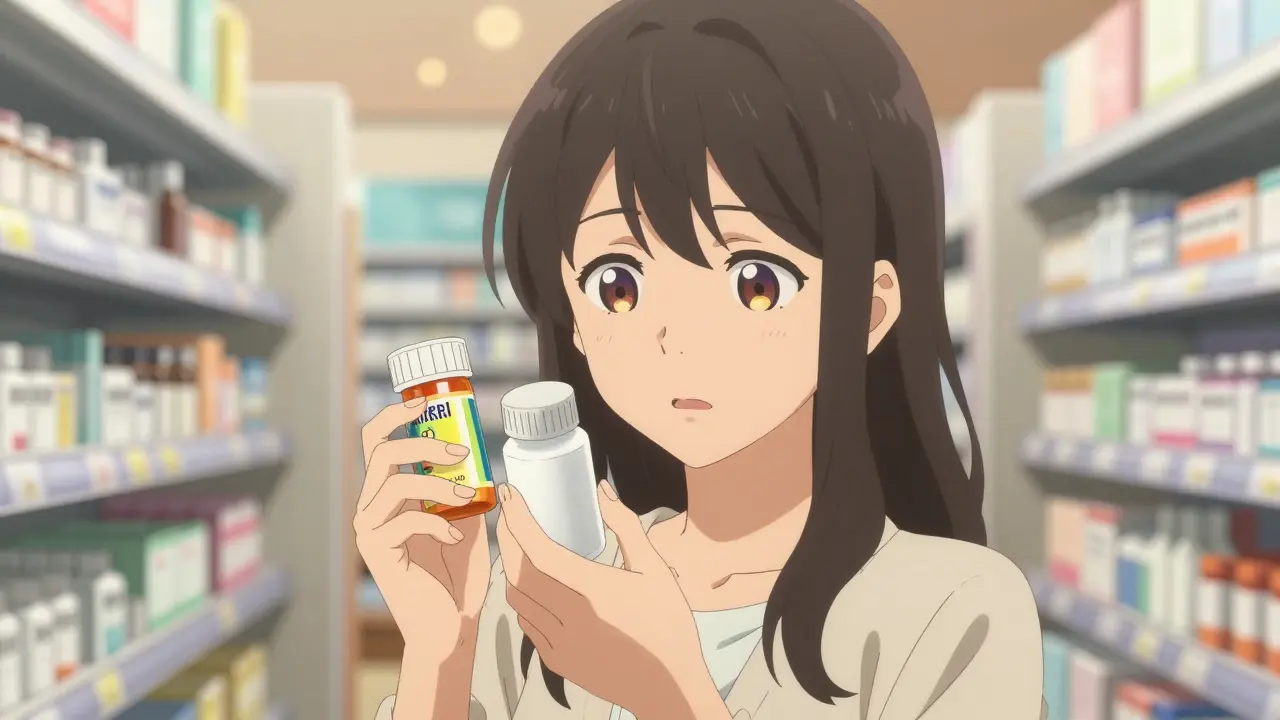
Have you ever picked up your prescription, looked at the pill in the bottle, and felt a sudden wave of doubt? The shape is right. The dosage is right. But the color is wrong. Maybe it’s a shade darker, or the imprint letters are slightly different. You’re not imagining things. If you’ve been switched from a brand-name drug to an authorized generic, that visual mismatch is completely normal-and it’s actually a sign that everything is working as intended.
It’s easy to panic when a medicine looks different. We trust our eyes to tell us if something is safe. But with authorized generics, the outside story doesn’t match the inside reality. These pills look different on purpose. They aren’t counterfeit. They aren’t “regular” generics with cheap fillers. They are the exact same drug you were taking before, just wearing a disguise required by law.
What Exactly Is an Authorized Generic?
To understand why the pill looks different, we first need to clear up what an authorized generic actually is. It’s a term that sounds complicated, but the concept is straightforward. An authorized generic is a brand-name drug sold without the brand name on the label.
Here is the key distinction: unlike regular generic drugs, which are made by different companies using their own manufacturing processes, an authorized generic is produced by the original brand-name manufacturer. They use the same factory, the same equipment, and the same raw materials. The U.S. Food and Drug Administration (FDA) defines it simply: it is the exact same drug product as the branded product, just marketed under a different label.
Think of it like this. Imagine a famous coffee roaster decides to sell its signature blend in a plain white bag instead of its colorful branded box. The beans inside haven’t changed. The roast profile hasn’t changed. Only the packaging has. That is an authorized generic. It sits in a unique middle ground between expensive brand-name drugs and standard generics.
The Real Reason for the Visual Differences
If the pill is identical inside, why can’t it look identical outside? Why does the FDA allow-or even require-these changes? The answer lies in trademark law and patient safety, not chemistry.
In the United States, brand-name drug manufacturers hold trademarks on the specific look of their medications. This includes the color, shape, and imprint (the letters or numbers stamped on the pill). Trademark law prevents other products from looking exactly like the brand-name version to avoid consumer confusion. Even though the authorized generic is made by the same company, it is being sold under a different legal identity (often through a subsidiary or a third-party distributor).
Dr. Rachel Sherman, former FDA Principal Deputy Commissioner, explained that U.S. trademark laws prevent any drug product from looking identical to another, requiring sufficient visual differentiation to avoid consumer confusion, even when the products are pharmacologically identical. So, the manufacturer must tweak the appearance. They might change the dye concentration by a tiny fraction (no more than 0.05%) or alter the imprint code. These changes are superficial. They do not affect how the drug works in your body.

Authorized Generics vs. Regular Generics: What’s the Catch?
This is where most patients get tripped up. There is a huge difference between an authorized generic and a regular generic, especially regarding what’s inside the pill.
| Feature | Brand-Name Drug | Authorized Generic | Regular Generic |
|---|---|---|---|
| Active Ingredient | Original Formula | Identical to Brand | Equivalent (90-110% bioequivalence) |
| Inactive Ingredients | Proprietary Mix | Identical to Brand | May Differ (binders, dyes, fillers) |
| Manufacturer | Brand Company | Brand Company (or licensee) | Different Company |
| Appearance | Trademarked Look | Slightly Different (Color/Imprint) | Often Very Different |
| Cost | Highest (~$478/30 days) | Moderate (~$341/30 days) | Lowest (~$276/30 days) |
The table above highlights the critical advantage of authorized generics: inactive ingredients. Regular generics must be bioequivalent, meaning they deliver the same amount of active drug into your bloodstream over time. However, they can use different inactive ingredients-like binders, fillers, or dyes-to achieve this. For most people, this doesn’t matter. But for about 4.7% of patients, these different excipients can cause adverse reactions, such as allergic responses or digestive issues.
Because authorized generics use the exact same formulation as the brand-name drug, they contain the same inactive ingredients. If you tolerated the brand-name drug perfectly, you will tolerate the authorized generic perfectly. This makes them a vital option for sensitive patients who cannot switch to regular generics.
Why Do Some Patients Still Feel Confused?
Despite the scientific clarity, the human element remains tricky. A survey by PharmacyTimes found that 58.3% of patients initially questioned the efficacy of authorized generics because they looked different. It’s a natural psychological reaction. When we see a change, we assume a risk.
On online forums like Reddit’s r/pharmacy community, users frequently report initial confusion. One user noted, "My pharmacist explained that the different color was just to comply with trademark laws, but the medicine inside is exactly the same." While 92.4% of those users appreciated the identical ingredients once they understood the reason, the initial shock is real.
Pharmacists often spend an extra 1.7 minutes per prescription explaining this difference. This isn’t just customer service; it’s necessary care. Misunderstanding can lead to non-adherence, where patients stop taking their medication because they fear it’s “wrong.” Leading pharmacy chains like CVS and Walgreens have started using visual comparison tools and standardized scripts to help bridge this gap.
Is It Worth the Price Difference?
Let’s talk money. Brand-name drugs are expensive. In 2023 data, the average cost for a 30-day supply of a brand-name drug was $478.23. Regular generics dropped that price to $276.17. Authorized generics sit in the middle at roughly $341.05-a 28.7% savings compared to the brand.
Is it worth paying more than a regular generic? For many, no. If you have no sensitivities, a regular generic is the most economical choice. However, for the subset of patients who react to the inactive ingredients in regular generics, the authorized generic is often the only viable alternative to staying on the high-cost brand-name drug. In these cases, the modest premium pays off in health stability and avoided side effects.
Keep in mind that availability varies. Only about 38.4% of brand-name drugs with generic competition have an authorized generic version available. Your insurance plan also plays a role. Some Pharmacy Benefit Managers (PBMs) may not recognize authorized generics as therapeutically equivalent to regular generics for reimbursement purposes, leading to occasional coverage hiccups.
What Does the Future Hold?
The landscape is shifting. The FDA issued draft guidance in May 2023 titled "Enhancing Visual Differentiation of Authorized Generics," aiming to standardize how these differences are managed to reduce patient confusion while maintaining trademark compliance. Furthermore, starting in 2025, the FDA plans to integrate authorized generics directly into the Orange Book (the official list of approved drug products), which should make identification easier for pharmacists and prescribers.
Major pharmaceutical companies are also adapting. Pfizer, for example, launched an "appearance continuity program" for several products, keeping the shape identical and only altering the color minimally. This approach tries to balance legal requirements with patient recognition needs.
Are authorized generics safer than regular generics?
Both are safe and effective. However, authorized generics are identical to the brand-name drug in every way except the label and minor appearance tweaks. Regular generics may have different inactive ingredients (fillers, dyes). If you have allergies or sensitivities to those inactive ingredients, an authorized generic is likely safer for you because it matches the brand-name formula exactly.
Why does my authorized generic look different if it's made by the same company?
It’s due to trademark law. The brand-name manufacturer owns the trademark for the specific look (color, shape, imprint) of their original drug. To sell the same pill as a generic, they must change its appearance slightly so it doesn't infringe on their own trademark or confuse consumers into thinking it's the full-price brand product.
Can I ask my doctor for an authorized generic specifically?
Yes. You can request an authorized generic by name or ask your pharmacist to check if one is available for your medication. Note that some insurance plans may not cover authorized generics automatically, so you might need to verify coverage with your PBM beforehand.
Do authorized generics work as well as brand-name drugs?
Yes, they are pharmacologically identical. Since they are produced by the same manufacturer using the same New Drug Application (NDA) approval process, they have 100% bioequivalence. There is no difference in efficacy or therapeutic effect.
How common are authorized generics?
They are becoming more common but are still less widespread than regular generics. As of recent FDA data, there are over 170 unique authorized generic products available. About 38% of brand-name drugs that have generic competition also have an authorized generic version.



14 Comments
I honestly feel like the FDA is playing some sort of psychological game with us by changing the color slightly. It’s so intrusive to have my medication look different every few months, and it makes me question if I’m actually getting what I paid for. Why can’t they just keep the exact same pill? It feels like a boundary crossed in my trust as a patient.
you dont need to overthink it its trademark law simple as that the company owns the look so they have to change it to sell it cheaper
i totally get where you are coming from cici but hey at least its the same stuff inside right? maybe we should focus on the savings instead of the shade of blue or whatever it is lol
It is imperative that patients understand the legal distinctions clearly. The visual differentiation is not arbitrary; it is a compliance measure. We must respect the regulatory framework that ensures these drugs are safe while maintaining intellectual property rights. Ignorance of this process leads to unnecessary anxiety.
The bioequivalence parameters are strictly adhered to within the pharmacokinetic profile. In the Indian pharmaceutical sector, we often see similar challenges with brand perception versus generic efficacy. The key metric here is the Area Under the Curve (AUC) which remains identical for authorized generics compared to the reference listed drug. This ensures therapeutic parity without the premium pricing structure associated with branded entities.
That's a great point about the AUC. For those who might be confused, think of it like this: the active ingredient does all the heavy lifting. If the amount entering your bloodstream is the same, the effect is the same. The only real difference is the filler materials, which usually don't matter unless you have specific allergies.
Oh my goodness, it is such a profound realization that our eyes deceive us! The soul of the medicine remains pure even if its outer shell changes. It is a metaphor for life itself, isn't it? We judge by appearances but the truth lies within. I felt such a wave of relief reading this because I was so scared when my pills changed color last month!
It is truly disheartening to observe how the general public is misled by these superficial alterations in pharmaceutical packaging, which serves only to protect corporate interests rather than consumer welfare, and one must wonder why regulatory bodies do not enforce stricter transparency measures to ensure that patients are not subjected to such unnecessary confusion and potential health risks due to their own ignorance of the complex legal frameworks governing drug manufacturing and distribution practices.
Haha, typical US bureaucracy making everything complicated just to save a few bucks on trademarks. But hey, at least we aren't paying European prices for our meds, right? :D
prices are still too high though
I always find it fascinating how the 'inactive' ingredients are treated like background noise when they can actually be the stars of the show for sensitive people. It’s like a culinary secret sauce-most don’t notice, but if you’re allergic to garlic, that sauce becomes a nightmare. Authorized generics are the safe harbor for those of us who can’t handle the wild west of regular generic fillers.
Yeah, it’s pretty chill once you know what’s going on. I used to stress out every time my prescription looked different, but now I just check with my pharmacist. They’re super helpful and usually explain it in two seconds. No big deal really.
its obvious the pharma companies are just trying to trick us into thinking we are saving money when really they are keeping the profits high by selling the same drug twice under different names its a scam and everyone knows it but no one talks about it because they are too busy being grateful for the tiny discount
Sure, let's pretend it's not a scam. The 'authorized' part is just marketing fluff to make you feel special for paying more than the generic store-brand version. It's theater, nothing more.
Write a comment